Get in Touch with Mackayhairscissors Company
We use submitted details to respond to your quote request. Read our Privacy Policy.

60-62 HRC VG10 steel, convex hand-honed edges, and a spec sheet you can hold your supplier to – built for salons, distributors, and private-label brands sourcing at volume, not one pair at a time.
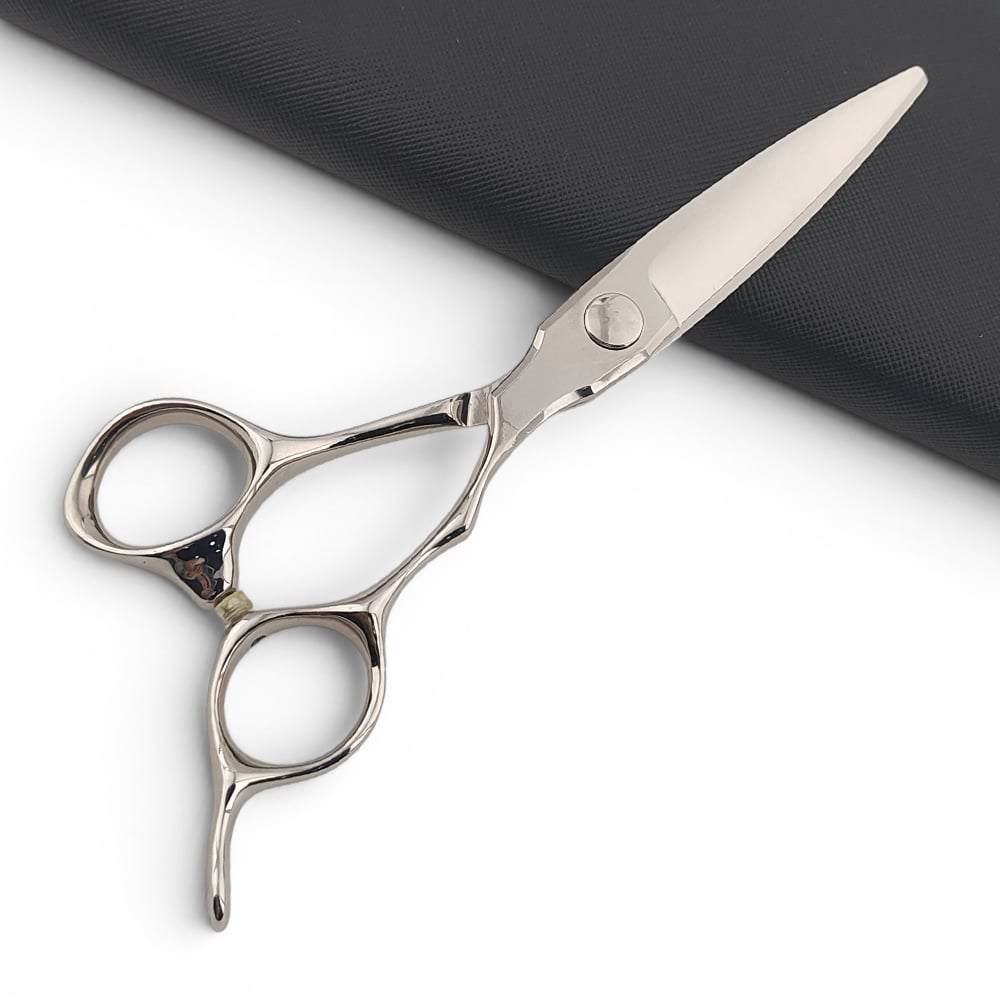
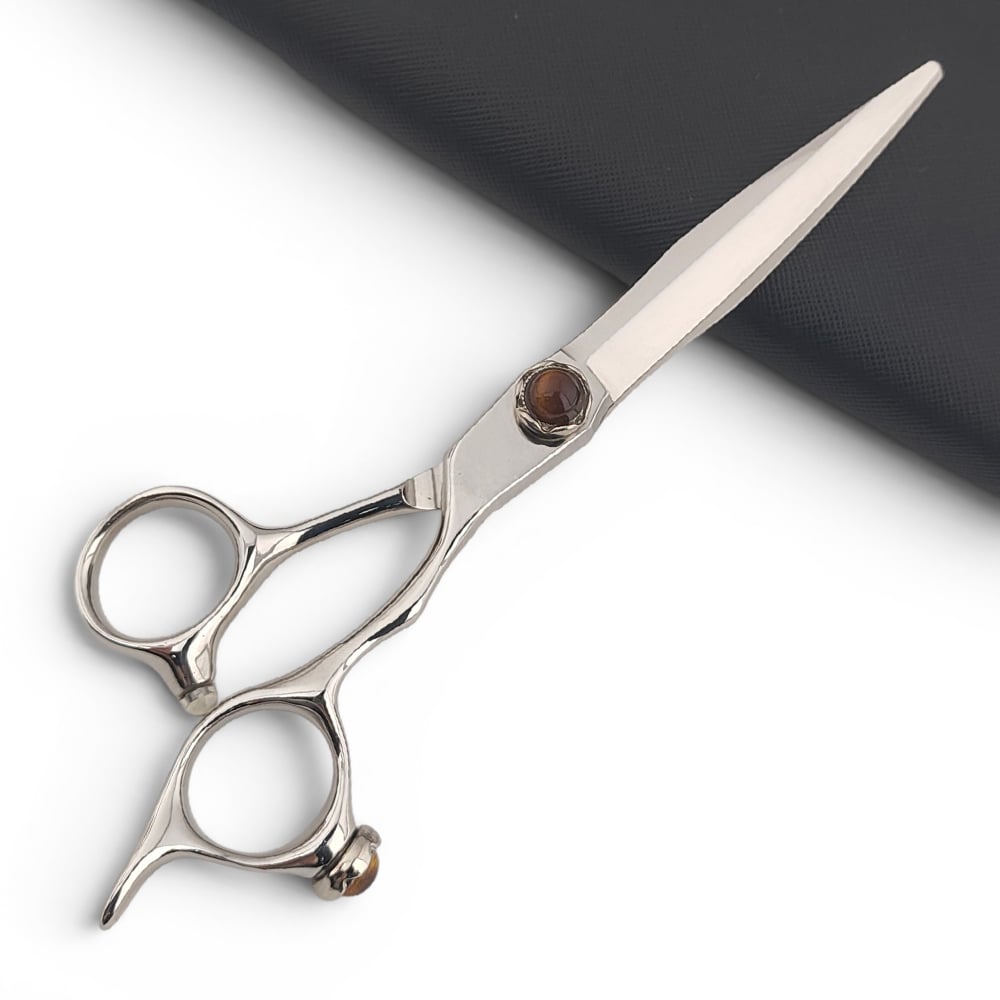
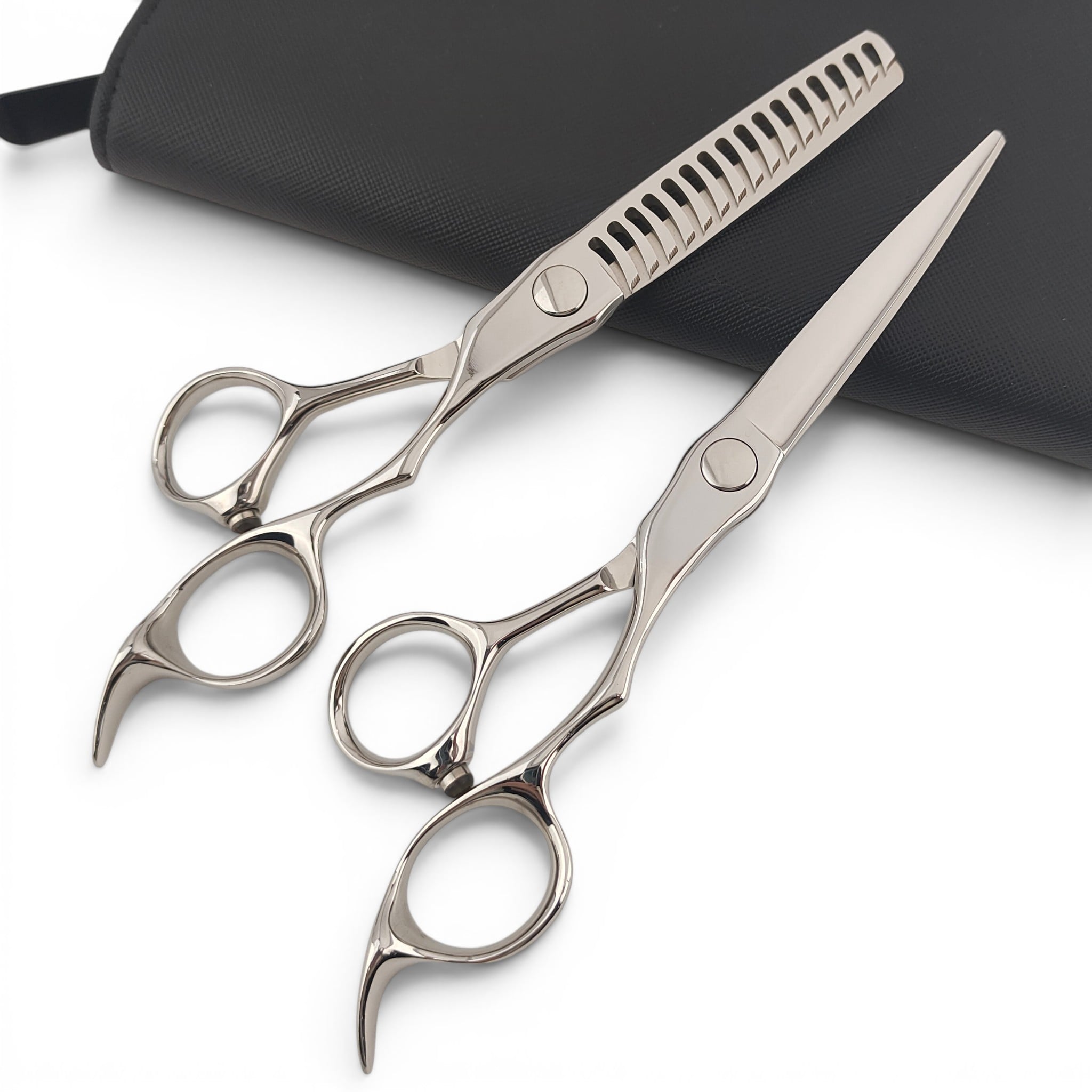
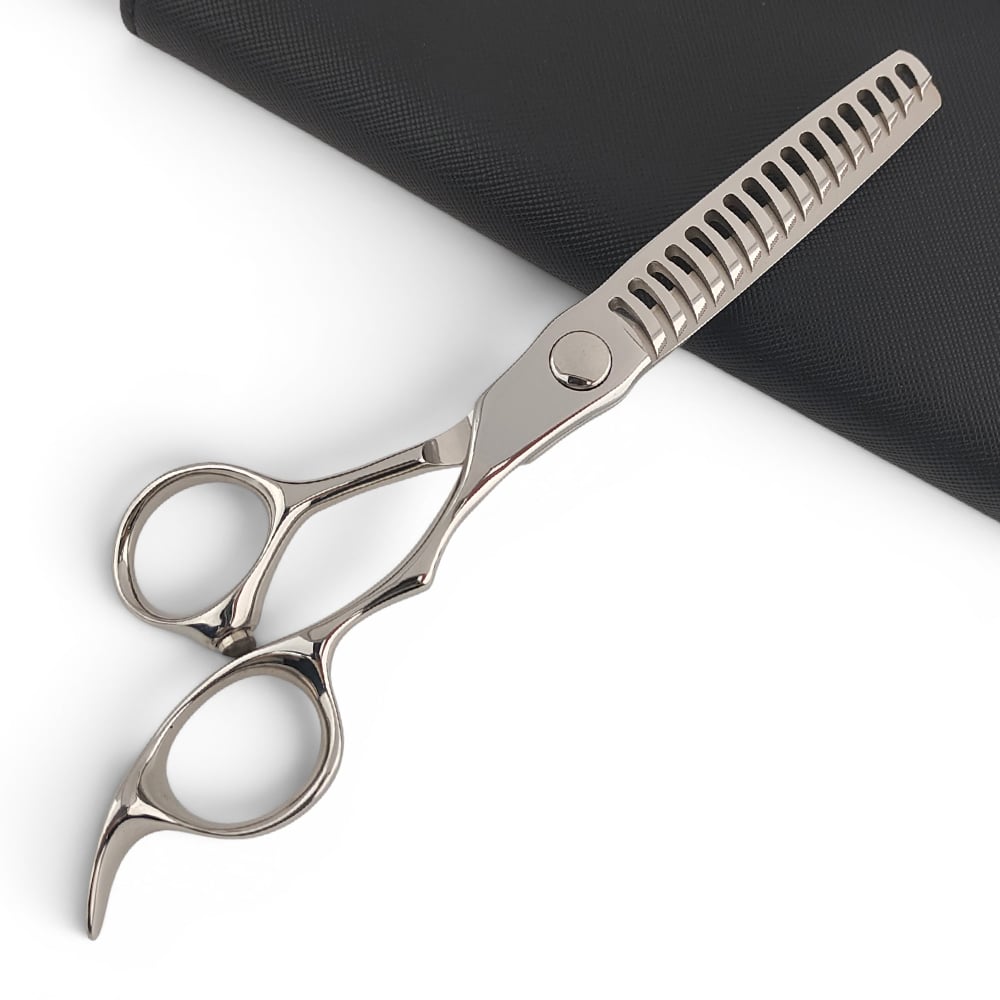
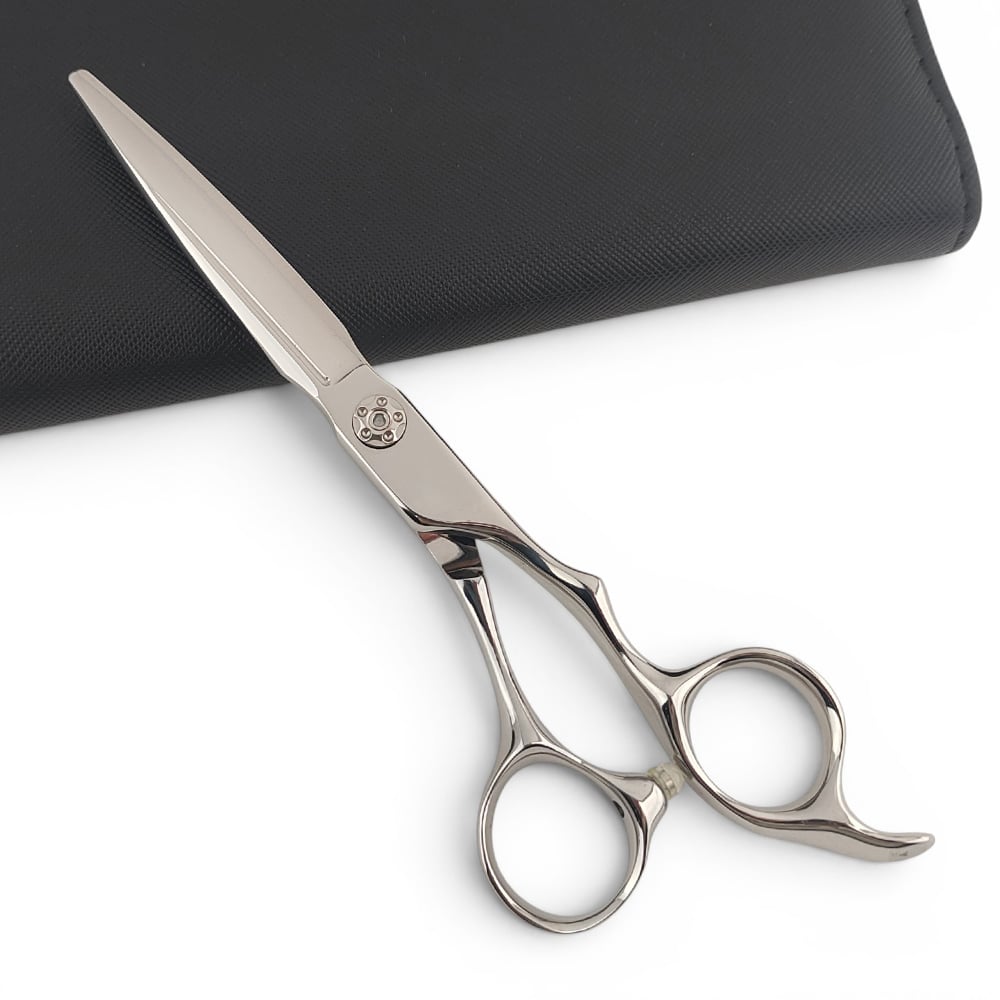
VG10 hair shears are professional hairdressing scissors forged from VG10 Japanese stainless steel and hardened to 60-62 HRC on the Rockwell C scale. They get sold on a single word – “Japanese steel” – more often than they get sold on a number, and MATSUOPRO’s VG10 line is built to close that gap: a hand-honed convex (Hamaguri) edge and a composition sheet we hand a buyer before they ask for one. If your last supplier’s answer to “what steel is this and how hard is it” was a shrug and a marketing paragraph, that’s exactly the scrutiny this page answers – composition disclosed, hardness disclosed, test method disclosed.
Search “VG10 hair shears” and every result reads the same: hardness, edge retention, Japanese heritage, all stated, none of it sourced. One r/Barber thread put it bluntly – that the “Japanese steel talk is BS” and that quality doesn’t automatically scale with the price tag. On the retail side, an independently-run scissorsmith business selling direct to stylists makes the same point:
Two unrelated sources, one shared conclusion – the steel name on the box tells a buyer almost nothing on its own, and that’s the mistake most “Japanese steel” marketing quietly depends on. Get this wrong and the risk isn’t cosmetic – a mismatched hardness choice shows up as chipped edges within weeks, a hidden defect many return policies won’t catch within 60 days of delivery. That gap exists because most sellers disclose a steel name but not a heat-treatment method, so two “VG10” shears can perform differently for reasons buyers can’t see on a spec sheet.
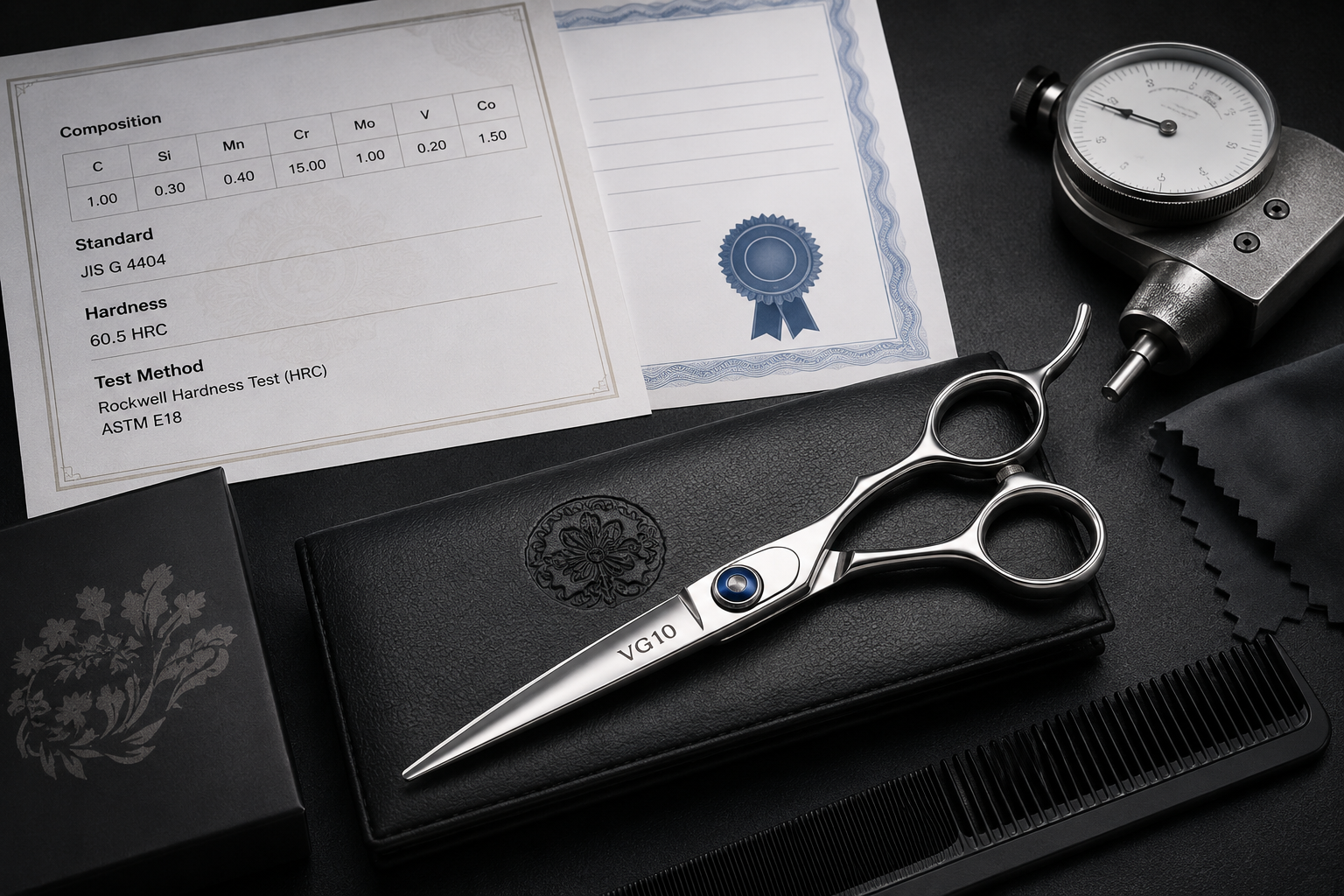
Unlike a marketing paragraph, a hardness number and a composition sheet don’t change depending on who’s asking – that’s why every VG10 shear on this line is engineered to ship with its own certificate, not just a grade name. What actually tells you some thing: the hardness number tested to a real standard, the composition, the test method, and whether the seller can produce all three without changing the subject. That’s the standard MATSUOPRO’s VG10 line is built to meet, and the rest of this page is the receipts – composition, HRC, edge geometry, certifications, and OEM terms, in that order.
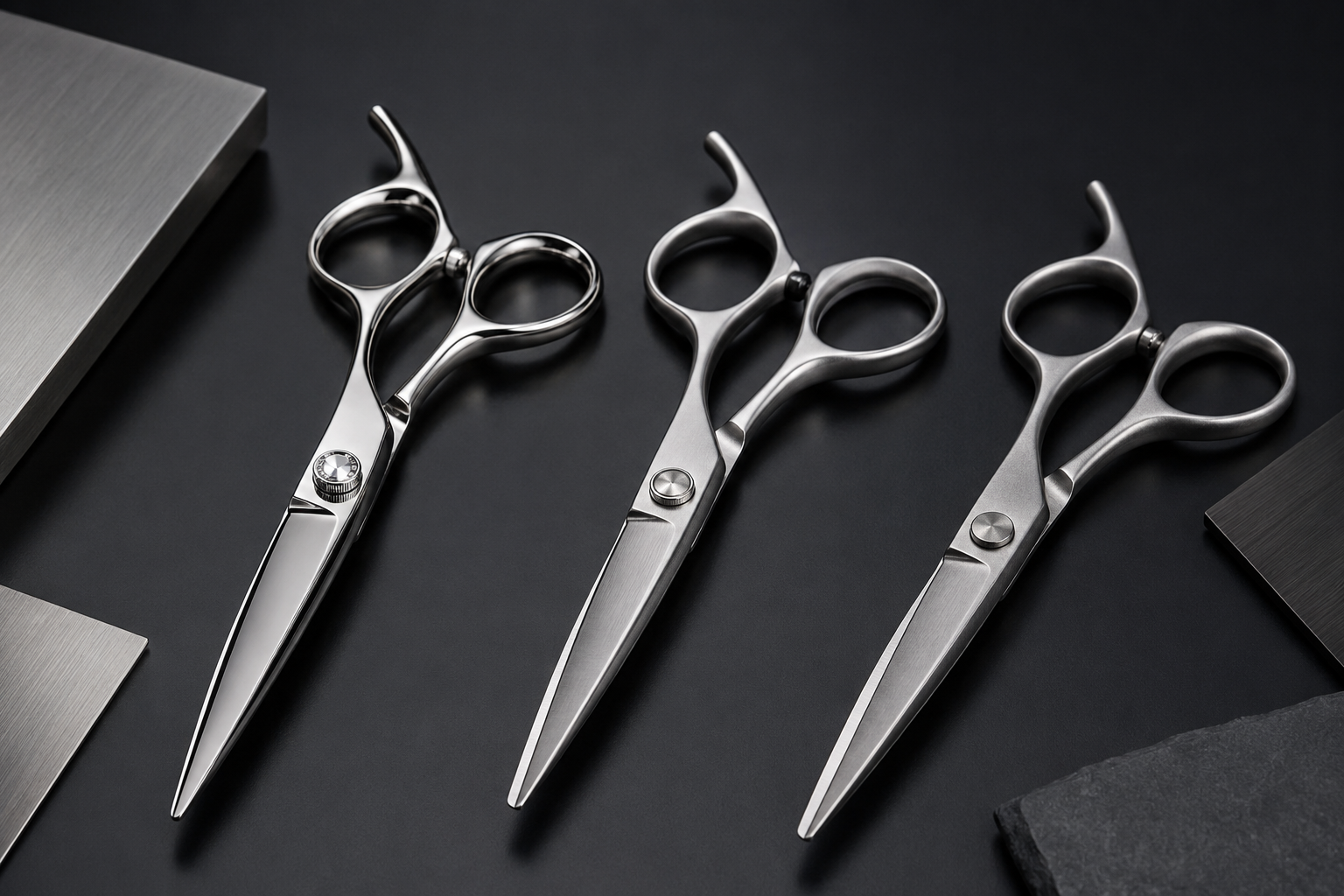
Ten SKUs make up this VG10 line, built upon the same steel composition, hardness, and edge finishing: nine straight-edge cutting shears, and one 16-tooth thinning shear designed for texturing applications. Across the line, the standard shear length is 6.0 inches, with alternate lengths available upon request for OEMs or private-label orders. When ordering, verify mill availability for the desired alternative lengths. All shears come equipped with standard offset handles, ensuring a balanced feel and comfortable grip during extended use. For those seeking reduced wrist strain on high-volume, salon-grade shears, a swivel thumb handle option is available as a custom order.
| SKU range | Type | Steel | Hardness | Edge | Best fit |
|---|---|---|---|---|---|
| MP-SC-085, 087–093 | Straight-edge cutting shear | VG10 | 60-62 HRC | Convex / Hamaguri | General salon cutting, private-label main line |
| MP-SC-086 | 16-tooth thinning shear | VG10 | 60-62 HRC | Convex / Hamaguri (toothed) | Texturizing, blending, weight removal |
| MP-SC-094 | Straight-edge cutting shear | VG10 | 60-62 HRC | spec sheet incomplete beyond HRC | Confirm handle/finish with factory before quoting |
VG10, also known as “V Gold 10,” is a high-quality Japanese stainless steel developed and produced by Takefu Special Steel Co., Ltd. in Fukui Prefecture, Japan. It’s important to distinguish this from Hitachi Steel, a common misidentification in the industry. This VG10 stainless steel falls into the same cobalt-vanadium steel family as certain competitor cobalt-alloy blades, hardened to HRC 60-62, and finished with a Japanese-Style Convex Edge instead of a flat bevel.
| Property | MATSUOPRO Spec | Reference Standard |
|---|---|---|
| Carbon (C) | ~1.0% | Mill comp, client spec |
| Chromium (Cr) | ~15% | Mill comp, client spec |
| Cobalt (Co) | ~1.5% | Mill comp, client spec |
| Vanadium (V) | ~0.2% | Mill comp, client spec |
| Hardness | 60-62 HRC | Rockwell C / ASTM E18 |
Microstructure analysis ensures a uniform carbide distribution, maintaining precise balance between toughness and apex retention stability.
“We check every incoming VG10 batch against the 60-62 HRC window before it goes to grinding. If a batch tests outside that range, it doesn’t become a MATSUOPRO shear, it goes back to the mill.”
If your buyers are choosing between different grades of steel and not just looking to verify they’re getting VG10, here’s where the three grades sit against one another in terms of hardness – not on subjective terms – starting with why 440C stainless steel remains the volume king in the segment.
There’s a gap between VG10 and either of the 440C grades, but it’s not every thing: a good heat treatment can narrow or widen that gap. Buyers ask “what brand is this” when the useful question is “what’s the steel and what’s the hardness rating”.
MATSUOPRO also has both China 440C and Japan 440C lines if VG10’s edge-retention benefit doesn’t fit your price range (check our China 440C value shears or Japanese 440C shears pages). A private-label buyer for a 20-chair salon will feel the benefit of longer resharpening intervals more acutely than any individual stylist.
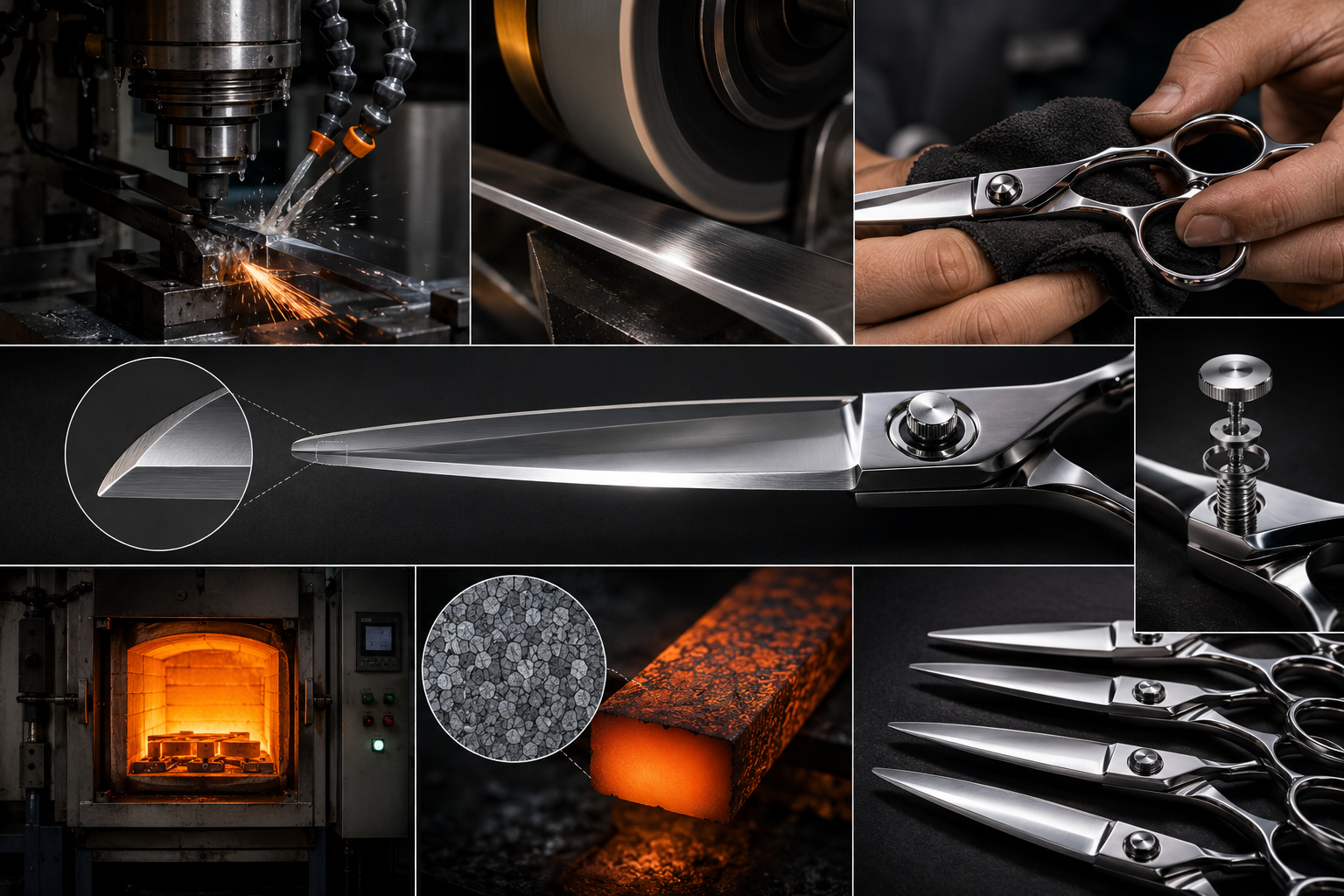
Each VG10 blade in this line goes through CNC precision grinding to a 15-20° convex (Hamaguri) edge angle and then hand-honed, instead of left to machine-finish. This convex grind follows the same curved-bevel logic as Japanese sword blades, which concentrates cutting force into a thinner edge without removing mass from the blade’s spine; it’s a key part of the reason why VG10’s superior edge retention compared to 440C translates to actual differences on the cutting floor rather than remaining a number on paper. Our blades are hand-honed and mirror-polished following CNC cutting and are then hand-tensioned through an adjustable tension screw at the pivot, rather than set to a single factory torque spec; a detail of much greater consequence on hard, brittle steels like VG10 where pivot inconsistencies are quickly felt as changes in the cutting feel compared to 440C.
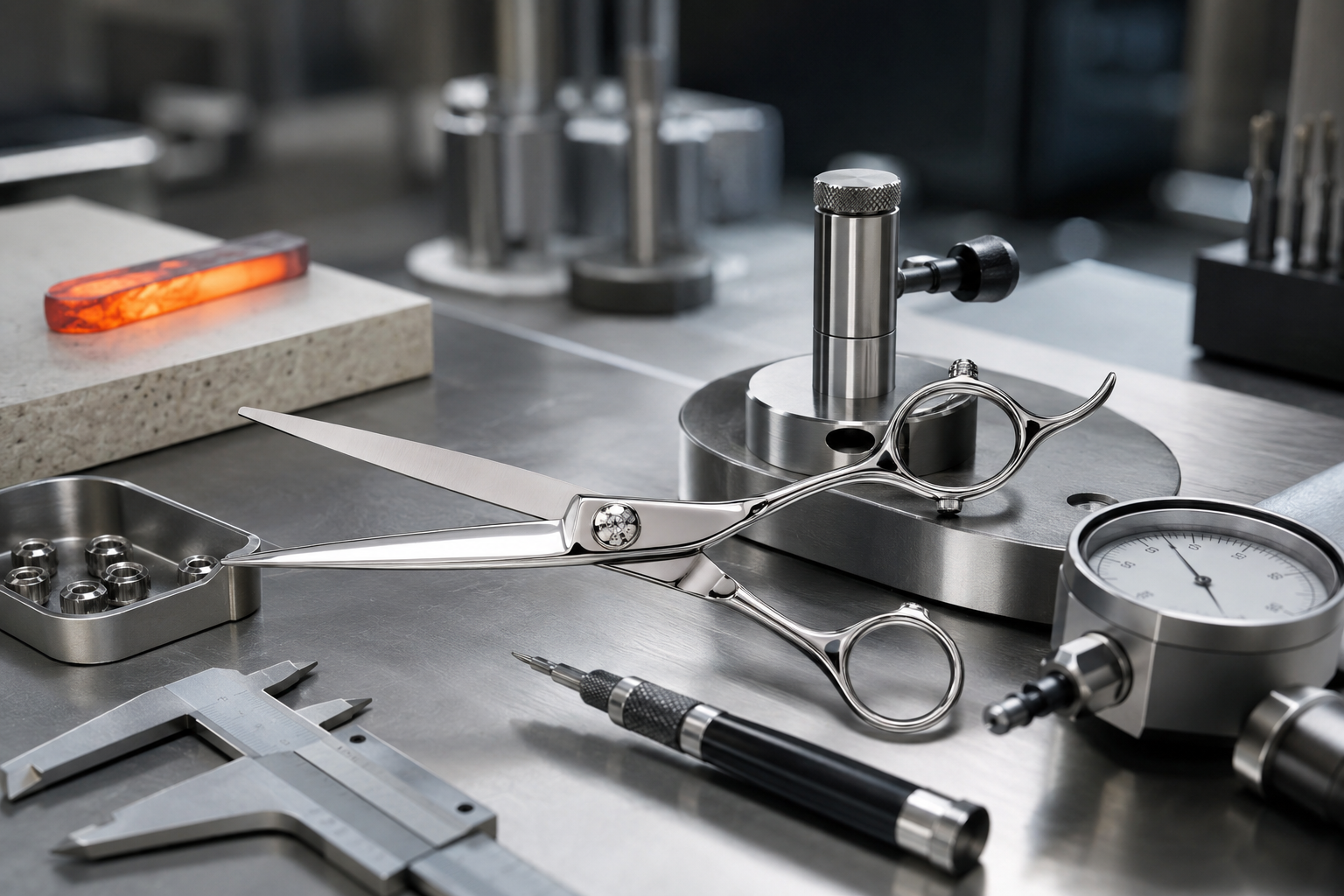
While certain premium lines in this category use cryogenic treatment or vacuum heat treatment prior to tempering to achieve even higher hardness, we use a conventional, certified 60-62 HRC heat-treatment process on our VG10 line and invest the savings into hand-finishing instead of a slight edge in the numbers. At final assembly, each blade’s pivot is set by hand through our blade tensioning system, rather than being reliant solely on a ball-bearing pivot. That distinction matters most with precision cuts, such as slide cutting, where inconsistent pivot feel is immediately obvious to a stylist’s hand.
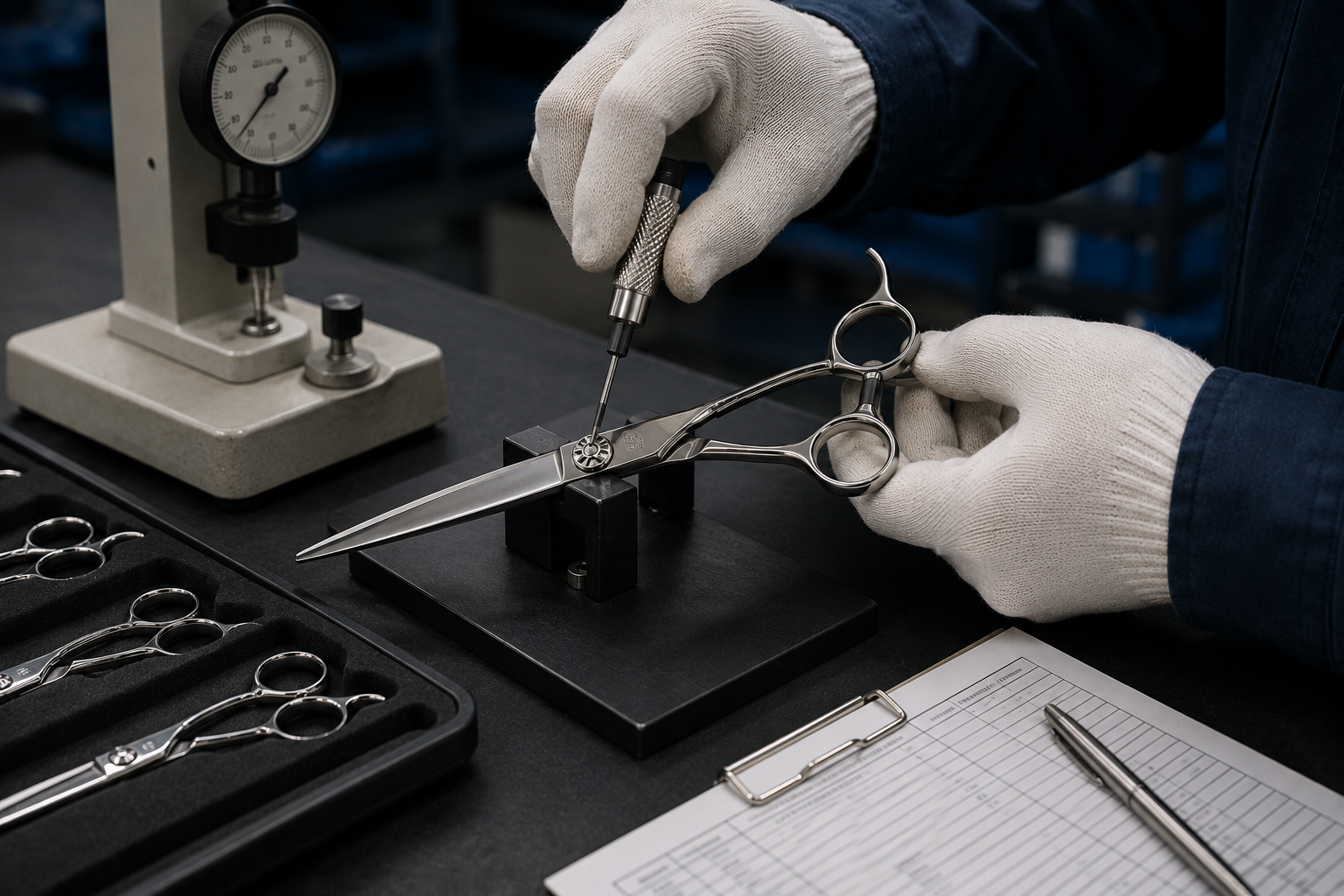
The structural reason for hand-tensioning every pivot rather than leaving it at a fixed, factory setting is because the performance of hard steels like VG10 is significantly more sensitive to variations in pivot tension. The cutting inconsistency caused by a misadjusted pivot on VG10 is far more pronounced than it would be on a softer 440C blade and would typically go undetected on a lower-grade blade until the issue had already made its way to a stylist’s hand months after purchase. Our factory addresses this issue through a process designed to identify and correct pivot inconsistencies at an ISO 9001 quality checkpoint, before a blade is shipped. If pivot precision is critical to the performance on your floor, ask for our pivot tensioning inspection log when you order.
The “Japanese steel” claim typically breaks down when faced with three simple questions: In which prefecture was the steel forged? What kind of steel is it? And who performed the heat treatment? This page provides clear, verifiable answers: it’s Takefu-milled VG10 steel with an HRC hardness of 60-62, heat-treated and hand-honed at our facility, which has been vetted with third-party audits to verify our production claims, unlike “badge-waving” competitors. BSCI SGS ISO 9001 audit reports for all MATSUOPRO shipments are available on request.
We’re engineered to survive the procurement team’s own audit, not their marketing department’s.

Pass on the certification check and the stakes get very real: there’s no protection when a buyer take a badge at face value, only to discover the shipment will fail their own incoming audit 90 days post-delivery when they could have just asked for the certificate number from day one. That’s the structural reason we share the cert numbers and not just a logo; we’re engineered to survive the procurement team’s own audit, not their marketing department’s –unlike a badge without backing, the most common purchasing mistake they learn only when their own audit breaks. It really only hits OEM and private-label distributors hard, who absorb all the downstream compliance responsibility in the 40+ export countries we already sell to.
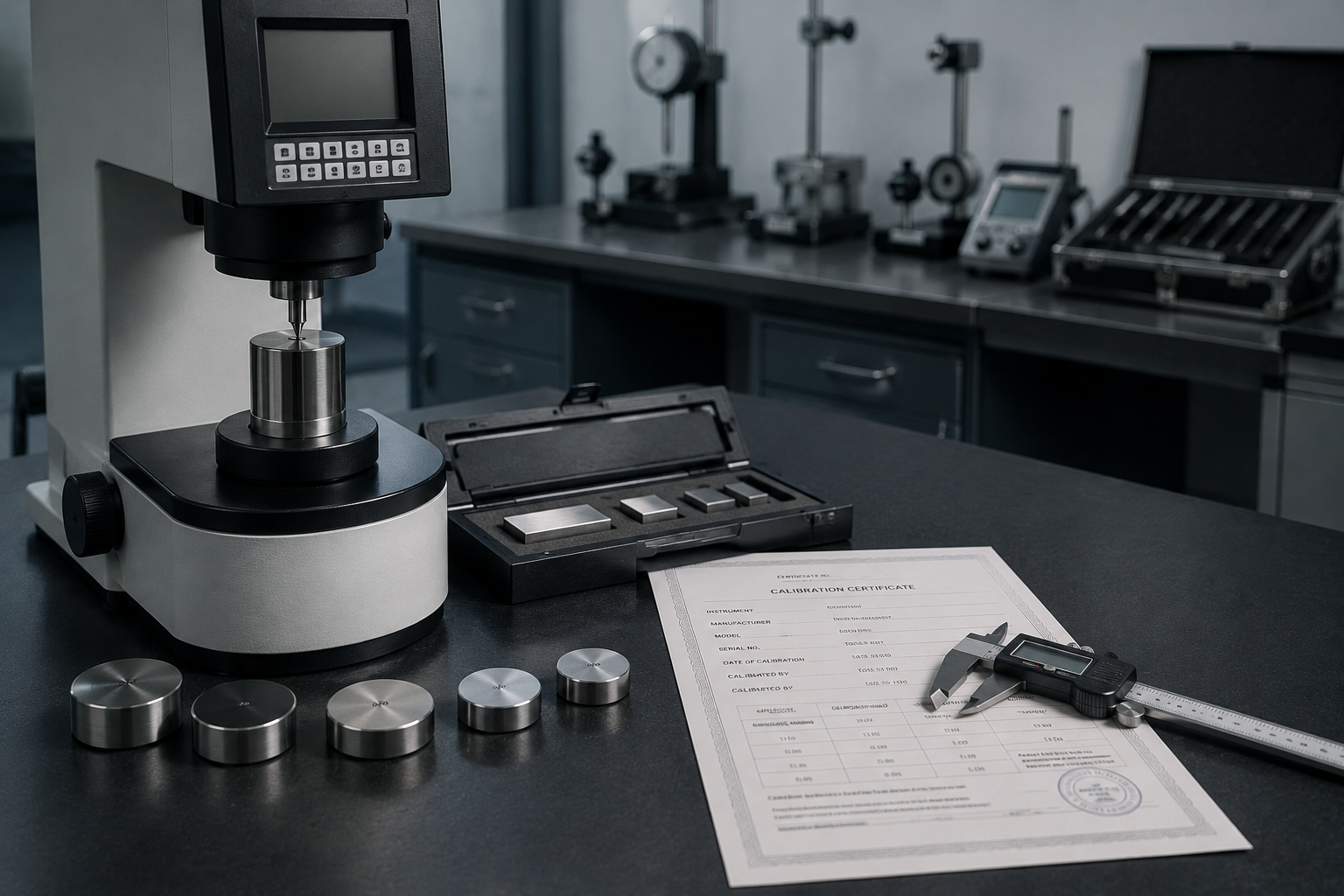
The 60-62 HRC number itself is only as trustworthy as the tester that produced it. Rockwell C testers drift out of calibration the same way any measuring instrument does, which is why NIST maintains Rockwell C Standard Reference Materials that instrument manufacturers and test labs use to verify their equipment against a national metrology standard. Ask a supplier whether their tester is checked against a traceable reference block; a shrug is the same red flag as a shrug on prefecture or steel grade.
We checked three D2C retail listings for this product type: all publish per-SKU pricing ($247 – $900, depending on model, in the same range independent cost-guide data reports for this steel tier) but none show an OEM/wholesale option; no MOQ, no private-label terms, no factory lead times. It’s not a lack of transparency on their part — it’s just a matter of audiences. They sell one pair of scissors; we supply an entire salon chain. Private-label distributors looking for wholesale hair scissors suppliers typically browse the same few online directories of hair scissors manufacturer listings, where none of the entries detail any specifications. Instead, our OEM private-label program – with logo etching, custom packaging, steel grades, and so on – is priced and scoped using the certificate shown above. Unlike the reseller who simply posts a per-pair price, we disclose the MOQ, sample times, and bulk lead times up front – regardless of your order size (50 vs. 5000), whereas other manufacturers increase small-order prices significantly to discourage preliminary testing. We operate this program internally with many years of experience providing direct factory-to-private-label services rather than farming it out to a middleman trading company.
Typical 5-year total cost of ownership for VG-10/cobalt-tier shears — purchase plus 4-5 resharpenings — per independently published professional-scissors cost-guide data. Sourcing at MOQ volume compresses the per-unit purchase side of that figure well below single-pair retail pricing.
Harder steels chip more easily in case of falls compared to softer steels like 440C, so be sure to consider that for your training materials and the case or pouch protocol when VG10 is going on a busy salon floor instead of a controlled studio setting. Lead Times: If possible, ask for your sample early in your selection window; a 3-day sample response still needs your internal approval, along with time for shipment, prior to initiating your 60-day bulk order.
How buyers in this space search tells you what worries them, and it’s worth answering those queries directly rather than making people dig for the answers themselves. Searches for “440c vs vg10” indicate they want a comparison of hardness vs. toughness rather than just a technical rundown; Searches for “vg10 steel hair scissors manufacturer” mean they want to skip middlemen entirely; searches for “vg10 hair scissors wholesale” indicate they want MOQ and lead time, not per-pair prices; searches for “vg10 steel hardness” just want the number (which is always 60-62 HRC); and “vg10 vs damascus steel scissors” searches generally mean a choice between functional sharpness and decorative patterns, not two similar steels.
Utilize our factory-direct interactive tools to specify your OEM requirements, compare steel metallurgy, and calculate exact production timelines before initiating an RFQ.
Input your target salon demographic, budget constraints, and aesthetic requirements to find the ideal steel alloy match for your private-label shears.
Analyze VG10 side-by-side against 440C, Damascus, and ATS-314. View exact HRC ratings, edge retention scores, and drop-damage vulnerability metrics.
Calculate precise lead times from initial 3D design to sample delivery and full 60-day bulk production based on your custom packaging and MOQ requirements.
A VG10 blade is a hair-shear blade forged from VG10 Japanese stainless steel, hardened to 60-62 HRC and alloyed with chromium, cobalt, and vanadium for hardness, corrosion resistance, and wear resistance. MATSUOPRO CNC-cuts each blade to a convex Hamaguri edge and hand-finishes it, a step many factories skip.
Neither is universally better: VG10 typically runs 60-62 HRC and holds an edge longer between sharpenings, while 440C runs 56-59 HRC and can resist chipping better when properly heat-treated. A poorly heat-treated VG10 blade will underperform a well heat-treated 440C blade in real-world use, so heat treatment and quality control decide the outcome more than the steel name alone.
No, a harder blade generally only means that the steel will chip and dull more easily. Even if you’ve hard steel, you may actually be getting poorer performance than someone who’s using a less hard steel that was properly heat treated and finished to a higher quality level. See our “hardness versus toughness” guide section above for more information on how the hardness and the toughness of a steel play off each other.
Ask the manufacturer three direct questions: who heat-treated the blade, what steel grade was used, and which prefecture the steel was forged in. Manufacturers who answer all three in a clear, specific sentence are giving you verifiable data; those who respond with generalities and marketing language are not. We publish those three answers for every blade in the specifications chart on this page.
Brand markups are usually what dictate price more than material composition or where it came from, especially with VG10 steel, and how well it was heat treated and hand finished. You can get a high quality VG10 steel from a factory direct company that can compete with and surpass the performance of any brand, while still being sold at a price point far lower than what a traditional name brand store would charge.
Yes, all custom orders over 50pcs come with full customization options, including both logo and packaging engraving. Lead times for custom orders are roughly 3 days for sampling, and about 60 days for bulk orders. If you’ve questions about the level of detail involved with branding, make sure to ask for clarification when requesting a quote for your order.
Yes, our SKU MP-SC-086is a VG10 16 tooth texturizing shear, and it’s built on the exact same 60-62 HRC VG10 steel and the same convex convex cutting edge construction process as our straight-edged models within this line, ensuring a smooth cut and even blending with other standard cutting shears in your collection.