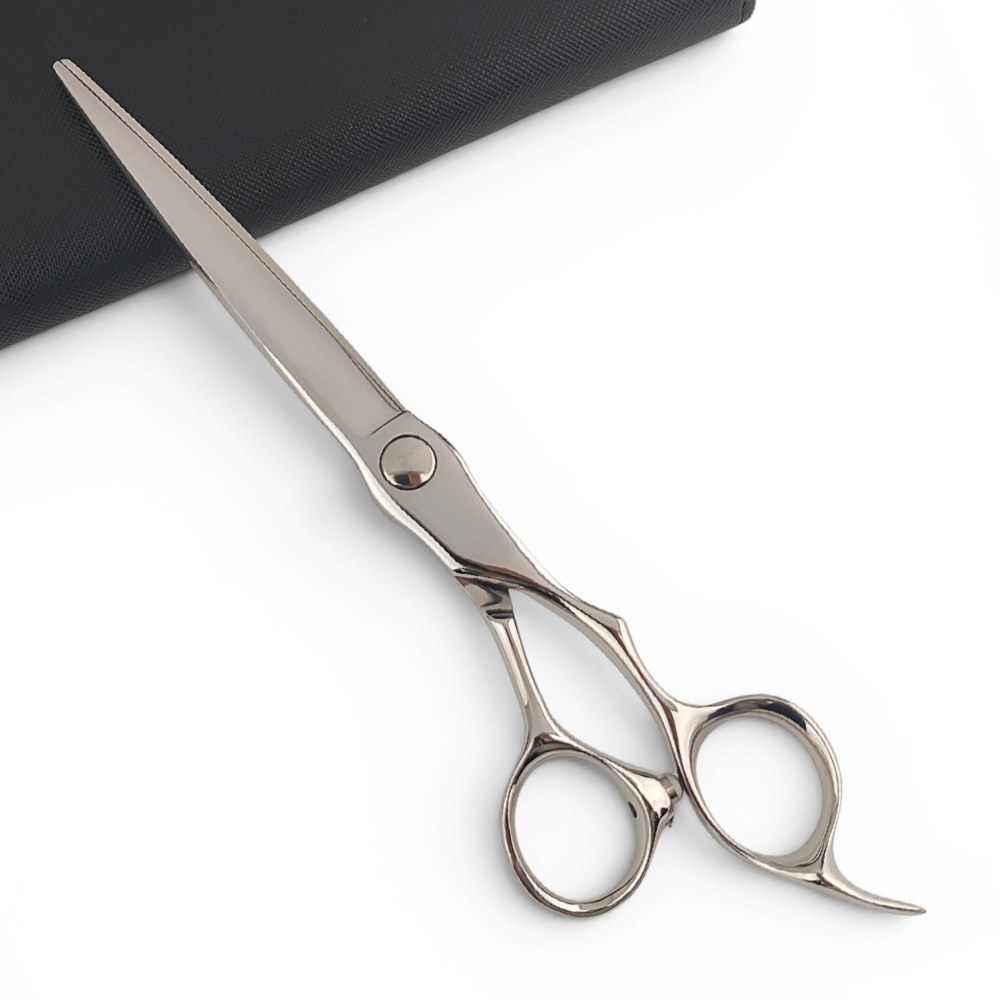
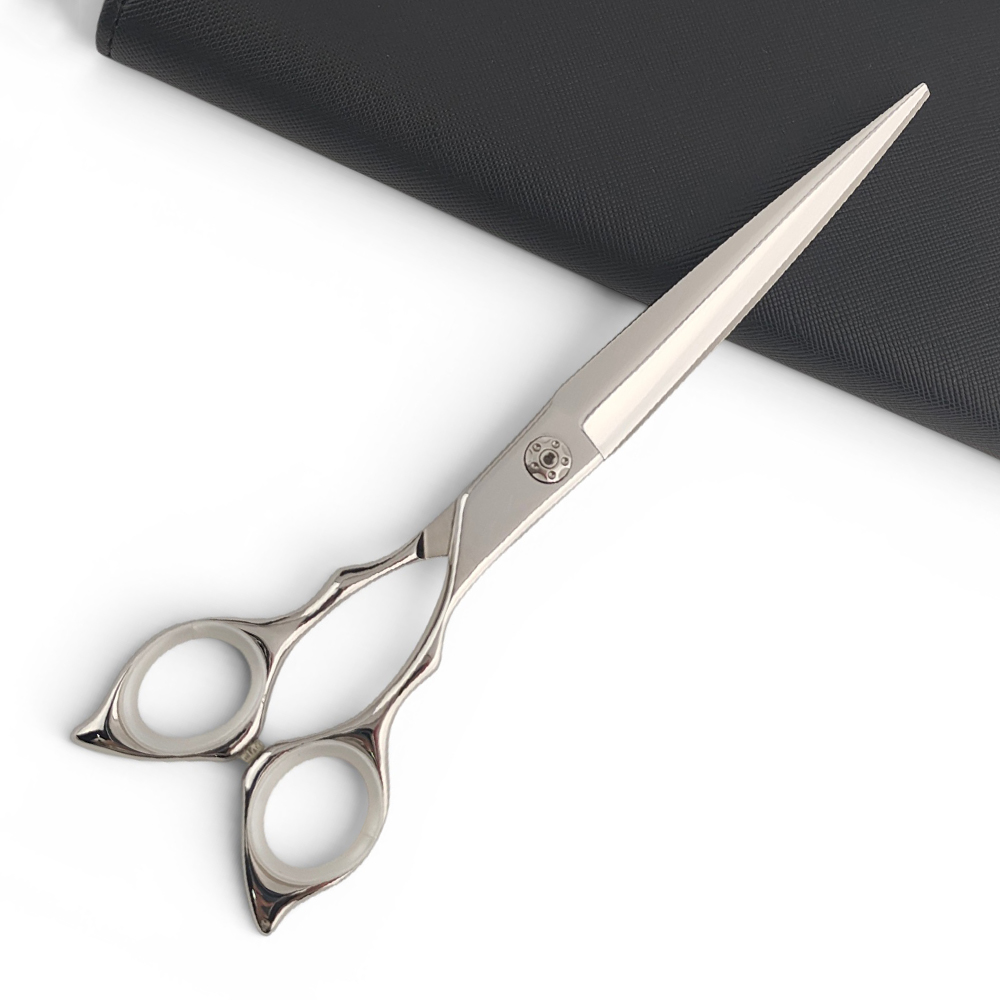
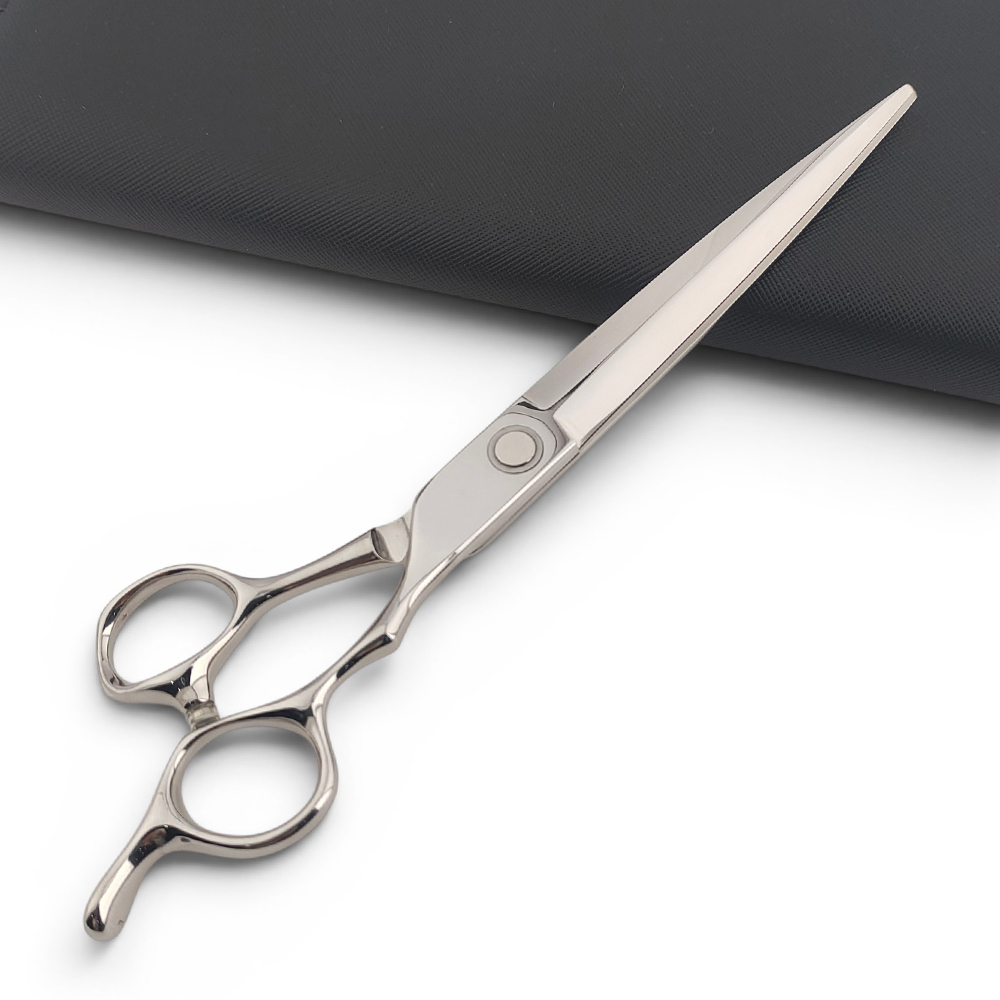
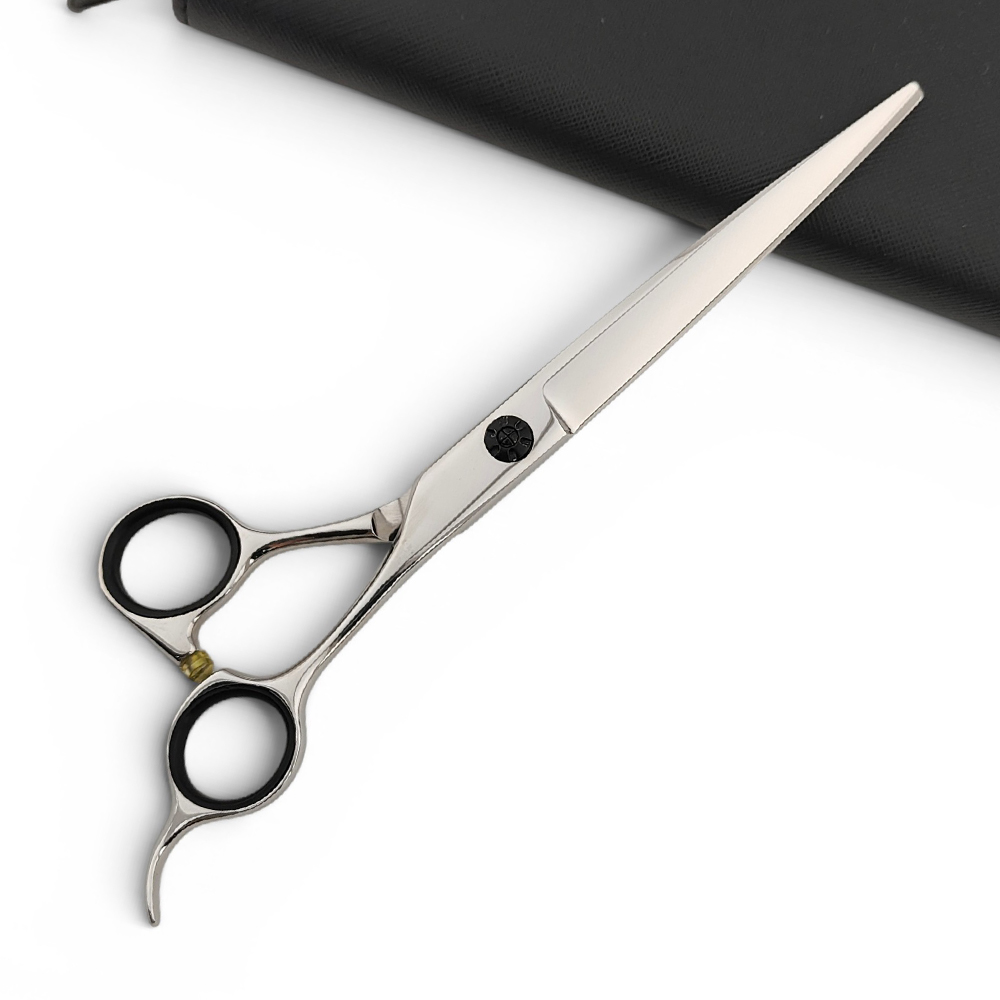
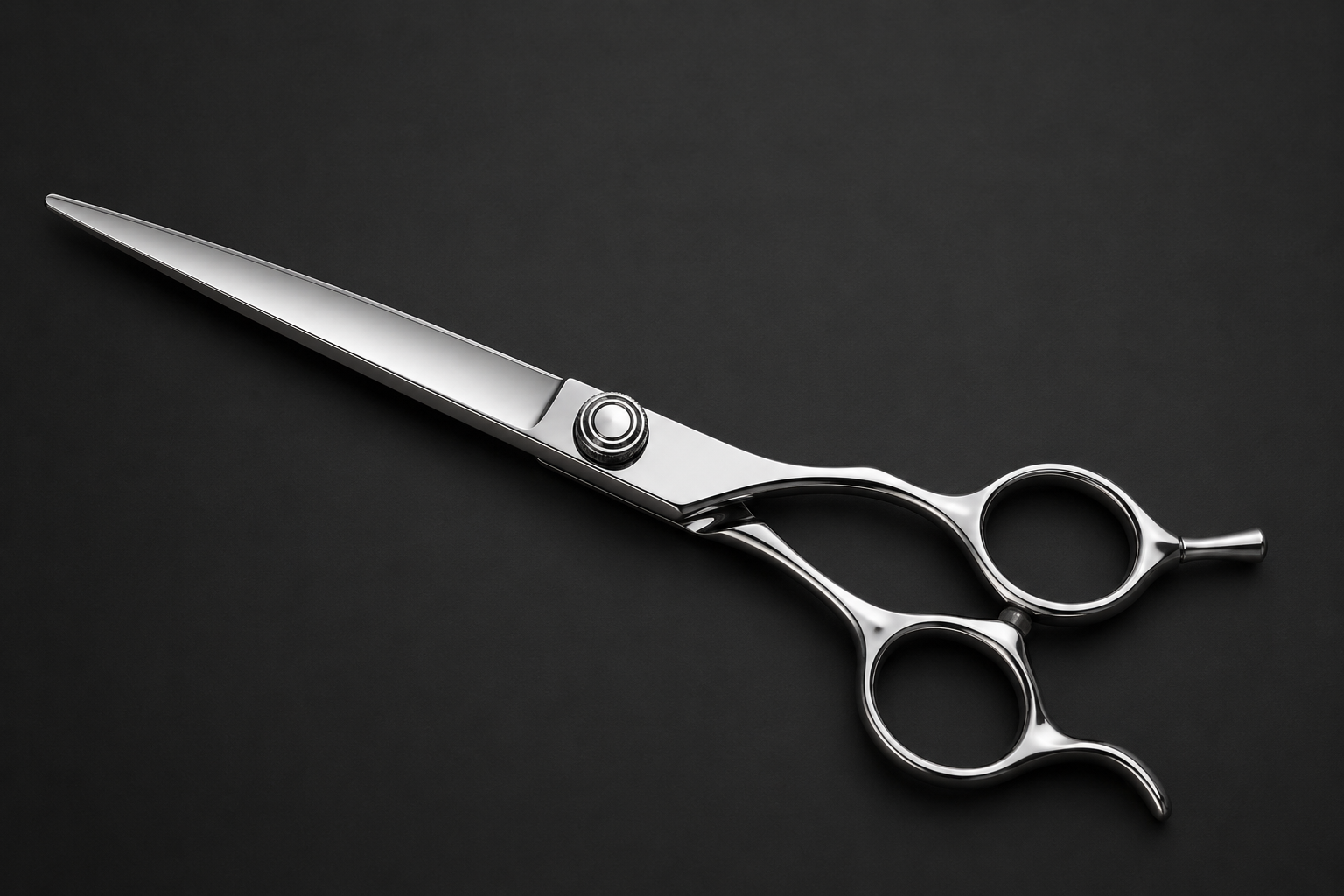
7-Inch Barber Shears — Built for Fades & Scissor-Over-Comb Control

7-inch barber shears from MATSUOPRO provide working barbers with the blade length demanded by scissor-over-comb fading -VG10 and 440C steel lines, factory-direct pricing, and OEM/private-label programs from 50 pieces.
7″ / 7.5″ Blade lengths in stock
VG10 / 440C Steel lines available
56–62 HRC range (by steel grade)
50 pcs MOQ, custom OEM
3 days Sample lead time
40+ Countries shipped to
Request Wholesale Quote
7-inch barber shears macro blade view
Precision scissor-over-comb control detail
MATSUOPRO VG10 steel material closeup
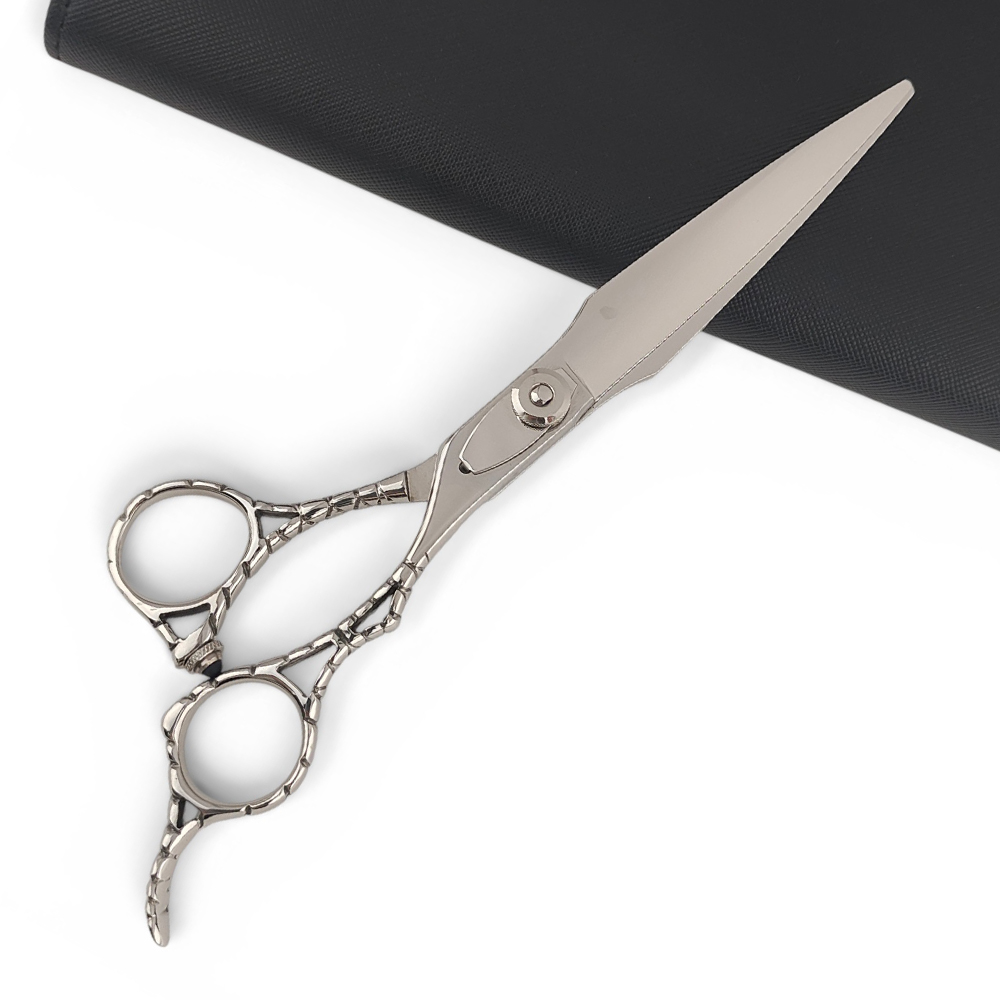
440C barber shears handle ergonomics
Factory direct pricing manufacturing process
OEM and private-label programs capability

The Long-Blade Control Problem Every Fade-Cutting Barber Runs Into

Scissor-over-comb fading demands a blade long enough to pass an entire comb without running out of reach at the end of the stroke.

A longer scissor will tackle a larger section of hair at a time, while a shorter scissor necessitates a smaller, more deliberate, and more time-consuming process. This length-based difference is why barber shears are longer than standard salon shears used for cutting hair of all types. Scissor-over-comb is a foundational technique taught at barbering and cosmetology programs across the US, UK, Canada, and Australia – hence, length at the source level become a key differentiator.

“Reach is the whole problem with general salon shears here; a working barber transitioning from a 5.5- or 6-inch salon shear for fade work will immediately run into limitations.”

At MATSUOPRO, we produce the 7- and 7.5-inch length lines specifically to meet the need for reach in this area, utilizing VG10 and 440C steel, along with a Japanese-style convex edge that glides over the hair rather than catching or pulling during repetitive scissor-over-comb motions.

For any salon chain, distributor, or private-label brand that sources barber shears in bulk, the real questions go beyond steel grade alone: which blade length fits which technique, what a factory-direct order actually costs per unit above 50 pieces, and whether the manufacturer backs its quality claims with verifiable detail. This page answers all three.

Specifications & Sourcing Context
7.0″ & 7.5″ Optimal length lines produced for scissor-over-comb fading reach.
VG10 / 440C Steel utilized with Japanese-style convex edge processing.
> 50 Pieces Bulk sourcing threshold for verifiable factory-direct cost evaluation.

There’s another issue contributing to confusion at this level: the retail pricing of 7-inch barber shears is highly variable, bordering on chaotic.

For bulk purchasers seeking a transparent understanding of their supply chain costs, the ambiguity of retail pricing obfuscates any real evaluation of potential factory-direct deals, so this page breaks down that cost structure explicitly based on the factors that influence it, not by a brand name.

“A near-identical 7-inch, convex-edge, Japanese steel shear is commonly listed online for anywhere from $103 to over $1,000, without clear explanations as to the actual source of the disparity (i.e., steel grade, manufacturing complexity, brand markup vs. functional value).”

If we speak with salon owners and distributors about what will encourage a second purchase, it comes down to durability and longevity every time – even more than with other types of shears.

The reason is the nature of fades, barber-style cutting and “ scissor-over-comb” – techniques that create a blade-to-blade opening and closing action for many, many times per haircut compared to other methods of hair cutting. Professional barber working in various industry online forums report replacing their cheap “pro-level” barber shears with something new about once per year and speak about buying numerous brands and brands over ten years of barbering searching for a pair of shears that will hold up to repeated daily use.

That’s why in the following section, we’ll explore the specific heat treating and hand honing procedures we use. It’s the physical steps we take that separate a working tool that lasts and one that dies.
Evaluate factory-direct costs explicitly based on the factors that influence durability, not brand markup.
Wholesale Inquiry

MATSUOPRO 7-Inch Barber Shear Line — Models & Specs

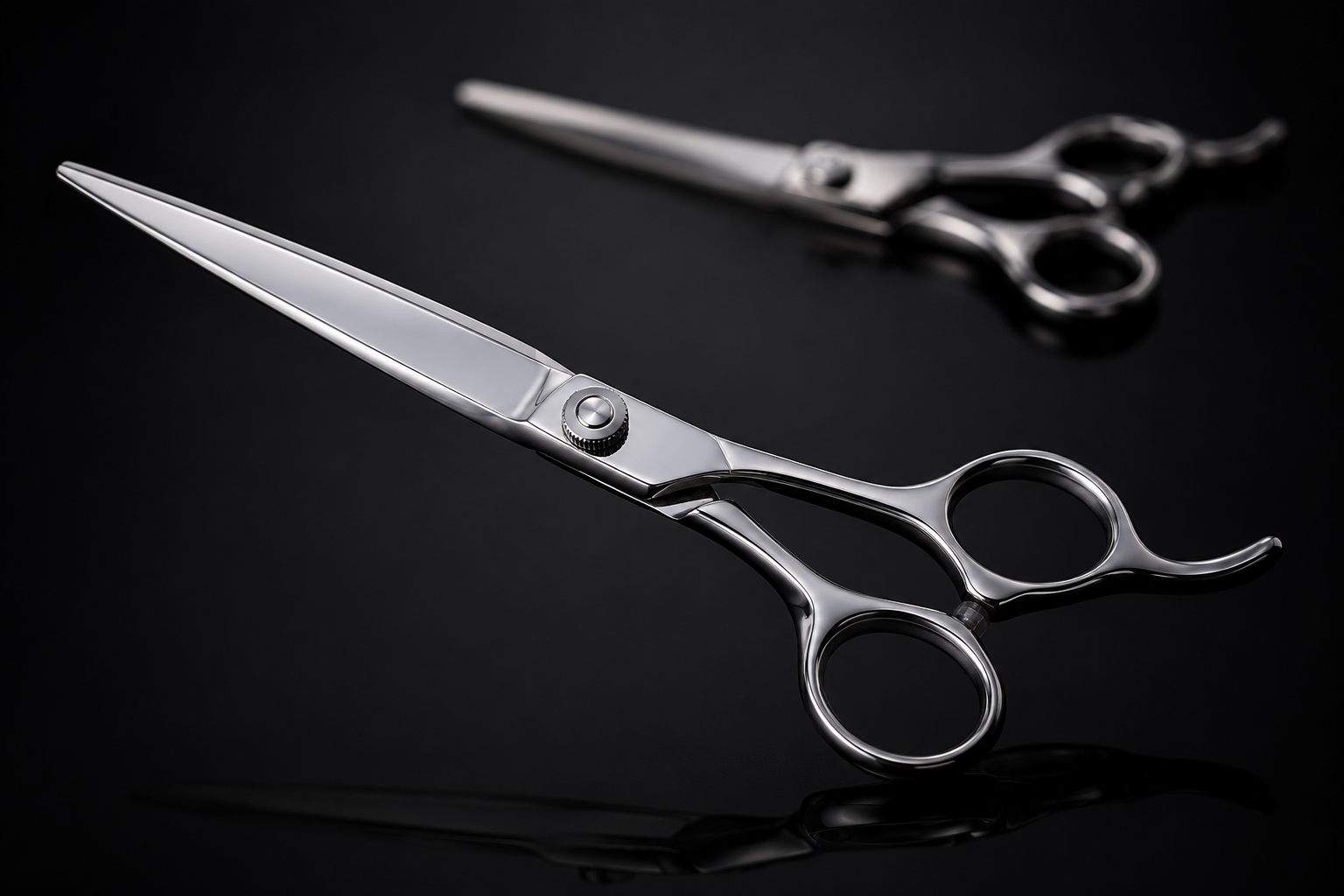
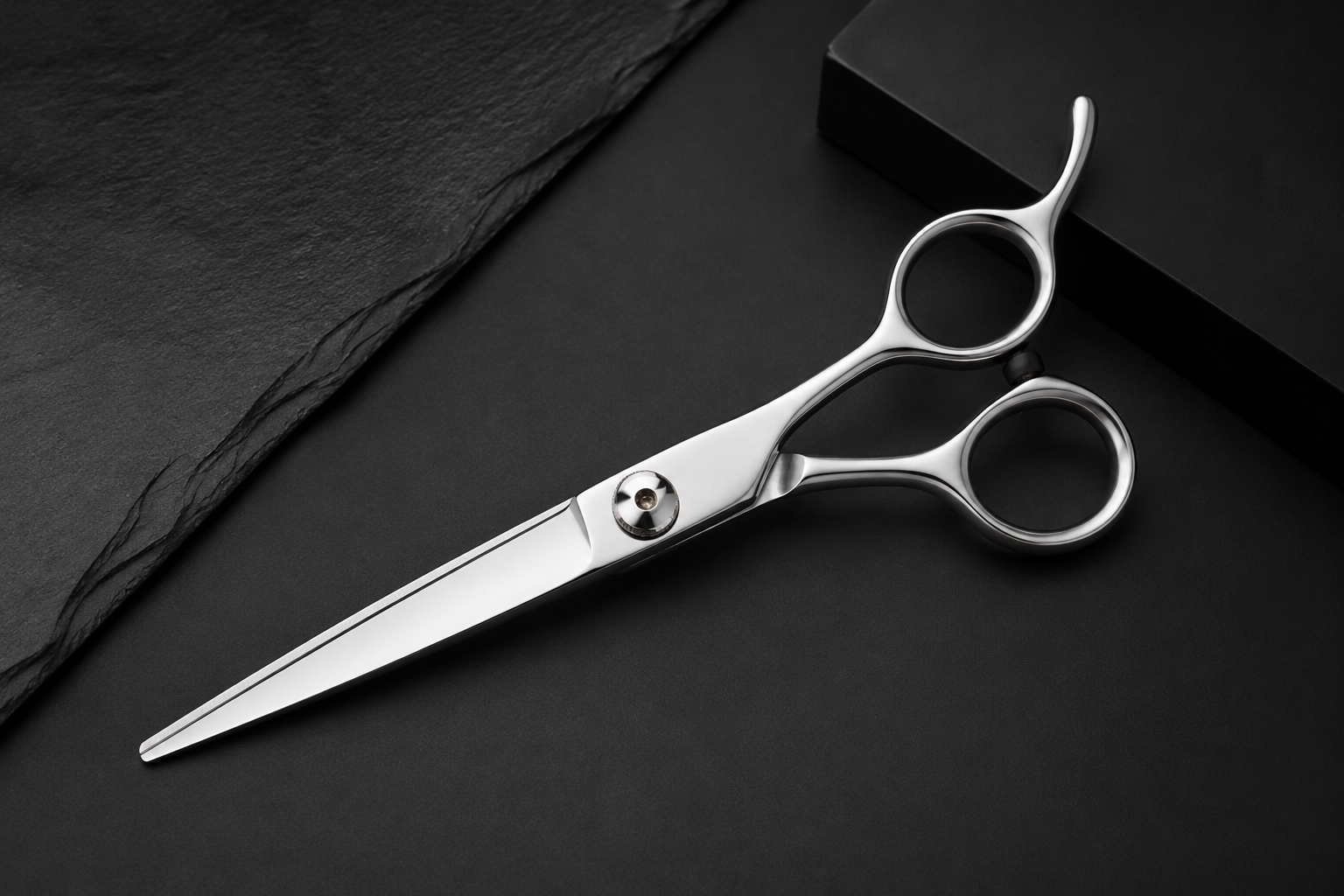
Our 7-inch barber shears are available in two grades of steel designed for both price points and performance characteristics. For barbers who require a full stroke through longer sections of hair, we offer our 7.5-inch version. All of our shears are crafted with the same features and construction methods we employ for our full catalog: a hand-honed edge with Japanese convex geometry, CNC precision grinding of the blade, and an ergonomic offset handle that MATSUOPRO uses on everything. This isn’t some stripped-down barber series, it’s our premium product available in this size.
Whether your purchase is our 440C stainless steel value tier or our top-quality VG10 Japanese steel shear, you’ll find that both pairs include a Japanese hand-honed convex edge and the exact same basic configuration: a ball-bearing pivot screw to allow the shears to operate with incredible smoothness throughout open and close cycles for scissor over comb cutting, a removable finger rest for pinky finger support when necessary, and CNC precision grinding on every blade. Both mirror polish (salon quality for marketing your brand) and matte finish (for the professional tool used every day) versions are available upon request. Our texturizing shears and thinners are built on this same design.

From steel bar to finished blade

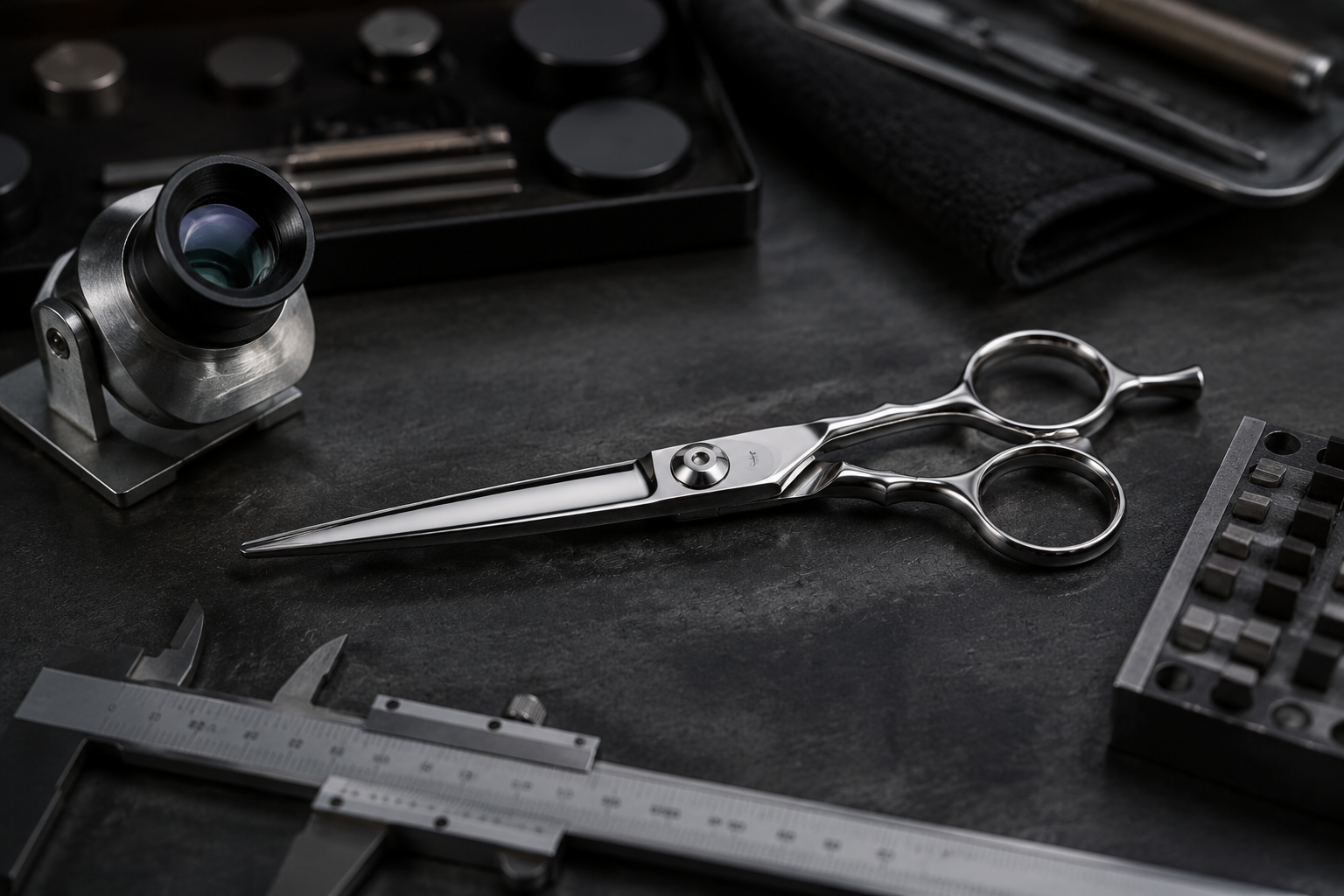
Like every shear we produce, each 7-inch pair is meticulously manufactured following over 80 individual steps of production including: Steel inspection and preparation; precision CNC cutting and shaping of all blade surfaces to 0.01 mm tolerance; vacuum hardening at elevated temperature, followed by sub-zero treatment to relieve stresses and lock in hardness; specialized scissor-grinding of the hollow ride area to produce a tension-free, clean cutting edge; hand honing of the convex cutting edge by a dedicated craftsperson; high-speed polishing; logo laser engraving; and, final hand assembly and individual testing for optimal balance and smooth tension across 50 pairs. Nothing is outsourced and the two separate Guangzhou and Zhangjiagang factories handle the entire process.
SKU family MP-SC-061 / 062 / 066

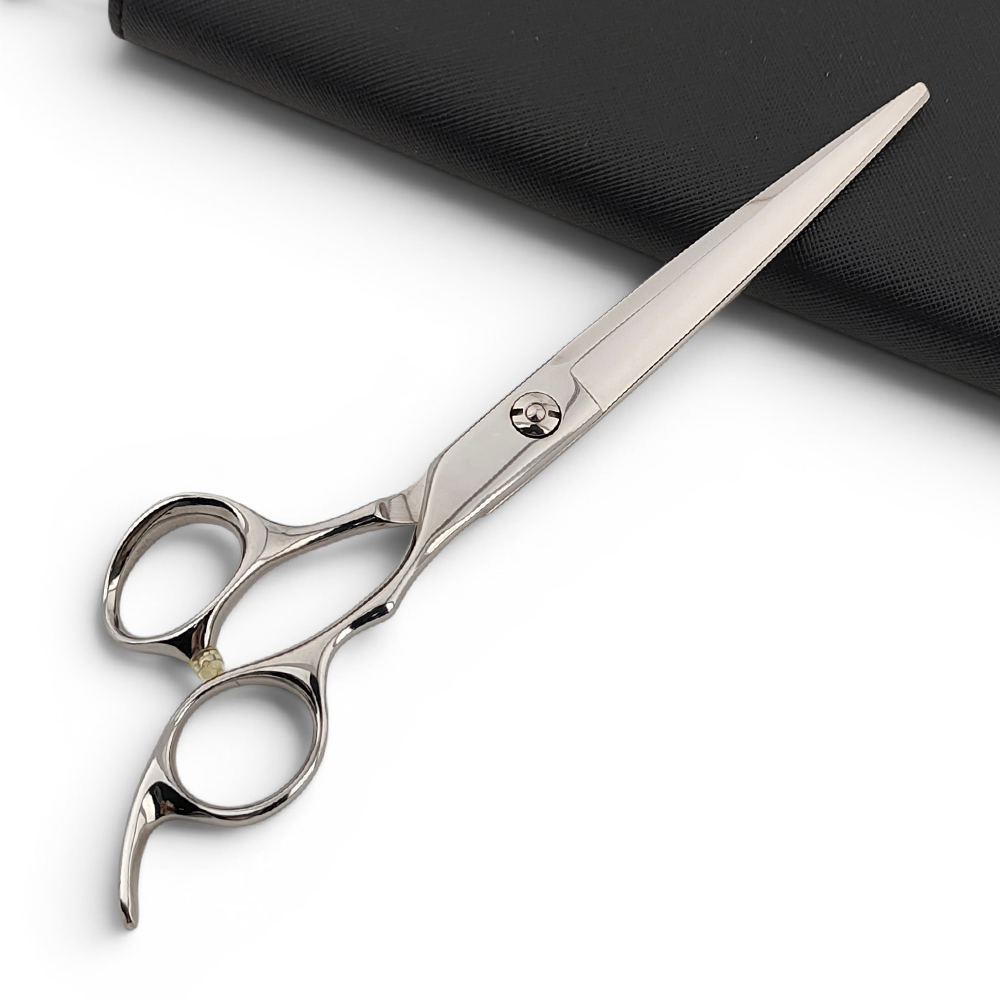
MATSUOPRO 7″ VG10 Barber Shear

MATSUOPRO 7″ VG10 Barber Shear
  • Steel: VG10 Japanese Premium Steel (Co-V-Mo alloy)
  • Hardness: HRC 60–62, vacuum heat-treated + cryogenically tempered
  • Edge: hand-honed Japanese convex edge, mirror or matte finish
  • Handle: offset ergonomic, adjustable tension screw
MOQ 50 pcs · Sample 3 days · OEM logo available
SKU family MP-SC-064 / 065 / 068 / 069 / 070

MATSUOPRO 7″ 440C Barber Shear

MATSUOPRO 7″ 440C Barber Shear
  • Steel: China sourced HRC 56-58 (standard) or Japan sourced HRC 57-59 (optional, specify on order).
  • Edge: hand-honed Japanese convex edge, matte polish
  • Handle: offset ergonomic, adjustable tension screw
  • Best-fit: value-tier professional line, private-label starter programs
MOQ 50 pcs · Sample 3 days · OEM logo available
SKU MP-SC-067

MATSUOPRO 7.5″ 440C Barber Shear

MATSUOPRO 7.5″ 440C Barber Shear
  • Steel: 440C stainless, HRC per sourcing option above
  • Edge: hand-honed Japanese convex edge
  • Best-fit: barbers with larger hands or high-volume thick-hair clientele
  • Handle: offset ergonomic, adjustable tension screw
MOQ 50 pcs · Sample 3 days · OEM logo available
If you’re looking for the flagship VG10, ATS-314 Cobalt or Damascus core steel hair shears for your professional use please visit our VG10 hair shears and Japanese steel barber shears pages to see the details.
You’ll find this listed several different ways across catalogs – as 7 inch barber scissors, 7 inch hair cutting scissors, or just professional hair shears – but they’re constructed exactly the same way. Stretch the same build for extended reach and you get the 7.5 inch barber shears variant. For those of you putting together a private-label catalog, we can carry this naming consistency across your listings so your search-facing descriptions stay aligned with how buyers actually search.
Spec 7″ VG10 7″ 440C 7.5″ 440C
Steel VG10 (Co-V-Mo) 440C stainless 440C stainless
Hardness (HRC) 60–62 56–59* 56–59*
Blade edge Convex (hamaguri) Convex (hamaguri) Convex (hamaguri)
Handle Offset, adjustable tension Offset, adjustable tension Offset, adjustable tension
Finish Mirror or matte Matte polish Matte polish
MOQ 50 pcs 50 pcs 50 pcs
*Note: 440C hardness varies by steel source. See China 440C Value Hair Scissors and Japanese 440C Hair Scissors for a detailed breakdown.
Need to compare all three lengths side by side before you commit to an RFQ?
Compare & Request Quote

Blade-Length Decision Framework: 7″ vs 7.5″ vs 8.5″ — Matched to Hair Density and Technique

Barber schools know scissor-over-comb is a length-specific technique, not one size fit all. The London School of Barbering’s NVQ2 curriculum clearly states: “long scissor blades tend to work better for this technique, as with shorter scissors your hand may get in the way of the cut” – and vice versa, where a longer blade become difficult to control when doing detailed work within tight sections. Blade length and the best-performing technique/hair-density combinations are mapped in the table below, based on industry professional consensus rather than a lab measurement.

// SPEC_MATRIX.DAT [AXIS_LOCKED]
Blade length Best-fit technique Hair density / texture Hand size / Pairing
7″ Scissor-over-comb, mid-to-large section blending Normal to thick, straight to wavy Average to large hand
Pair: 6″ thinning shear
7.5″ Large-section blending, extended reach passes Thick, coarse, or high-volume clientele Larger hand preferred
Pair: 6″ thinning shear
8.5″ Bulk reduction before detail work Very thick or dense sections Larger hand, less tip precision needed
Pair: Shorter detail shear

Why length changes control, not just reach

This is about reach, not just surface area. As one practicing barber-educator explains it when discussing technique for scissor-over-comb: “you’re able to do more with a larger blade… the smaller the scissors, the slower you work in sections, so it’s really detail work,” and that logic is why a 7 or 7.5 barber shear is perfect for fade and taper work, while the same barber keeps a shorter 5.5 or 6-inch shear close at hand for detail finishing and point cutting.

An honest word here: the convex edge that all MATSUOPRO shears come standard with isn’t always the best edge for every cutting technique – that’s the real trade-off worth knowing before you order. When the edge types are discussed among pros, everyone agrees a convex edge is a top-performer for texturizing and slide-cutting work such as scissor-over-comb. It’s not always recommended for blunt cutting, where a semi-convex or beveled edge is often easier to maintain for that style. If you’re focused primarily on precise blunt-cutting, please talk to us about your edge preferences prior to placing your order; we would much prefer to guide you toward the right specification than sell you a shear size that won’t fit your chair.

Handle fit matters as much as blade length

The longer blade makes the balance point move forward and, consequently, change the way a barber should fit his finger into the handle of this 7 or 7.5 inch shear as opposed to his 5.5 or 6 inch shear. Barber ergonomics often includes a basic fit check regardless of shear brand: your ring finger shouldn’t go past your second knuckle and your thumb should fall between the tip and the first knuckle. If it falls past either point, your handle size is too small and fatigue will become more prominent toward the end of your shift. The MATSUOPRO’s offset handle shape and its tension adjustment screw are based on the same fitting principle. On orders for OEM / Private-Label products, we can easily customize the size of the finger ring so that it’s uniform on all of your shears, not just a “one-size-fits-all.”

Onboarding a training team on scissor-over-comb technique?

Request a length-fit consultation for your team →

Trusted at Scale: 40+ Countries, OEM Partner to Leading Brands, 80+ Manufacturing Steps

SYS_01 // Scale & Integration
MATSUOPRO’s production facilities now supply over 40 countries worldwide and have experienced rapid expansion on every continent
, but our main markets are now located in North America – driven primarily by the U.S. market – followed closely by Asia, Europe and Oceania. We also have a commanding presence in both the U.S. and Russian markets as the manufacturer for some of the largest, professional hair-scissor brands on the market today and for the past decade, having served literally hundreds of brands, distributors and salons.
That vast scale of production is the result of our company’s ability to manage its own entire vertically integrated production line
-from steel production, precision CNC machining and shaping to heat treatment, polishing and final hand finishing-in our two separate, but well-integrated, factory locations: in southern China’s Guangzhou and in Zhangjiagang along the Yangtze River Delta. That integrated process includes the processing and creation of steels like 440C and VG10, which results in significantly more controlled production lead-times and consistently higher quality levels, and we don’t outsource any aspect of the production process, allowing us to maintain strict controls on the quality of every single product.
MATSUOPRO vertically integrated CNC machining facility
CAM_01: CNC_MACHINING
SPEC_RATING Baseline Metric
~1 year
is the service life working barbers commonly report for entry-tier “professional” shears before replacement — against that baseline, a properly hardened, hand-honed convex edge with regular sharpening is built to stay in service well beyond a single season.
Source: r/Barber community discussion — durability performance is Bronze-tier: qualitative field signal, not a lab-measured lifespan multiplier.
Engineering Focus
“A technique such as scissor-over-comb uses your shears with more repeated open-close cycles than almost any other in barbering; that’s why our tension screws are adjusted and the bevels hand-honed with that repeated motion in mind – not just for a single sharp test cut out of the box.”
— Senior Production Engineer, MATSUOPRO
Master craftsman inspecting scissor steel hardness and bevel quality
QC_PASS: BEVEL_INSPECTION
SYS_02 // Craft & Transparency
To continually innovate and to make certain that we’re on the cutting edge, our master craftsmen make two trips to Japan and Korea each year to visit world-class scissor makers.
There, they attend classes and workshops and meet with their peers to share techniques and knowledge of the newest manufacturing methods with them directly – it’s not simply a one-time course, but rather an ongoing cultural and educational exchange. It’s through this interaction and our close ties to the original origins of shear technology, as well as through our skilled artisans and advanced factory equipment that we can provide hand-crafted fit and finish, and a quality that compares to long-established Japanese and German shears – at a fraction of the price!
We’re up-front about origin, because the market already is:
working barbers openly recommend Chinese-made shear brands with Japanese steel origins in the forums, judging the tool on reported materials and build rather than assembly location. We hold ourselves to that same level of transparency – every steel grade, hardness range, and certification listed on this page is readily apparent, not masked behind a “premium quality” sticker that lacks numerical substance. One working barber even advised trainees on Chinese-made brand recommendations, stating, “Titan, these are Chinese shears made from real Japanese 440 steel at a minimum” – an approval based on documented composition, not assembly.
Durability is the other part of the trust equation, and the forums are brutally clear on this as well.
One example comes up again and again: “Roc-it-Dog 7 shears by Centrix…like $150 and will last about a year. After that, throw them out” – the mark of a disposable-tier shear with a year-long shelf life for many professional users. This is the exact gap a properly hardened, hand-honed convex edge is designed to close – not with clever marketing, but with heat treatment and the finishing steps discussed in the previous section.
Want production photos or a video walkthrough of our line before you commit?
Request a factory video call →

Certifications & Quality Control — BSCI · SGS · ISO 9001

The most frequently reported buying mistake? Ignoring quality standards and certifications altogether – often because an array of badges looks imposing but can be difficult to verify from afar. This is precisely the kind of risk we want to eliminate for a distributor placing a first-time order unseen: providing more than just badges, but clarifying what each one actually signifies.
ISO 9001
Certified quality management system
BSCI
Social compliance audit
SGS
Third-party testing & inspection
National QC Center
Hardware quality inspection partnership
Each of these three certifications pertains to a distinct area, and it’s significant when a factory can distinguish between them rather than merely parade them. According to ISO’s own explanation of ISO 9001 and the American Society for Quality’s corresponding guide, ISO 9001 certifies a quality management system that is subject to independent auditing, dictating a factory’s consistency in replicating order specifications. BSCI (amfori Business Social Compliance Initiative) audits a factory’s labor practices and social compliance standards. SGS is an external verification body, and any mention of SGS auditing means an external inspector, not our in-house quality control team, has confirmed our claims.
MATSUOPRO also collaborates with a national-level tool and hardware quality inspection center and can supply independent Rockwell hardness and material-composition reports upon request, giving buyers concrete data to confirm HRC values before committing to a large order, not after.
QC Automated Tracking ● LIVE
Quality control is done in 5 stages on every single 7 inch shear that leaves the factory floor:
  • Hardness Rockwell C (HRC) testing of the finished blade
  • Sharpness test against a cutting standard for professional scissors
  • Action testing for smooth operation and cutting feel
  • 100% inspection for cosmetic defects of the finish
  • Dimensional testing with precision gauges against the designed specification
It isn’t an average from a sample batch, it’s a line item on your production report for each and every one of 50 units ordered.
SYSTEM: 100% FULL-INSPECTION

What to ask any barber-shear supplier for before you order

Regardless of where you buy – be sure to get the name of the certifying body (don’t accept “ISO certified” as the sole evidence of quality) and confirm hardness ratings by checking whether that specification comes from a third-party independent test lab or is just an internal company boast. Get a sample before placing an order and before committing to the Minimum Order Quantity. Any supplier that wavers on any of those 3 criteria is sending you a signal.
For a private label barber shears brand ready to launch under their own logo and name, having those kinds of certifications on file and knowing you can get that kind of documentation on demand is more than just a point of confidence-it is the expected norm of your B2B customers, whether it be your local salon chain or national retail customer. Having the name of an actual third party lab (like SGS or ISO 9001) and a certificate number available in your records beats out a well-placed logo on a box or a generic ‘factory certified’ sticker any day of the week.
Want copies of our current certificates and third-party hardness reports before you order?
Request compliance documentation →

Procurement Guide: Pricing, MOQ, Lead Time, and OEM Customization

The MOQ on this professional barber shears product line is 50 units per style, a low MOQ that’s perfectly suited for any private label business getting started with the flexibility to run multiple SKUs or a new product line in the barber supplies category without needing to fill a full container. Our lead times for samples on these current models is 3 days and 60 days from a confirmed order to the factory floor for a full production run. Custom engraving of your logo on any SKU within this barber scissors product line is available, and a customized package, including branded leather shear cases or attractive presentation boxes can also be incorporated within the same lead time. This isn’t a sticker job on generic wholesale barber shears, it’s a genuine OEM private label program that offers full customization capabilities: you can choose the exact steel grade, the handle finish, and even the ergonomic handle offset diameter you desire, along with your own custom branding.

Factor MATSUOPRO (factory-direct) Typical retail/D2C brand
MOQ 50 pcs Single-unit retail (no wholesale tier disclosed)
Sample lead time 3 days Not applicable (retail stock only)
Bulk production lead time 60 days Not disclosed
OEM/private label Logo engraving + custom packaging, same run Rarely offered; when offered, usually opaque on pricing/MOQ
Certification detail ISO 9001 / BSCI / SGS + third-party hardness reports on request Certification badges typically shown without underlying report access

What actually drives your landed cost

The 4 factors that most influence the quotation for these shears, more than the actual length of the blade, are: The type of steel used in the blade ( VG10 will be higher cost than 440C), The volume of your order, The complexity of your customized packaging, The shipping method utilized ( EXW/FOB/CIF/DDP ). Request your quotation, clearly specifying your required volume and steel grade, and you’ll receive a clear itemized quote breaking down the costs by each of these factors instead of an ambiguous all-in price.

Payment and service are as transparent across three stages. Before you order: free consultation on steel, blade type and sizing for your market, 3-day samples in existing styles (new designs sketch to CAD prototype) and graduated pricing without hidden minimums outside the 50-piece MOQ. During production: one point of contact throughout with your account manager, and production updates plus pre-shipment QC photos/video before we send. After you receive your order: manufacturing defect warranty, ongoing spare part supply (tension screws, finger rings, silencers), and optional professional sharpening/refurbishment service. Shipping is quoted on EXW, FOB, CIF or DDP basis to whatever degree of logistics management you require from us, and we offer dropshipping for distributors who wish to operate without stocking inventory.

Here’s the honest version: it’s not always about replacing them. Barbers discussing shears on forums will invariably comment that an “old” or “dull” pair is often more a matter of sharpening and tension adjustment than one of material composition, and the difference can be dramatic and, when handled by someone with know-how, it is sometimes near like-new performance from a worn-in tool that one is tempting to trash. Which is why our after-sale service not only includes warranty service but the offer of professional sharpening and refurbishment as well; that MATSUOPRO shear you own is designed for durability through multiple sharpening cycles, not disposal after the first wear.

Production & Sourcing Tools

Tool // 01

Blade Fit Quiz

Determine the optimal blade length and offset ergonomics for your specific cutting style and hand size.

Launch Quiz
Tool // 02

Bulk RFQ Configurator

Build custom order specifications including steel grade, handle offset, and OEM private-label branding.

Configure Order
Tool // 03

Steel Comparison Matrix

Compare VG10, 440C, and other premium steel variants to match your performance and price-point targets.

Compare Steels

Frequently Asked Questions

What shears do professional barbers actually use for fades?

Most working barbers land in the 6.5-7.5 inch range for fading and tapers (the scissors used for scissor-over-comb blending) combined with a smaller 5.5-6 inch scissor for detail point-cutting. MATSUOPRO’s 7-inch line, and the corresponding sibling steel-grade pages, are structured around that basic pairing.

Does the length of a barber shear actually matter for the cut, or is it personal preference?

They’re both important but for different things: length has to do with mechanics, specifically with how much ground a blade cover per swipe; longer shears do a better job for scissor-over-comb blends, while shorter shears necessitate smaller movements better for very tight detail cuts close to the hairline and ear.

Is a 7-inch shear too big for detail work?

In some instances, yeah-particularly for super tight detail sections where a 7″ blade isn’t optimized to do what’s being asked. That’s precisely the sort of cutting that’s better served by the shorter, finer 5.5-6″ blades, leaving the 7″ for the broader, more expansive blends and scissor work it was designed to excel at.

How much do professional-grade barber shears typically cost, and why is factory-direct pricing different?

Seven-inch professional barber shears can often sell for as much as $100-900+ from consumer retail sources where you’re paying for all the layers of markup (distribution, branding, retail margins, etc.). If you’re looking at a 50-piece factory direct order at the MOQ level, you’re paying for the raw materials and labor – and quality control – without any retail markup at all.

How long do professional barber shears actually last?

Common forum discussions among active barbers refer to first-tier “professional” shears failing within roughly one year of consistent daily use. Service life varies, of course, depending on the steel used, heat treating process, and whether maintenance involves hand-honing the convex edge on a correctly heat-treated steel plus regular sharpening. A hand-honed convex on well heat-treated steel can last considerably longer than those cheap scissors that die within 12 months.

Can MATSUOPRO produce shears under our own private-label brand?

Yes, from the same 50-piece minimum: steel, handle, engraving, and packaging are all yours to specify.

Do Japanese steel shears have to be made in Japan?

No – where the steel come from and where it’s assembled are distinct issues in the market and are often conflated to mislead the consumer. It’s actually the disclosed steel grade, its HRC, and how precisely the factory control heat treatment, that determines a shear’s overall quality and performance – regardless of where it’s assembled.

What’s the actual difference between the VG10 and 440C 7-inch lines?

HRC and price point. A VG10 typically runs 60-62 HRC and can hold its edge between sharpenings significantly longer than 440C, which can range from 56-59 HRC (whether sourced in Japan or China). Both use our hand-honed convex edge and offset handle design, but 440C offers a more accessible starting point for a first batch of private-label tests or an order for a smaller chain, with room to scale to VG10.

Can you supply left-handed 7-inch barber shears?

Yes, on request for both OEM and bulk orders. Genuine left-handed shears require mirroring not just in the blade, but in the screw structure as well-not just swapping labels on a right-handed pair. This needs to be built into the production order from the RFQ stage.