Get in Touch with Mackayhairscissors Company
We use submitted details to respond to your quote request. Read our Privacy Policy.

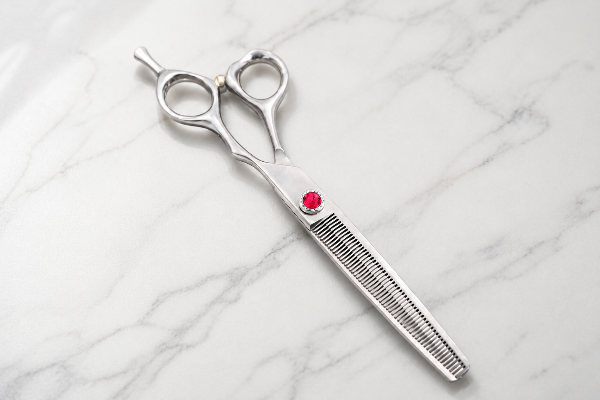
Build a professional thinning and texturizing shear range around a defined cut result, an approved sample, and a written release plan. MATSUOPRO offers confirmed 16- and 30-tooth human-hair starting models; 40-tooth+ human-hair blending configurations require factory confirmation and sample approval.
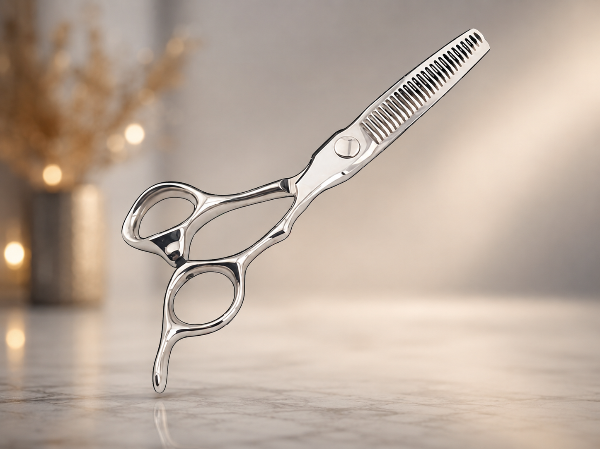
Thinning, blending, and texturizing shears often carry overlapping names, while the working result depends on more than the label. Tooth shape and spacing, cutting angle, blade geometry, tension, handle fit, technique, and target hair all affect the result and feel.
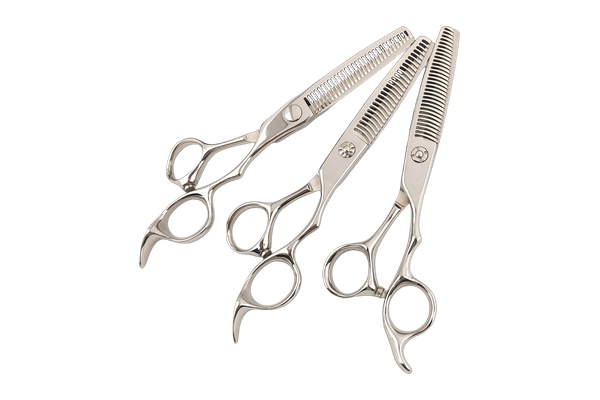
A buyer comparing 16- and 30-tooth shears with model-dependent 58–62 HRC claims still can’t infer the right result from those labels alone. MATSUOPRO connects CNC geometry, stated hardness, hand finishing, and user approval, so the final configuration can’t be approved from a spreadsheet alone.
In fact, the Hairdressing Professional occupational standard requires examination of hair type, sample cutting, and identification of an appropriate tool for weight, angles, balance, growth patterns, and length. This is why a capable supply chain should close with a test protocol rather than a universal “best tooth count” verdict.
Texas rules classify metal shears and scissors as multi-use implements, require visible debris removal before disinfection, and warn that chemicals may affect product materials over time. Send the disinfectant name, concentration, contact method, and rinse/dry routine before approving a finish.
A peer-reviewed scoping review noted wrist posture and high hand loads in hairdressing and identified tool design as one factor studied. We use this research to justify trial-fit and neutral-position checks, not to suggest that one handle configuration prevents pain.
Use this guide to move from a specific use case to the closest verified product sample. Treat each destination as a family-level route for volume purchasing, not a claim that every item in the line produces an identical result.
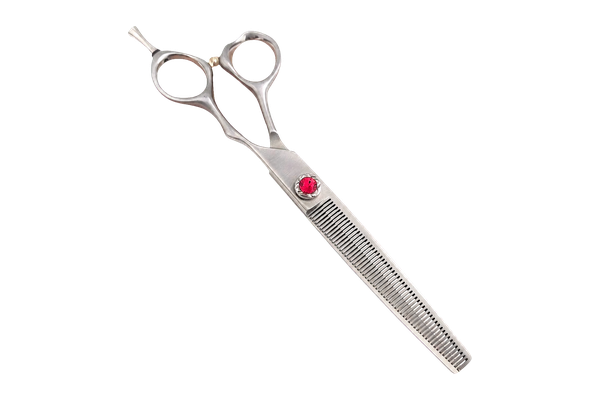
A stylist or product developer can start with confirmed 6-inch hair cutting shears in 16- or 30-tooth configurations, but a 40-tooth+ human-hair blending model still carries an unresolved configuration risk. The cards below separate documented steel, stated hardness, sample status, and open checks so buyers can move from selection to approval without substituting an unrelated model.
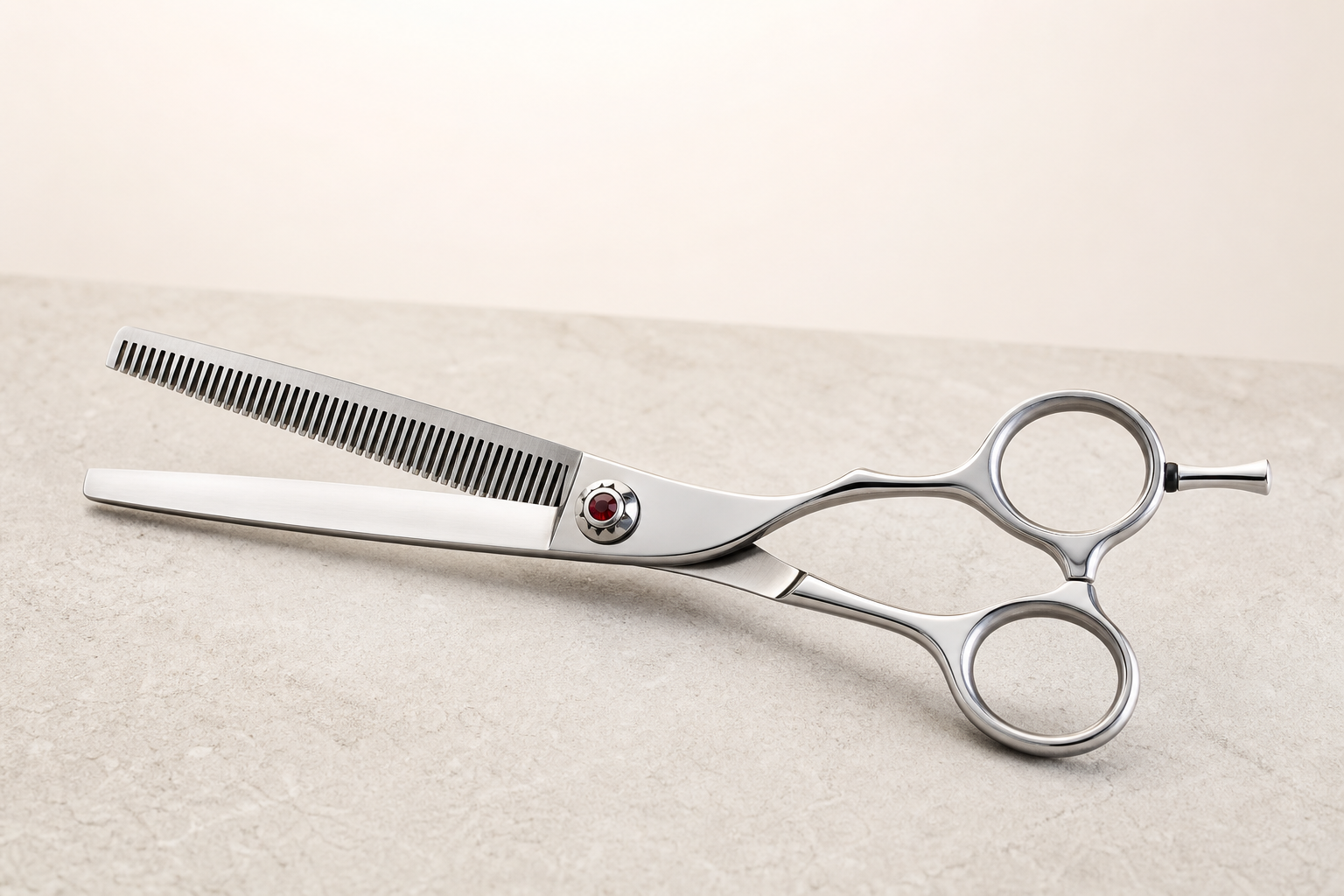
Confirmed starting points include 6-inch, 30-tooth shears in VG10 at a stated 60–62 HRC or 440C at a stated 58–60 HRC. The workbook also lists a true left-handed 30-tooth VG10 model.
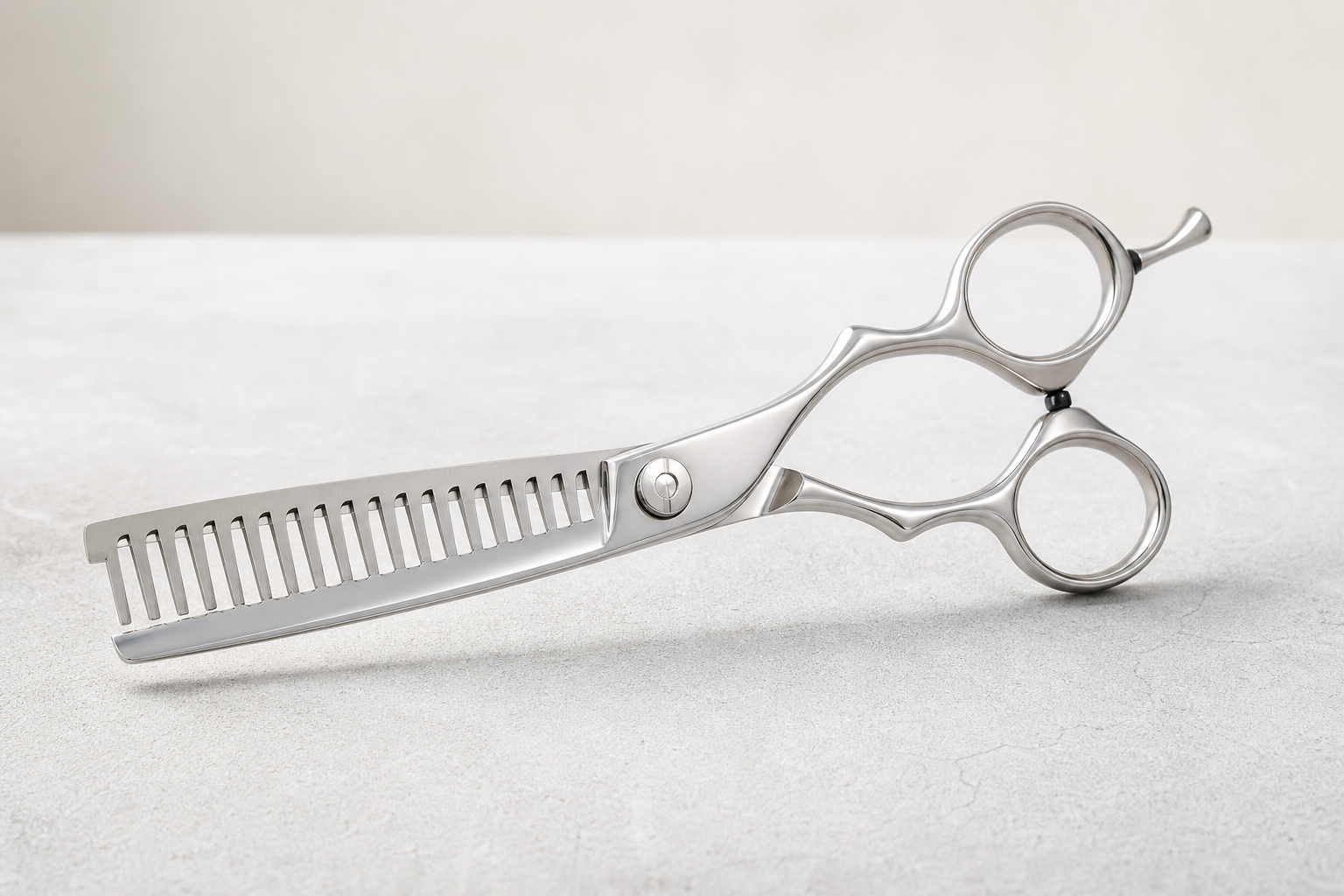
Start with a confirmed 6-inch, 16-tooth VG10 model with a stated 60–62 HRC and convex edge. Wider tooth spacing is a sample direction for visible texture; the actual cut ratio and finish must be tested.
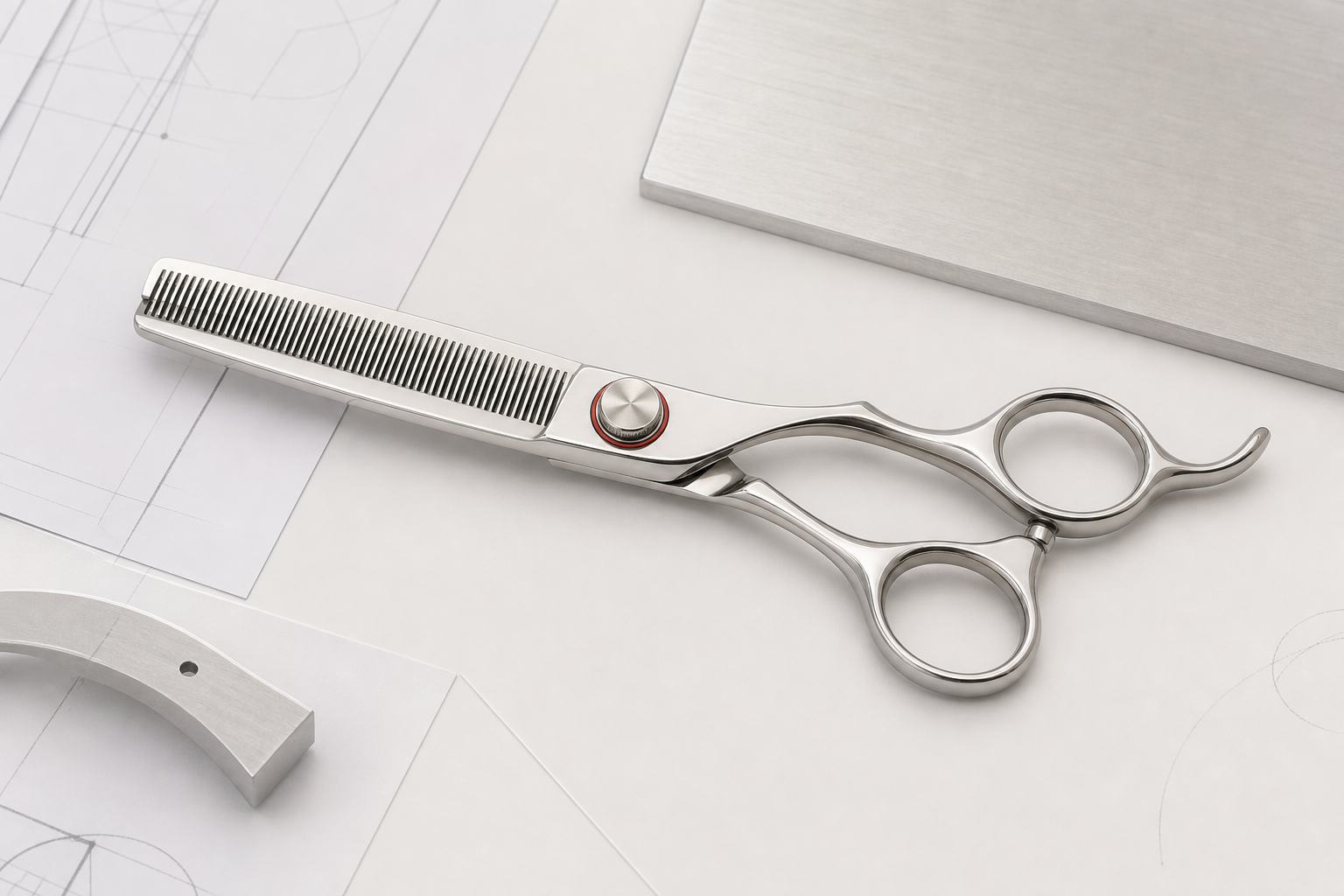
The workbook shows only a 7.5-inch pet-hair shear as a confirmed 40-tooth model, so it isn’t listed here as a salon product. MATSUOPRO must confirm a human-hair model, image, dimensions, steel, and test protocol before this range is released.
The honest version is that tooth count does not always predict softness, and a harder steel is not necessarily a better choice for every user. A common assumption links more teeth or greater hardness to a universally better result, but the sample must settle that question.
Separate the confirmed starting specification, buyer hypothesis, sample test, and release status before a model enters the range.
A peer-reviewed scissor model relates cutting force to material fracture properties, crack position, and blade geometry, although its experiments weren’t conducted on human hair.5 We adopt the general mechanics boundary and don’t claim that its measured results apply to MATSUOPRO hair thinning scissors.
Brand teams often receive consumer-facing phrases that describe an audience, technique, or result rather than a verified shear geometry. Use this phrase map to convert that language into target hair, tooth and blade requirements, test method, and an approved sample.
Steel and hardness help define a sample brief, but heat treatment, final edge, geometry, tension, and maintenance determine whether the configuration fits a brand tier. MATSUOPRO will not claim that a steel name alone guarantees sharpness, edge life, or salon performance; the trade-off must be judged on the finished sample.
Potential value‐led professional level, depending on sample and brand positioning
Possible premium professional tier, subject to finished-shear validation
Request material documentation, model feasibility, and sample terms
ASTM E18-25 notes that a Rockwell result at one location may not represent the whole part or finished product.6 Before using an HRC number in a retail claim, ask which method, surface, location, instrument verification, sample quantity, and lot the report covers.
MATSUOPRO states that its Guangzhou and Zhangjiagang operations use a vertically integrated route with 80+ steps for premium shears. Japanese steel inputs and overseas craft training don't change the product's country of manufacture.
Steel grade, heat/lot identification, incoming inspection, and requested material paperwork.
Repeatable blade and handle geometry formed from the approved drawing.
Vacuum heat treatment and cryogenic tempering under the model's process route.
Precision grinding establishes the blade relationship before hand finishing.
Craftspeople finish the Japanese-style convex edge and mirror polish by hand.
Polishing or selected PVD color is applied against the approved finish sample.
Screw, inserts, finger rest, and tension are assembled and hand-tuned.
Sharpness, action, tension, balance, finish, logo, and packaging are checked.
The important point isn't the number 80 by itself, but evidence a buyer can trace to material, process, sample, and lot. A long process list doesn't prove consistency unless the handoffs, inspection records, and acceptance criteria are defined.
Factory and management-system evidence needs precise wording. MATSUOPRO states that its manufacturing is audited to BSCI and SGS requirements, follows an ISO 9001 quality system, and can provide third-party hardness or material reports on request.
ISO explains that ISO 9001 defines requirements for a quality-management system and that certification, when chosen, is performed by an independent certification body rather than ISO.7 The common assumption that a system badge replaces product inspection is therefore kept out of this approval route.
Custom production starts from 50 pieces, while selected in-stock styles can start from one piece. These are separate purchasing routes: one stock unit isn't a one-piece custom-logo order.
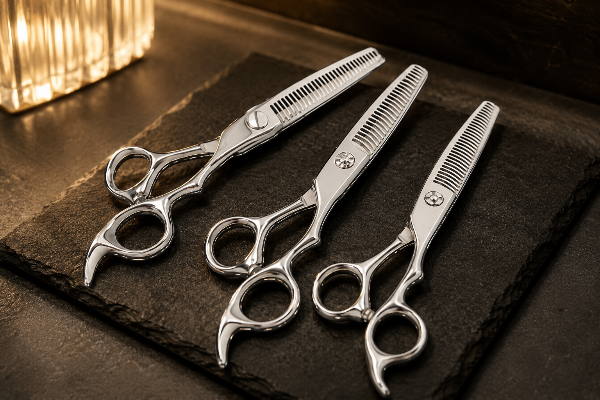
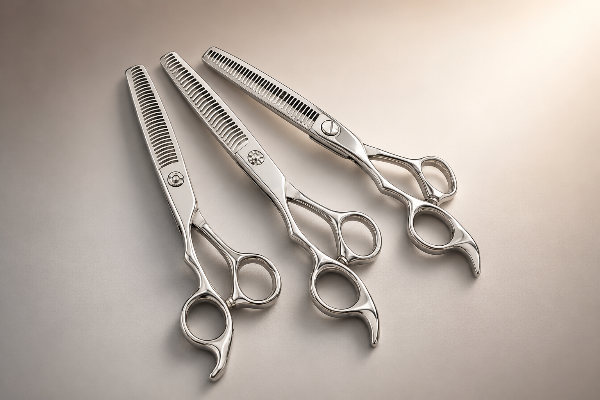
An OEM buyer launching a 50-piece, 6-inch professional thinning shear can still spread a small order across too many unapproved variables: teeth, steel, finish, logo, and packaging. MATSUOPRO therefore ties the custom program to a factory sample, CNC specification, heat-treatment target, hand-finished edge, and approved artwork, with each variation scoped separately.
A low custom minimum reduces inventory exposure, but it doesn't remove specification risk. Because salon chemicals may affect product materials over time, the private-label finish brief should include the intended cleaning and disinfection routine.3
A quotation is comparable only when each supplier prices the same scope. A VG10 offer with material evidence, custom packaging, and a defined inspection plan isn't equivalent to a line item that says only “professional quality thinning scissors.”
Poor sharpening can shorten usable life or change blade action. That is why the request for quotation should define the authorized sharpening route, tension support, spare parts, warranty limits, claims window, and replacement turnaround before launch.
| Approval area | What to inspect | Record to retain | Do not infer |
|---|---|---|---|
| Cut action | Opening/closing smoothness, tooth/blade engagement, pulling, comb-out, line marks | Named sample, test hair, method, tester, photos/video, result | A tissue cut proves real-hair performance |
| Tension | Adjustment range, screw security, consistency after repeated controlled use | Approved setting and measurement/check method | One feel check proves the lot |
| Ergonomics | Finger fit, thumb position, balance, weight, true handedness, working posture | Feedback from representative target users | One handle prevents discomfort |
| Finish | Color, polish, marks, coating coverage, logo and repeated disinfectant cycles | Color reference, approved sample, chemical/process details | Every chemical is compatible |
| Evidence | Material, hardness, audit/system documents, inspection scope and revision | Files linked to purchase order and SKU | A certificate proves every product claim |
| Packaging | Protection, insert, labels, artwork, barcode, carton, quantity | Signed artwork and pack-out sample | Artwork approval confirms shear performance |
An approved sample doesn't prove that the production lot will match. Keep the approved sample as a reference and define how the bulk lot will be sampled, inspected, accepted, or rejected.
ISO 2859-1:2026 provides an attribute-sampling framework for lot-by-lot inspection, including sample sizes, acceptance/rejection thresholds, and switching rules.8 It does not provide one universal acceptable quality level for hair shears, so buyer and supplier must write the risk-based plan into the order.
Access our technical calculation and standardization platforms designed for global OEM/ODM procurement.
Configure technical parameters including tooth count, cut percentage, and handle ergonomics for custom OEM/ODM production.
Ensure absolute precision before mass production. Access our standardized protocol for evaluating blade tension, material hardness, and cutting feel.
Streamline complex procurement data. Instantly align variable specifications and volumes into standardized B2B pricing matrices.
Market terminology overlaps, so specify the desired result and geometry instead of relying on the name. Blending usually targets softer line removal, texturizing creates more deliberate separation or movement, and thinning reduces bulk, but each result depends on teeth, blade action, technique, and hair.
The workbook confirms 16-tooth VG10 and 30-tooth VG10/440C starting configurations. Choose by target result, then approve the sample.
The current workbook lists VG10 models at a stated 60–62 HRC and 440C models at 58–60 HRC. Those numbers can help position samples, but finished geometry, heat treatment, edge, tension, maintenance, and test evidence still determine fitness for a brand tier.
Yes. The workbook lists a 6-inch, 30-tooth VG10 left-hand model; approve its blade orientation and fit before bulk production.
MATSUOPRO states a 50-piece custom minimum, a one-piece minimum for selected in-stock styles, and a 3-day sample time. Confirm the minimum per SKU/finish/package and the actual schedule in the current quotation.
Request material, hardness, quality-system, and inspection records, each linked to its method, sample, lot, and SKU. The quote should also define authorized sharpening, tension support, spare parts, warranty exclusions, claims window, replacement handling, and turnaround. A certificate or general service promise does not settle those operational details.
Yes, subject to a quoted feasibility check and an approved sample or artwork reference.
Approve cut behavior, tension, geometry, finish, logo, packaging, reports, defect definitions, sampling plan, retain sample, and disposition rules. Sample approval fixes the reference; it doesn't replace lot inspection.
Trial the fit with representative users, then test the finish through the buyer's documented cleaning and disinfection process.