Get in Touch with Mackayhairscissors Company
We use submitted details to respond to your quote request. Read our Privacy Policy.

7-inch barber shears from MATSUOPRO provide working barbers with the blade length demanded by scissor-over-comb fading -VG10 and 440C steel lines, factory-direct pricing, and OEM/private-label programs from 50 pieces.
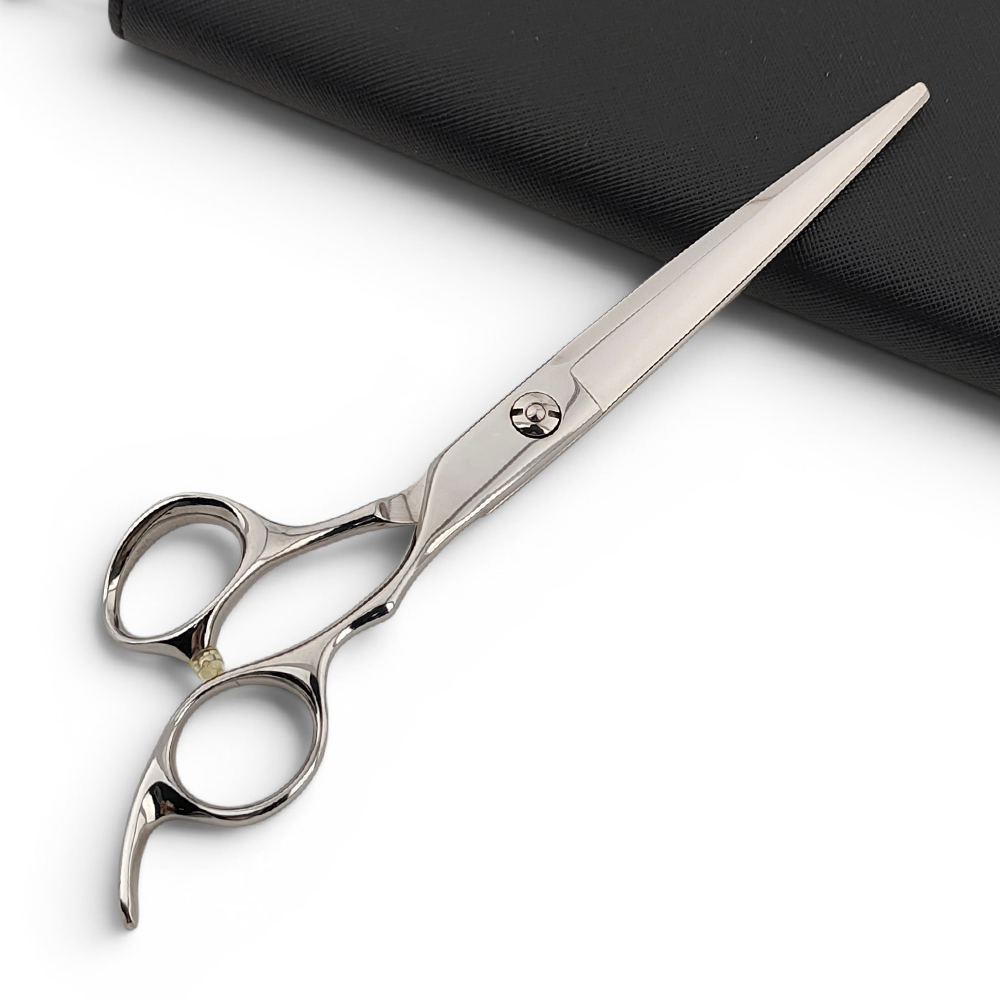
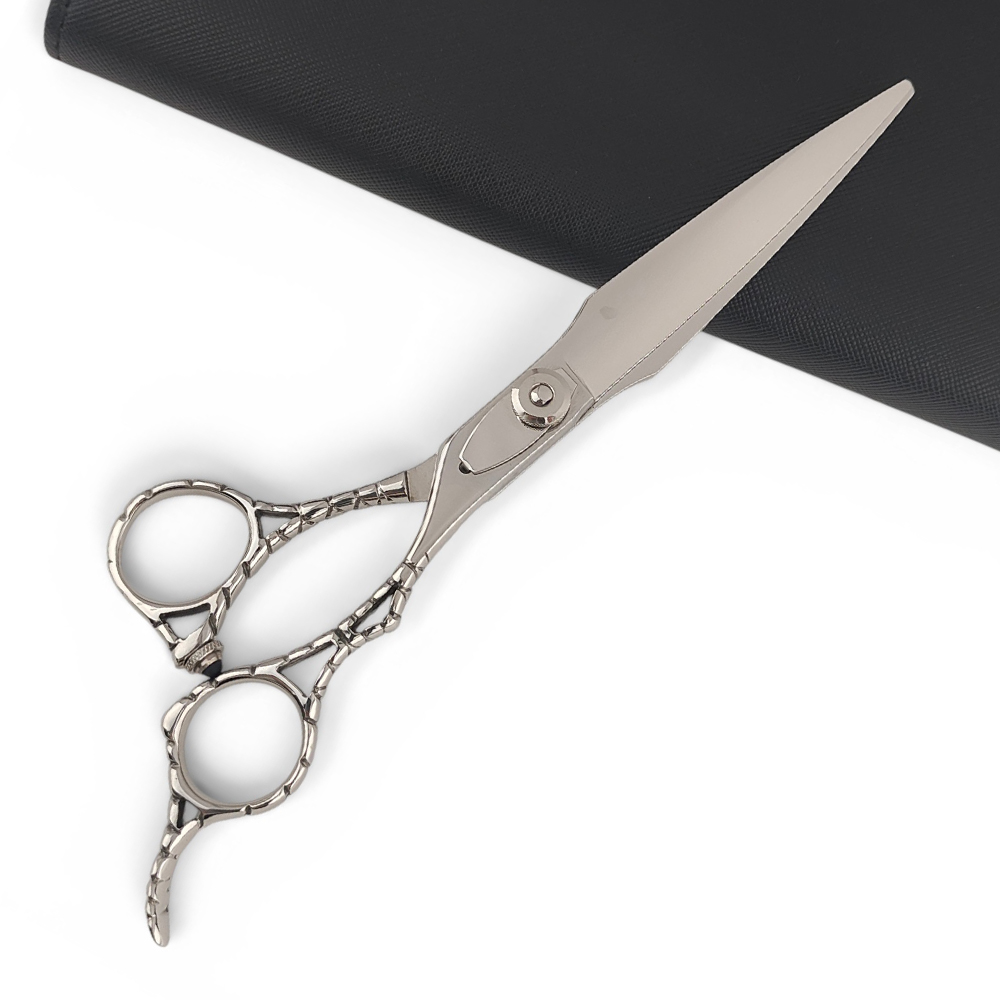
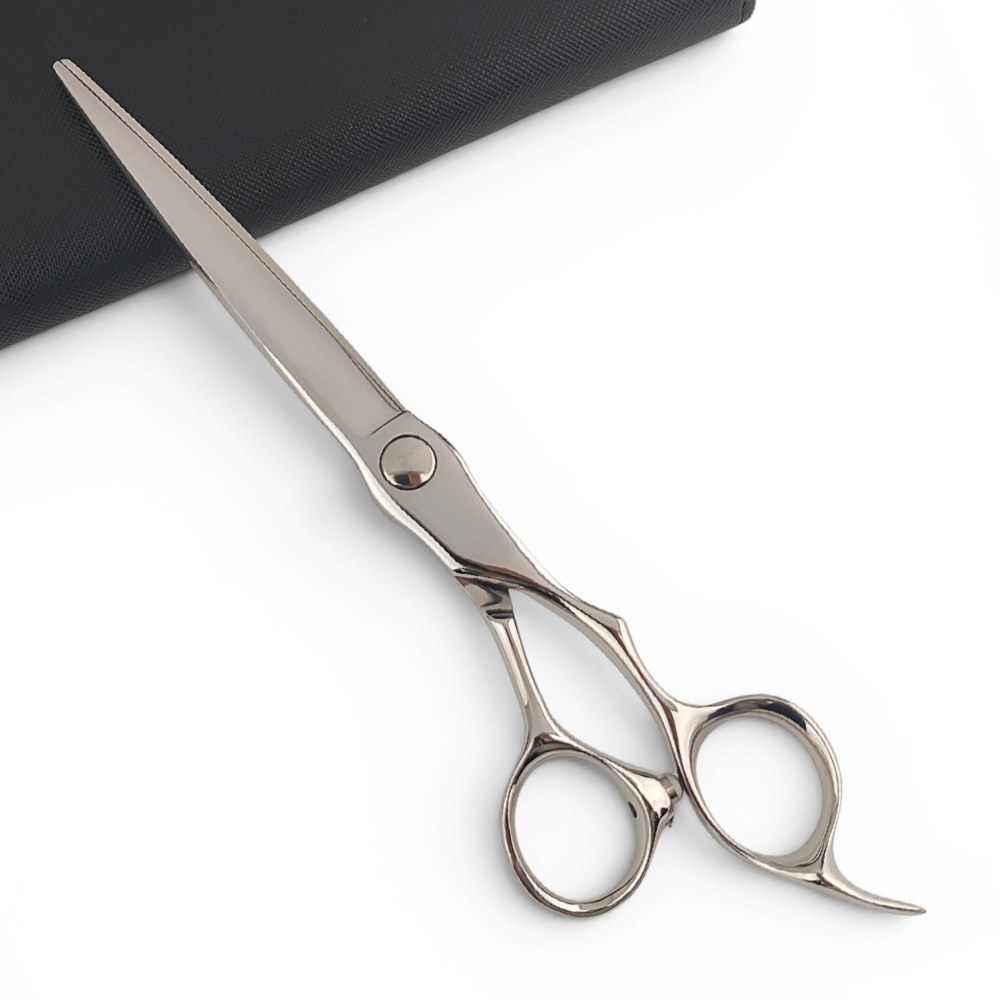
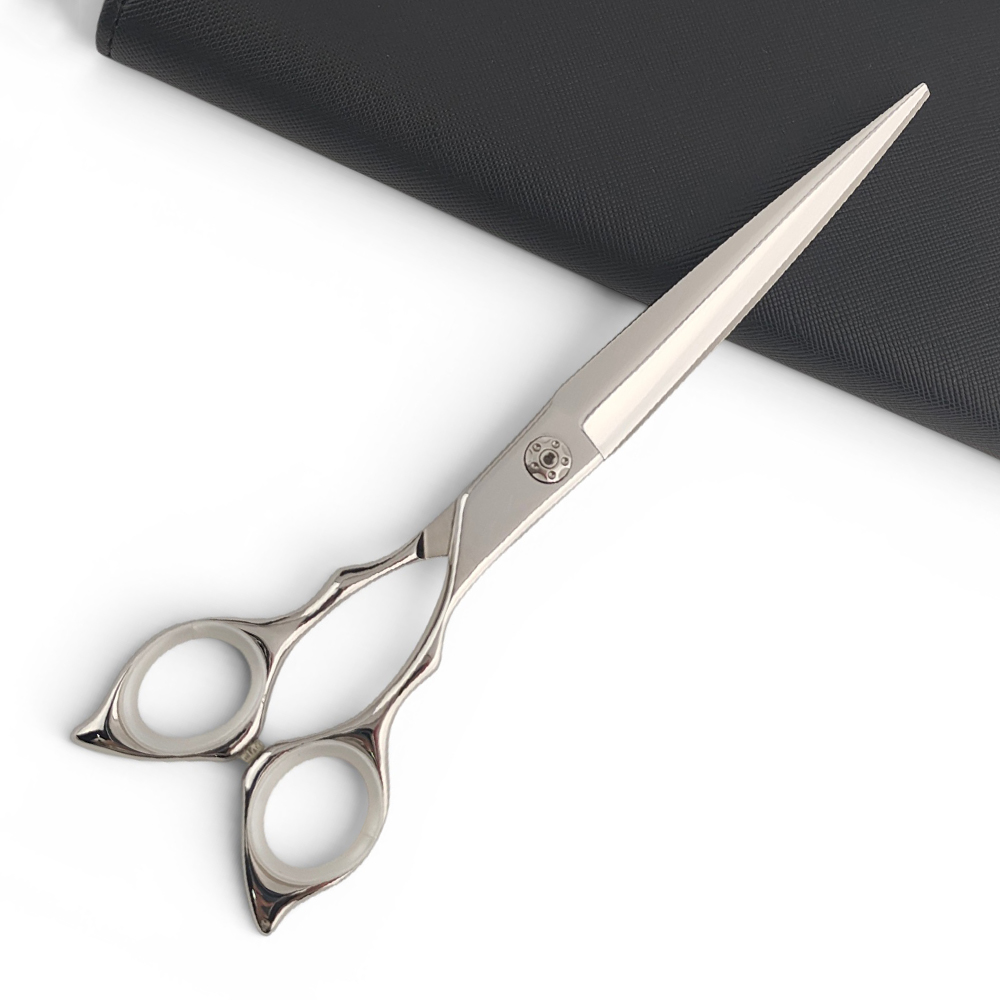
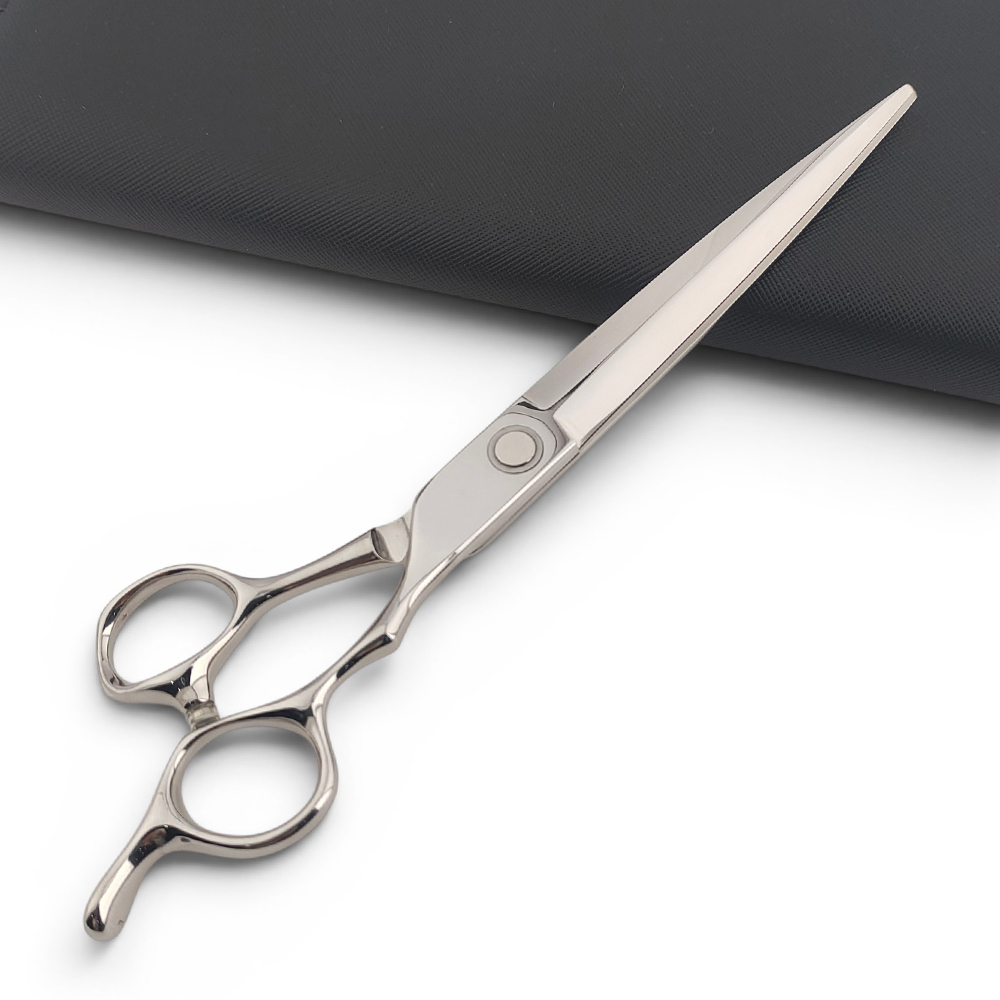
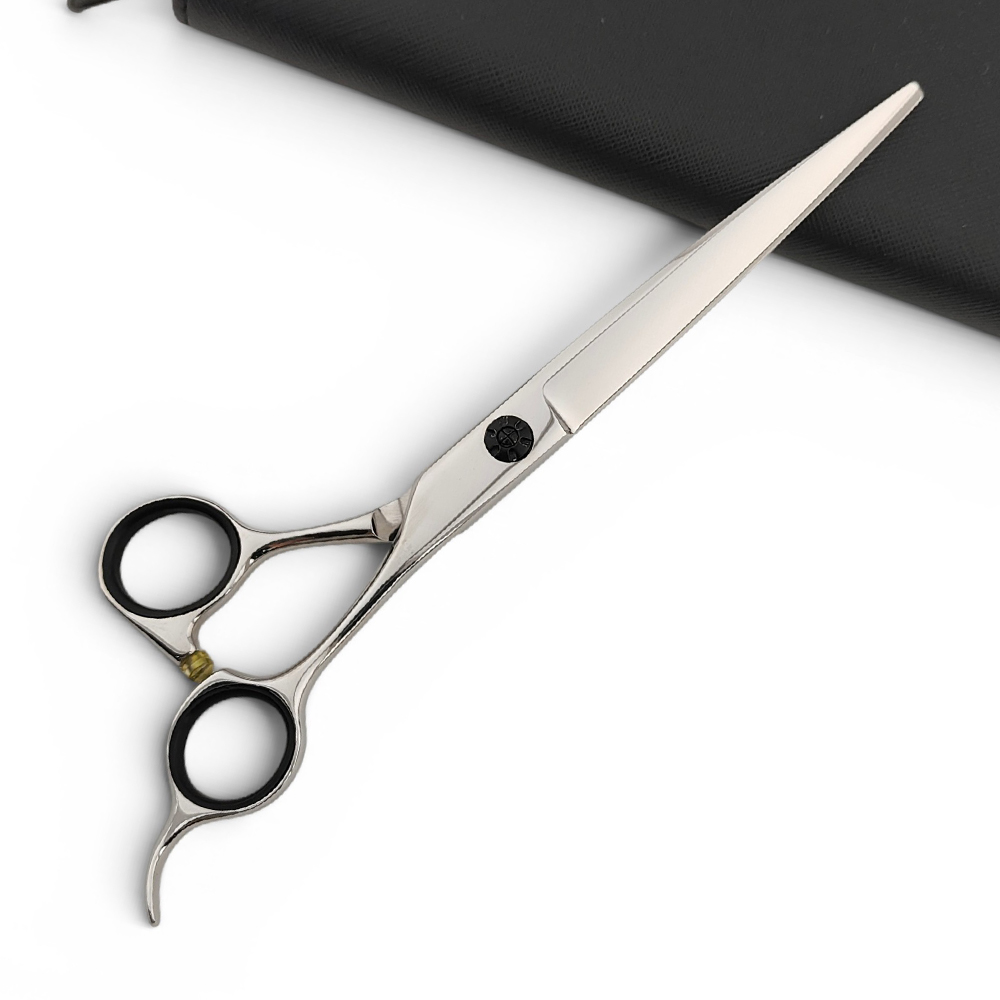
Scissor-over-comb fading demands a blade long enough to pass an entire comb without running out of reach at the end of the stroke.
A longer scissor will tackle a larger section of hair at a time, while a shorter scissor necessitates a smaller, more deliberate, and more time-consuming process. This length-based difference is why barber shears are longer than standard salon shears used for cutting hair of all types. Scissor-over-comb is a foundational technique taught at barbering and cosmetology programs across the US, UK, Canada, and Australia – hence, length at the source level become a key differentiator.
At MATSUOPRO, we produce the 7- and 7.5-inch length lines specifically to meet the need for reach in this area, utilizing VG10 and 440C steel, along with a Japanese-style convex edge that glides over the hair rather than catching or pulling during repetitive scissor-over-comb motions.
For any salon chain, distributor, or private-label brand that sources barber shears in bulk, the real questions go beyond steel grade alone: which blade length fits which technique, what a factory-direct order actually costs per unit above 50 pieces, and whether the manufacturer backs its quality claims with verifiable detail. This page answers all three.
There’s another issue contributing to confusion at this level: the retail pricing of 7-inch barber shears is highly variable, bordering on chaotic.
For bulk purchasers seeking a transparent understanding of their supply chain costs, the ambiguity of retail pricing obfuscates any real evaluation of potential factory-direct deals, so this page breaks down that cost structure explicitly based on the factors that influence it, not by a brand name.
If we speak with salon owners and distributors about what will encourage a second purchase, it comes down to durability and longevity every time – even more than with other types of shears.
The reason is the nature of fades, barber-style cutting and “ scissor-over-comb” – techniques that create a blade-to-blade opening and closing action for many, many times per haircut compared to other methods of hair cutting. Professional barber working in various industry online forums report replacing their cheap “pro-level” barber shears with something new about once per year and speak about buying numerous brands and brands over ten years of barbering searching for a pair of shears that will hold up to repeated daily use.
That’s why in the following section, we’ll explore the specific heat treating and hand honing procedures we use. It’s the physical steps we take that separate a working tool that lasts and one that dies.
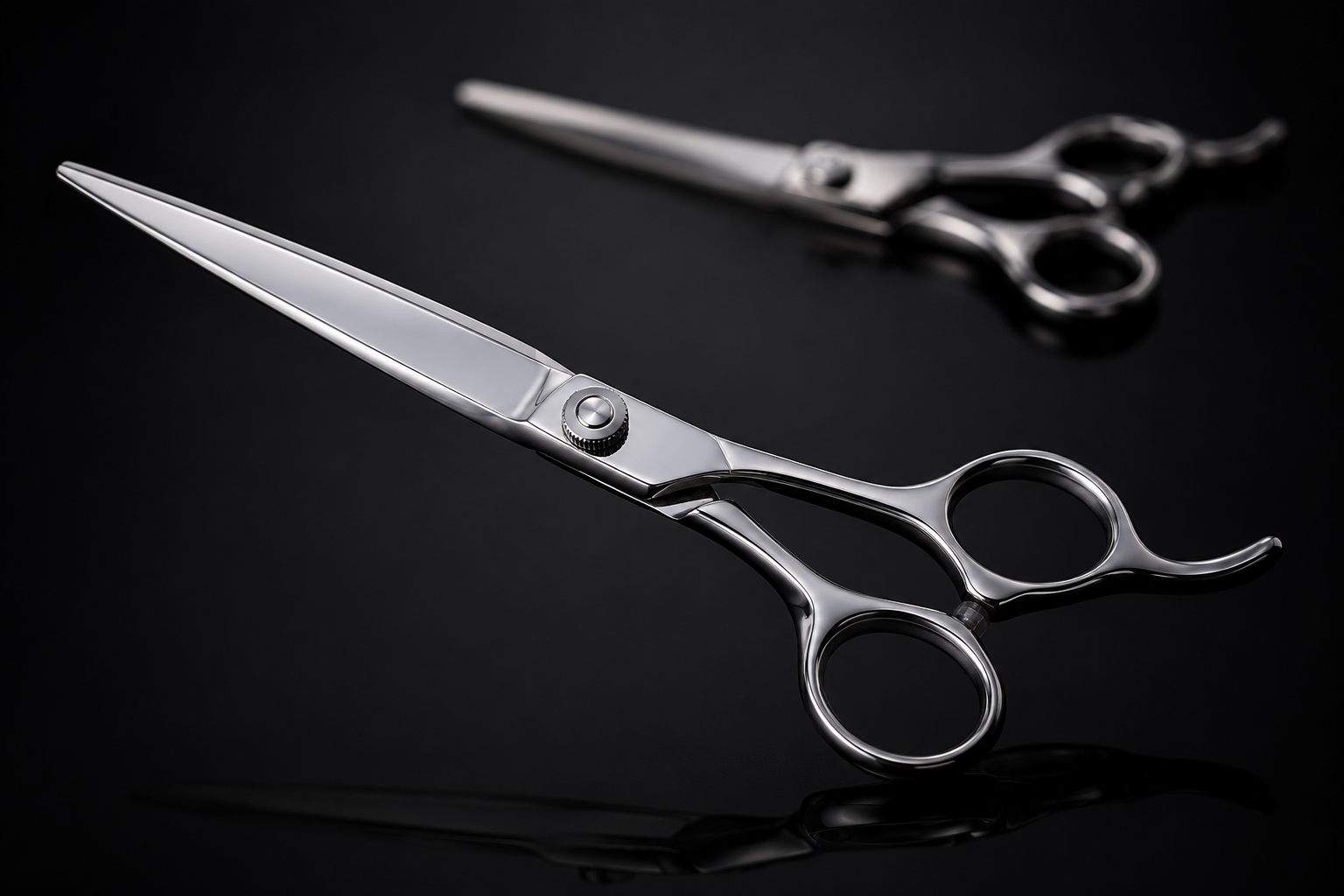
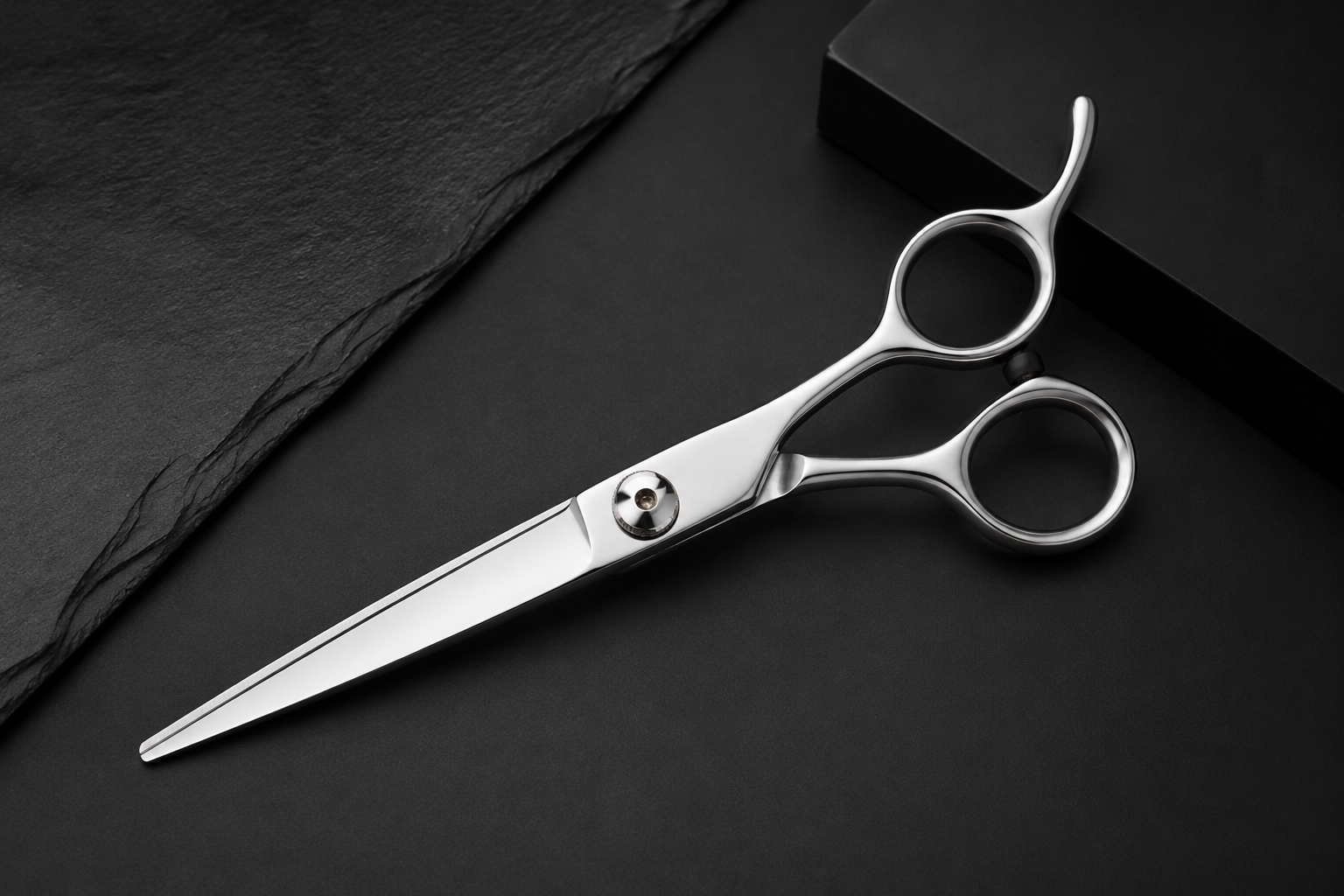
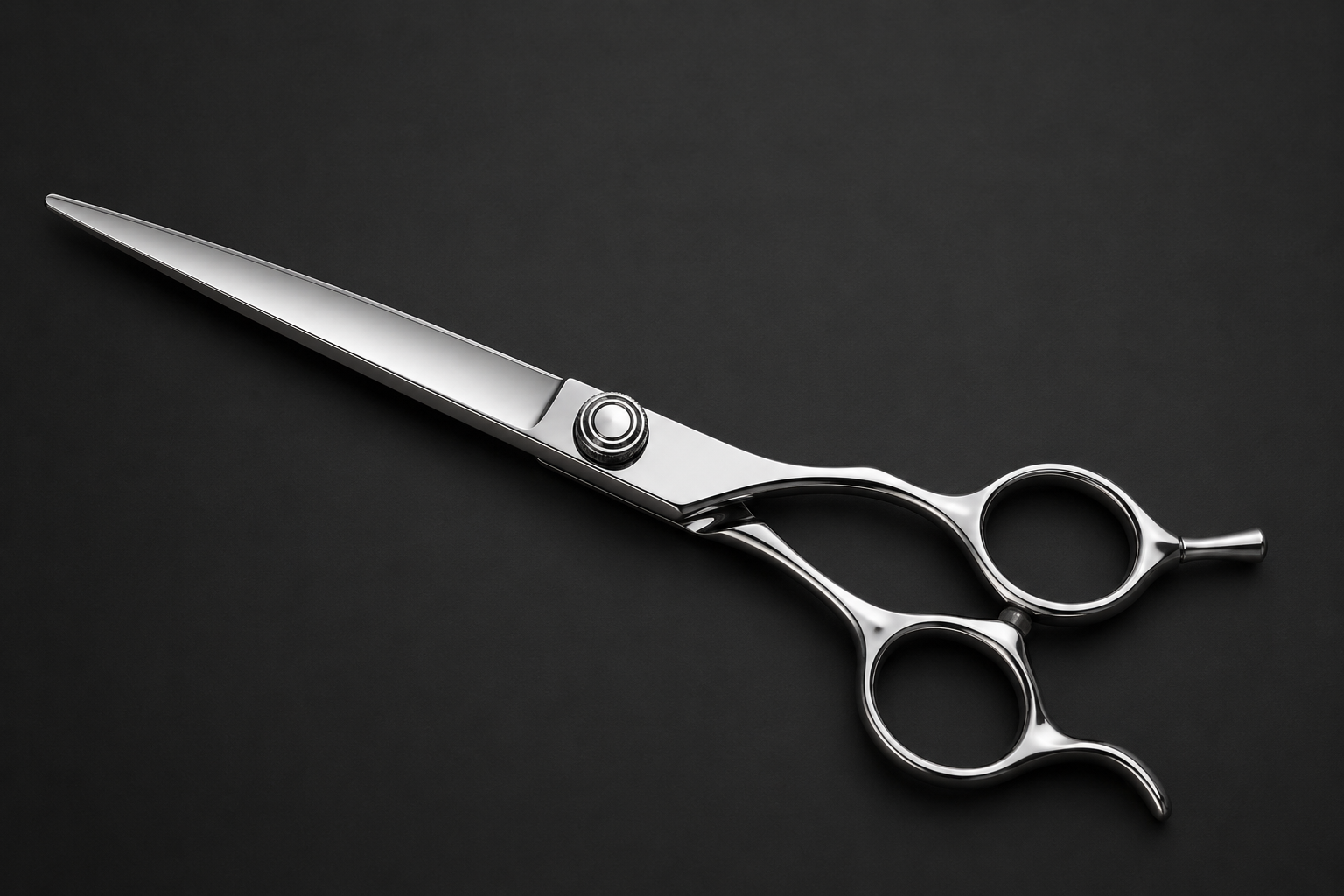
| Spec | 7″ VG10 | 7″ 440C | 7.5″ 440C |
|---|---|---|---|
| Steel | VG10 (Co-V-Mo) | 440C stainless | 440C stainless |
| Hardness (HRC) | 60–62 | 56–59* | 56–59* |
| Blade edge | Convex (hamaguri) | Convex (hamaguri) | Convex (hamaguri) |
| Handle | Offset, adjustable tension | Offset, adjustable tension | Offset, adjustable tension |
| Finish | Mirror or matte | Matte polish | Matte polish |
| MOQ | 50 pcs | 50 pcs | 50 pcs |
Barber schools know scissor-over-comb is a length-specific technique, not one size fit all. The London School of Barbering’s NVQ2 curriculum clearly states: “long scissor blades tend to work better for this technique, as with shorter scissors your hand may get in the way of the cut” – and vice versa, where a longer blade become difficult to control when doing detailed work within tight sections. Blade length and the best-performing technique/hair-density combinations are mapped in the table below, based on industry professional consensus rather than a lab measurement.
This is about reach, not just surface area. As one practicing barber-educator explains it when discussing technique for scissor-over-comb: “you’re able to do more with a larger blade… the smaller the scissors, the slower you work in sections, so it’s really detail work,” and that logic is why a 7 or 7.5 barber shear is perfect for fade and taper work, while the same barber keeps a shorter 5.5 or 6-inch shear close at hand for detail finishing and point cutting.
An honest word here: the convex edge that all MATSUOPRO shears come standard with isn’t always the best edge for every cutting technique – that’s the real trade-off worth knowing before you order. When the edge types are discussed among pros, everyone agrees a convex edge is a top-performer for texturizing and slide-cutting work such as scissor-over-comb. It’s not always recommended for blunt cutting, where a semi-convex or beveled edge is often easier to maintain for that style. If you’re focused primarily on precise blunt-cutting, please talk to us about your edge preferences prior to placing your order; we would much prefer to guide you toward the right specification than sell you a shear size that won’t fit your chair.
The longer blade makes the balance point move forward and, consequently, change the way a barber should fit his finger into the handle of this 7 or 7.5 inch shear as opposed to his 5.5 or 6 inch shear. Barber ergonomics often includes a basic fit check regardless of shear brand: your ring finger shouldn’t go past your second knuckle and your thumb should fall between the tip and the first knuckle. If it falls past either point, your handle size is too small and fatigue will become more prominent toward the end of your shift. The MATSUOPRO’s offset handle shape and its tension adjustment screw are based on the same fitting principle. On orders for OEM / Private-Label products, we can easily customize the size of the finger ring so that it’s uniform on all of your shears, not just a “one-size-fits-all.”
Onboarding a training team on scissor-over-comb technique?
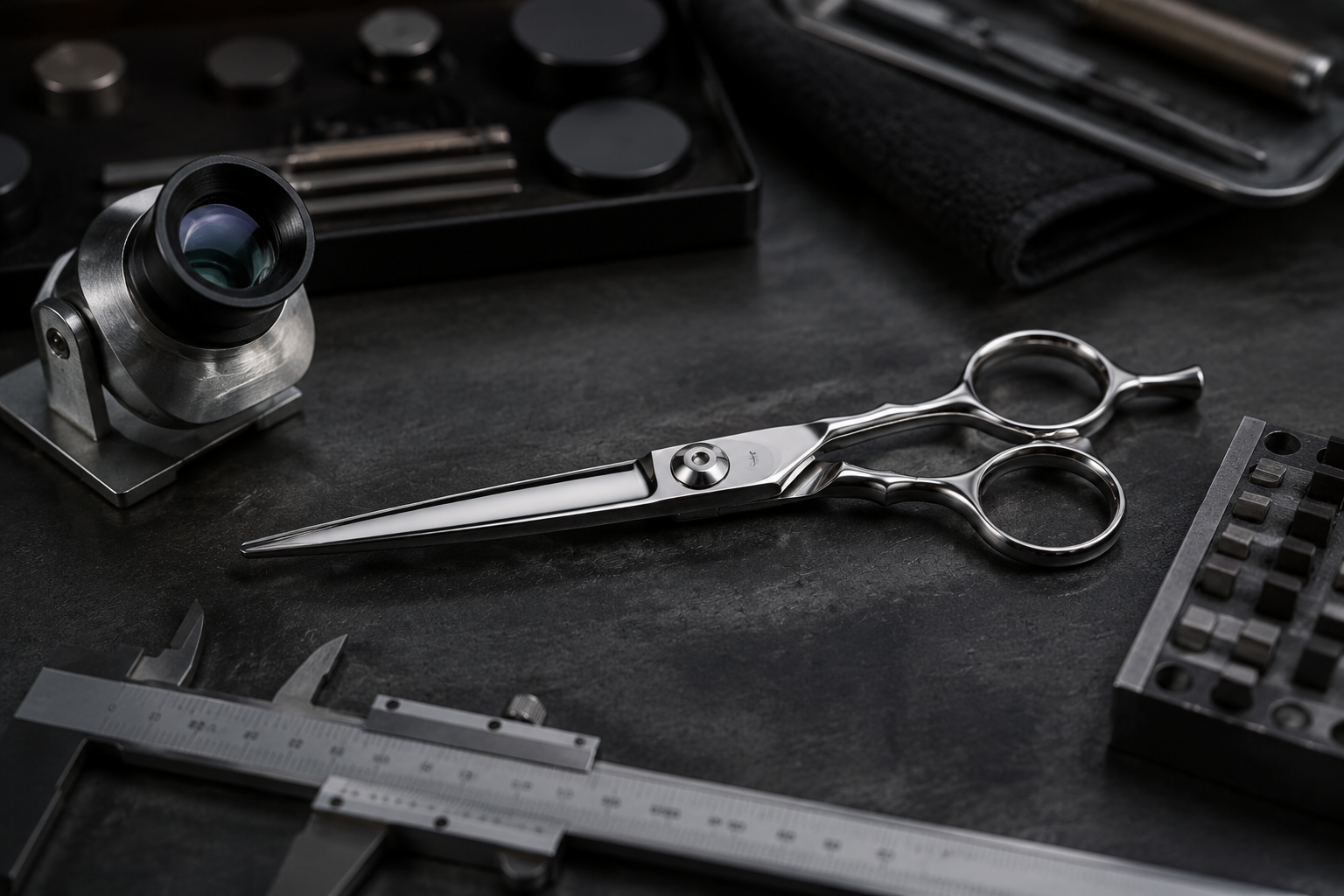
The MOQ on this professional barber shears product line is 50 units per style, a low MOQ that’s perfectly suited for any private label business getting started with the flexibility to run multiple SKUs or a new product line in the barber supplies category without needing to fill a full container. Our lead times for samples on these current models is 3 days and 60 days from a confirmed order to the factory floor for a full production run. Custom engraving of your logo on any SKU within this barber scissors product line is available, and a customized package, including branded leather shear cases or attractive presentation boxes can also be incorporated within the same lead time. This isn’t a sticker job on generic wholesale barber shears, it’s a genuine OEM private label program that offers full customization capabilities: you can choose the exact steel grade, the handle finish, and even the ergonomic handle offset diameter you desire, along with your own custom branding.
| Factor | MATSUOPRO (factory-direct) | Typical retail/D2C brand |
|---|---|---|
| MOQ | 50 pcs | Single-unit retail (no wholesale tier disclosed) |
| Sample lead time | 3 days | Not applicable (retail stock only) |
| Bulk production lead time | 60 days | Not disclosed |
| OEM/private label | Logo engraving + custom packaging, same run | Rarely offered; when offered, usually opaque on pricing/MOQ |
| Certification detail | ISO 9001 / BSCI / SGS + third-party hardness reports on request | Certification badges typically shown without underlying report access |
The 4 factors that most influence the quotation for these shears, more than the actual length of the blade, are: The type of steel used in the blade ( VG10 will be higher cost than 440C), The volume of your order, The complexity of your customized packaging, The shipping method utilized ( EXW/FOB/CIF/DDP ). Request your quotation, clearly specifying your required volume and steel grade, and you’ll receive a clear itemized quote breaking down the costs by each of these factors instead of an ambiguous all-in price.
Payment and service are as transparent across three stages. Before you order: free consultation on steel, blade type and sizing for your market, 3-day samples in existing styles (new designs sketch to CAD prototype) and graduated pricing without hidden minimums outside the 50-piece MOQ. During production: one point of contact throughout with your account manager, and production updates plus pre-shipment QC photos/video before we send. After you receive your order: manufacturing defect warranty, ongoing spare part supply (tension screws, finger rings, silencers), and optional professional sharpening/refurbishment service. Shipping is quoted on EXW, FOB, CIF or DDP basis to whatever degree of logistics management you require from us, and we offer dropshipping for distributors who wish to operate without stocking inventory.
Here’s the honest version: it’s not always about replacing them. Barbers discussing shears on forums will invariably comment that an “old” or “dull” pair is often more a matter of sharpening and tension adjustment than one of material composition, and the difference can be dramatic and, when handled by someone with know-how, it is sometimes near like-new performance from a worn-in tool that one is tempting to trash. Which is why our after-sale service not only includes warranty service but the offer of professional sharpening and refurbishment as well; that MATSUOPRO shear you own is designed for durability through multiple sharpening cycles, not disposal after the first wear.
Determine the optimal blade length and offset ergonomics for your specific cutting style and hand size.
Launch QuizBuild custom order specifications including steel grade, handle offset, and OEM private-label branding.
Configure OrderCompare VG10, 440C, and other premium steel variants to match your performance and price-point targets.
Compare SteelsMost working barbers land in the 6.5-7.5 inch range for fading and tapers (the scissors used for scissor-over-comb blending) combined with a smaller 5.5-6 inch scissor for detail point-cutting. MATSUOPRO’s 7-inch line, and the corresponding sibling steel-grade pages, are structured around that basic pairing.
They’re both important but for different things: length has to do with mechanics, specifically with how much ground a blade cover per swipe; longer shears do a better job for scissor-over-comb blends, while shorter shears necessitate smaller movements better for very tight detail cuts close to the hairline and ear.
In some instances, yeah-particularly for super tight detail sections where a 7″ blade isn’t optimized to do what’s being asked. That’s precisely the sort of cutting that’s better served by the shorter, finer 5.5-6″ blades, leaving the 7″ for the broader, more expansive blends and scissor work it was designed to excel at.
Seven-inch professional barber shears can often sell for as much as $100-900+ from consumer retail sources where you’re paying for all the layers of markup (distribution, branding, retail margins, etc.). If you’re looking at a 50-piece factory direct order at the MOQ level, you’re paying for the raw materials and labor – and quality control – without any retail markup at all.
Common forum discussions among active barbers refer to first-tier “professional” shears failing within roughly one year of consistent daily use. Service life varies, of course, depending on the steel used, heat treating process, and whether maintenance involves hand-honing the convex edge on a correctly heat-treated steel plus regular sharpening. A hand-honed convex on well heat-treated steel can last considerably longer than those cheap scissors that die within 12 months.
Yes, from the same 50-piece minimum: steel, handle, engraving, and packaging are all yours to specify.
No – where the steel come from and where it’s assembled are distinct issues in the market and are often conflated to mislead the consumer. It’s actually the disclosed steel grade, its HRC, and how precisely the factory control heat treatment, that determines a shear’s overall quality and performance – regardless of where it’s assembled.
HRC and price point. A VG10 typically runs 60-62 HRC and can hold its edge between sharpenings significantly longer than 440C, which can range from 56-59 HRC (whether sourced in Japan or China). Both use our hand-honed convex edge and offset handle design, but 440C offers a more accessible starting point for a first batch of private-label tests or an order for a smaller chain, with room to scale to VG10.
Yes, on request for both OEM and bulk orders. Genuine left-handed shears require mirroring not just in the blade, but in the screw structure as well-not just swapping labels on a right-handed pair. This needs to be built into the production order from the RFQ stage.