Get in Touch with Mackayhairscissors Company
We use submitted details to respond to your quote request. Read our Privacy Policy.

Professional dog thinning shears, hand-honed from Japanese 440C with a convex edge you can verify by spec and the same steel the big names use. We sell factory-direct to groomers, salons, brands and distributors worldwide, without the name-brand price tag.
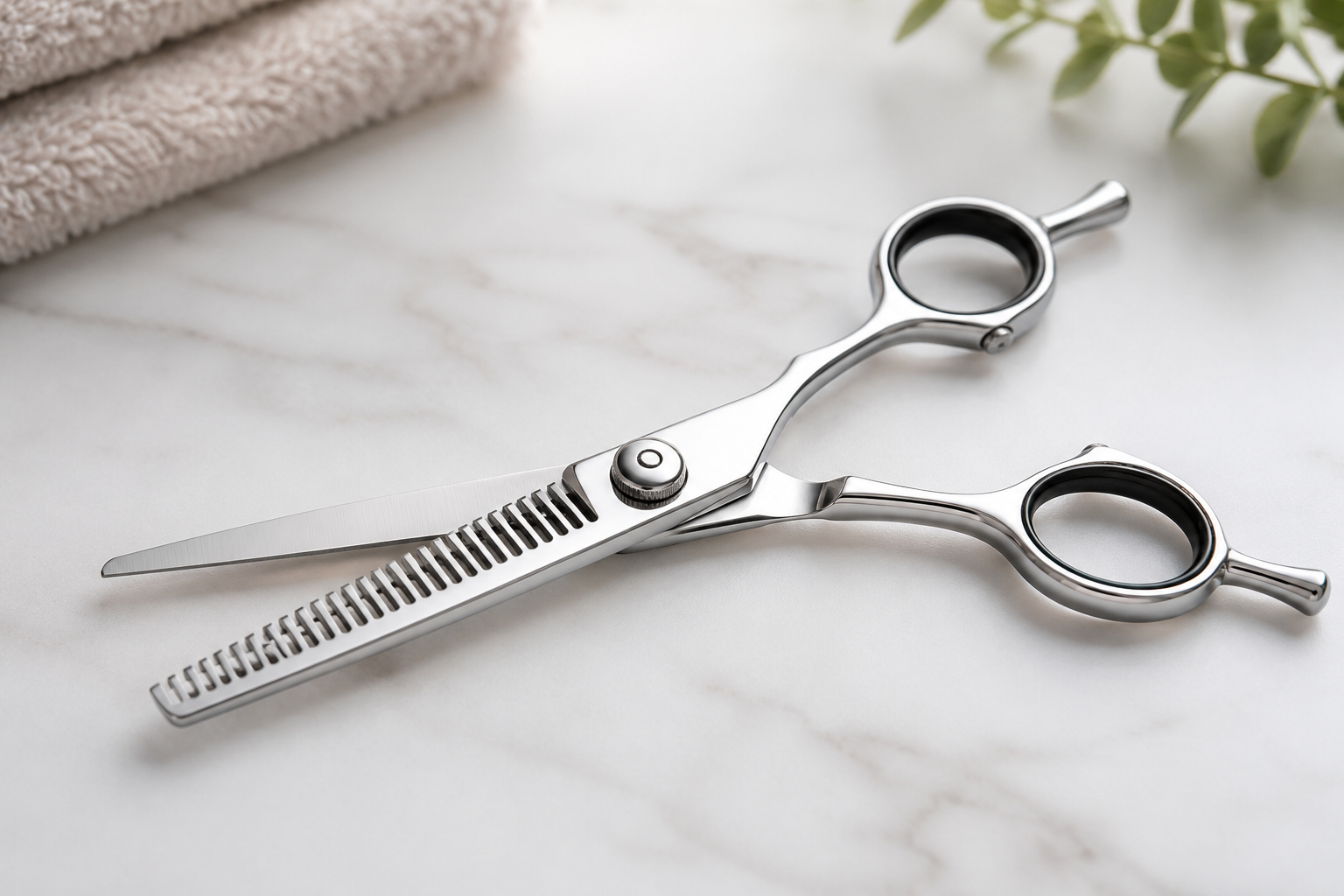
What are thinning shears for dogs? They are toothed (notched) grooming scissors — a serrated-blade mechanism documented in thinning-scissor patents — that remove only a fraction of the hair with each pass, so you can thin bulk, soften clipper lines and blend coat lengths without leaving a hard cut line. Fewer, wider teeth remove more hair; more, finer teeth remove less and finish softer.
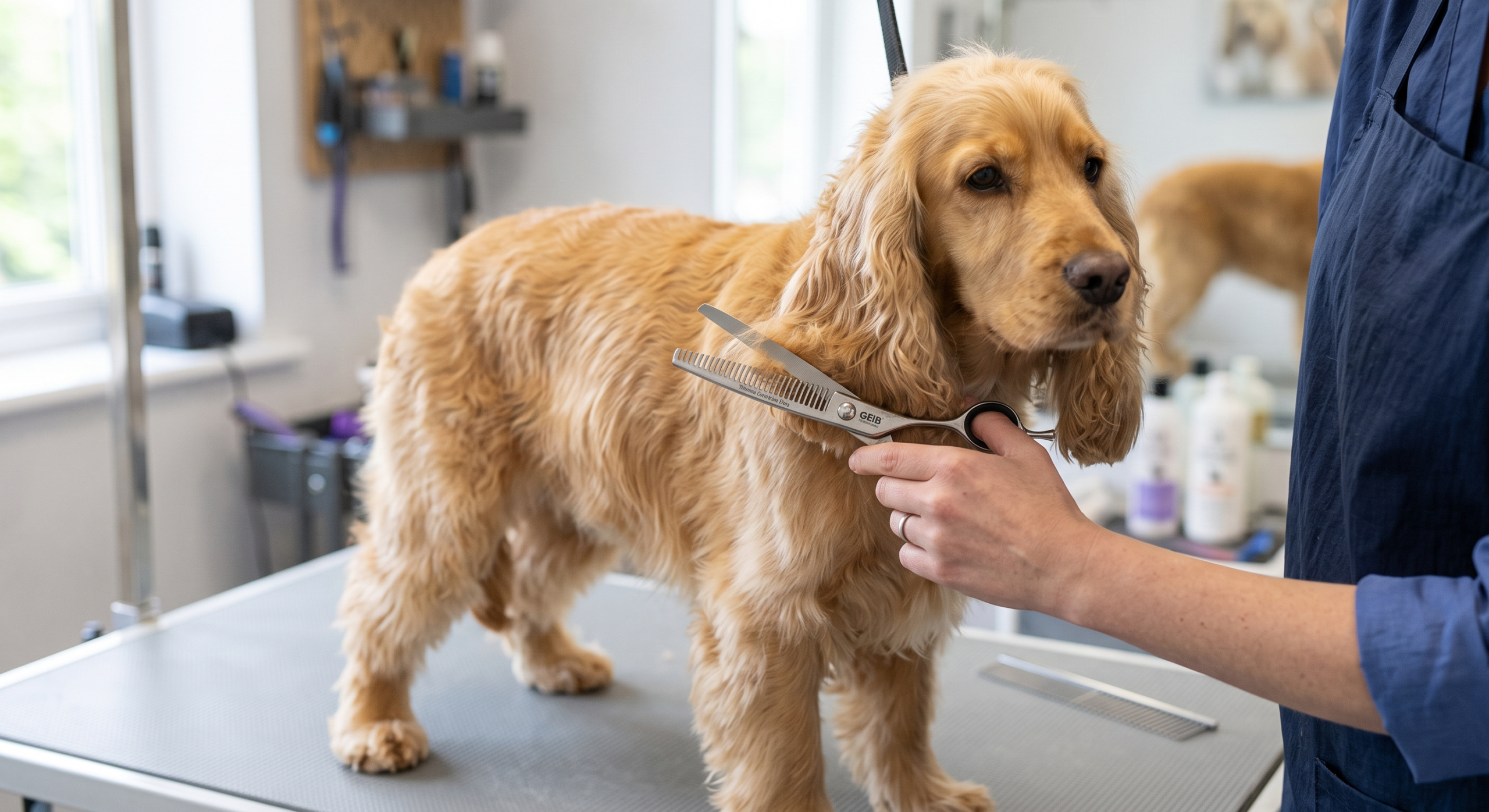
If you groom your own dog or groom dogs for a living, the impact of the wrong shear show up immediately. Using straight-edged shears to cut thick, double-coated hair will result in blunt lines in your clipping work or stepped layers on your scissored cuts, instead of smooth cuts. The solution isn’t skill – it’s toothed thinning shears, sized for the task and the coat.
Almost no groomer fails because they bought the wrong “bad” brand. They fail because no one has published the one number that predicts a cut: how much hair each tooth count removes. So we did.

These were generated by MATSUOPRO in-house workshop testing of medium density coats. Don’t take these as gospel; real-world results will depend on coat density, the technique used and how many passes you make. The reverse pattern (more teeth=less thinning) is also backed up by professional groomers and the vendors who give a percentage (for example, Artero advertises a VG-1 curvy thinner at “20% thinning”).
| Tooth count | Shear type | Approx. removal / pass | Best job | MATSUOPRO model |
|---|---|---|---|---|
| 7–15T | Wide chunker | 40–50% | Break bulk on very thick / matted coats | OEM-configurable |
| 16–24T | Texturizer / thinner | 25–40% | De-bulk + texture on double coats | MP-SC-079 (24T) |
| 25–30T | Curved thinner | 25–35% | Contour legs, chest, feathering | MP-SC-078 (28T curved) |
| 31–39T | Blender | 15–25% | Blend clipper lines, transitions | OEM-configurable |
| 40–46T | Fine blender / finisher | 10–20% | Finish, face, line-free polish | MP-SC-080 (40T) |
| 47–54T | Fine finisher | 8–15% | Show finish, delicate detail | OEM-configurable |
| 55–65T | Ultra-fine finisher | 5–10% | Final polish, no visible lines | OEM-configurable |
| Double-sided | Teeth on both blades | Highest for its count | Fast bulk removal, coarse control | OEM option |
| Single-sided | One toothed + one straight | Lowest for its count | Precision blend, softer finish | Standard build |
Read the ladder one time and you’ll know how that logic flips around. a 24-tooth shear does cut more for a single pass than a 46-tooth shear, contrary to how many novice users would think. Pay by the task, not the highest number.
Purpose-engineered thinning shears. Featuring three patterns for de-bulking, contouring, and finishing. CNC-milled 440C Japanese steel with convex Hamaguri bevels. Factory-hardened for professional endurance.
Request OEM Specifications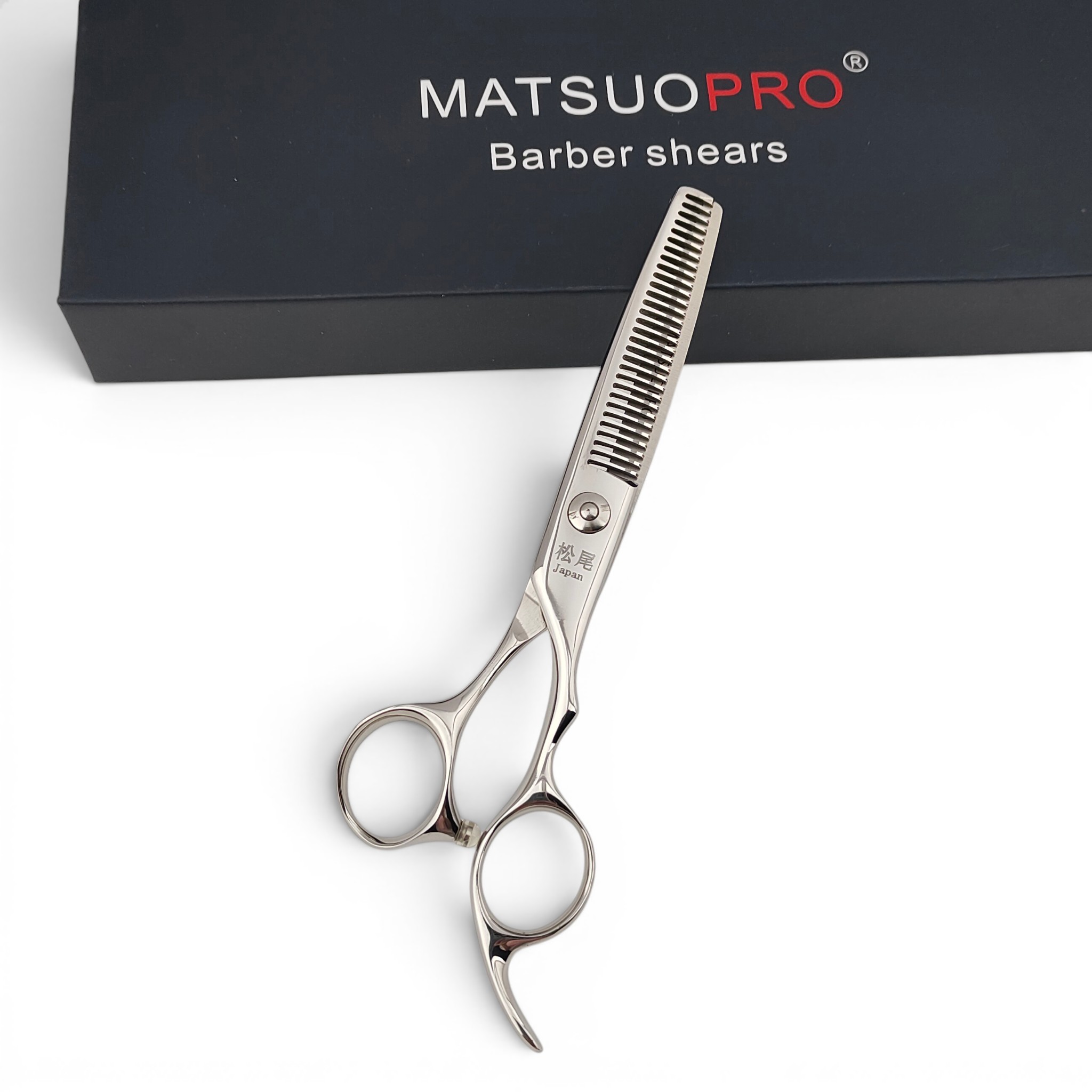
[SYS-REF: INDUSTRIAL_SPEC_CONTROL]
| Coat / task | Removal | Pick | Teeth | Why |
|---|---|---|---|---|
| Thick double coat | High | MP-SC-079 | 24 | Fewer teeth = more per pass |
| Legs / chest | Medium | MP-SC-078 | 28 curved | Curve hugs contours |
| Blend / Finish | Low | MP-SC-080 | 40 | More teeth = line-free |
| Model | Type | Teeth | Blade / edge | HRC |
|---|---|---|---|---|
| MP-SC-079 | Straight texturizer | 24 | 440C/convex | 58–60 |
| MP-SC-078 | Curved thinner | 28 | 440C/convex | 58–60 |
| MP-SC-080 | Straight fine blender | 40 | 440C/convex | 58–60 |
Hardness correlates with the Rockwell C scale according to NIST material-hardness references and ASTM E18.
What is the difference between thinners, blenders and chunkers? A thinner has teeth on both blades and removes the most bulk close to the skin; a blender (sold as blending shears) has teeth on one blade and a straight edge on the other for a softer, line-free finish; a chunker has fewer, wider teeth to strip heavy or matted coats fast. In professional dog grooming, thinning and blending are two steps of the same job — tooth count and tooth orientation, not the label on the box, decide how much hair leaves.
These categories – thinning scissors, blending scissors, curved shears, grooming chunkers, and texturizing shears – are loosely applied by brands and this is precisely why dog groomers are baffled when they purchase their own. A full groomer’s set of scissors and thinners combines multiple tooth counts, and therefore the dependable clues are tooth count and control. Below is the key.
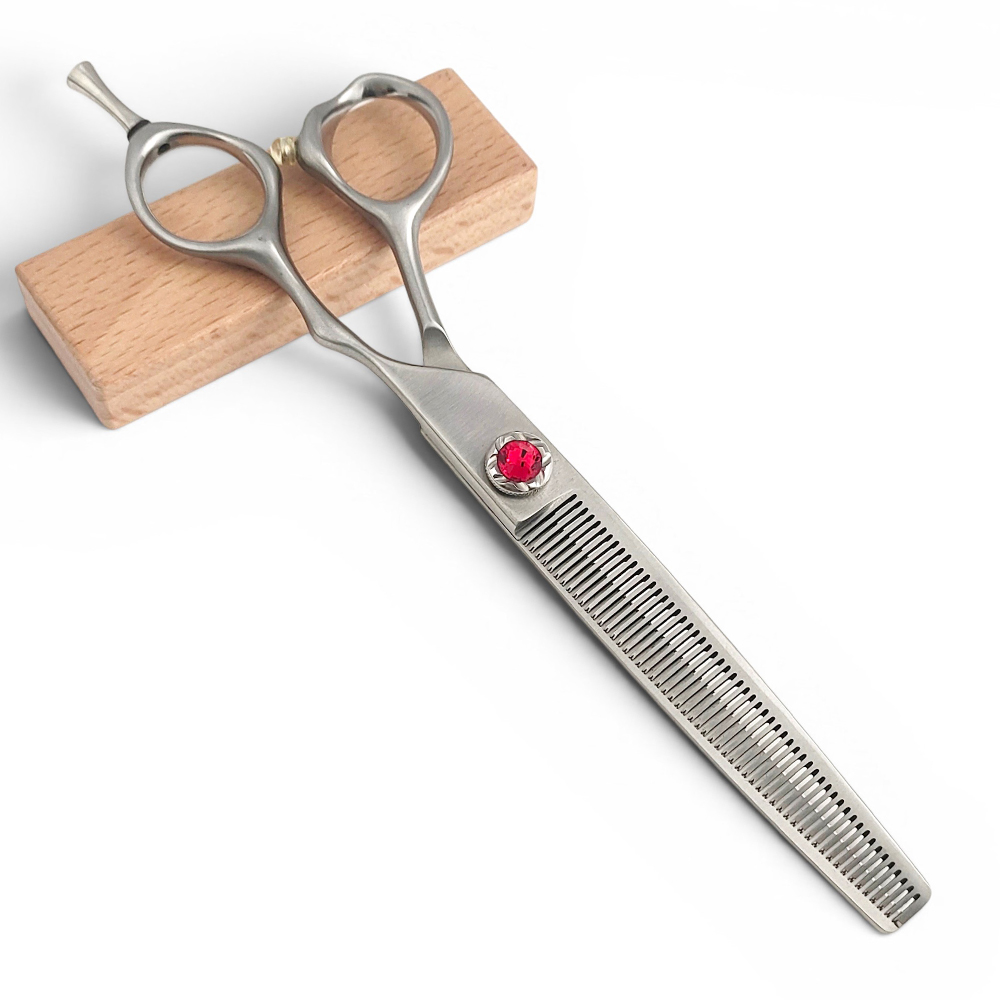
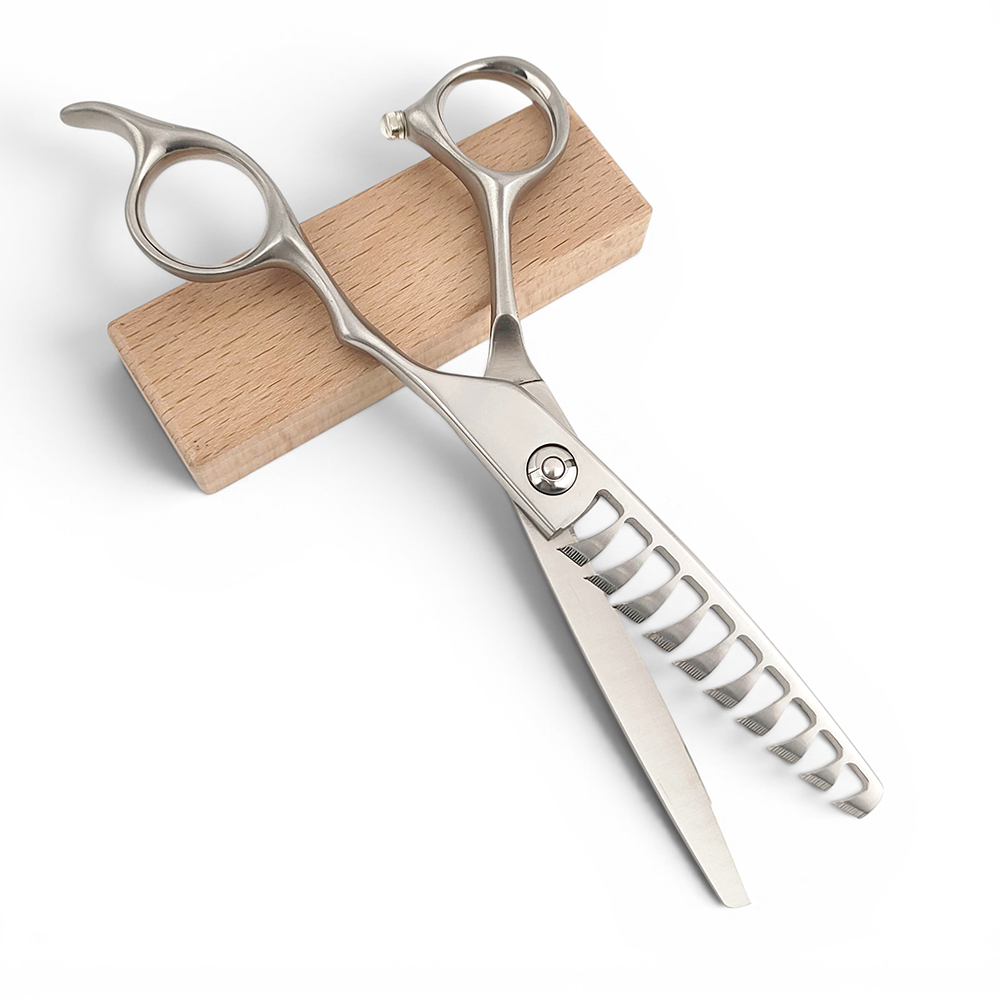
| Type | Typical teeth | Orientation | Removal | Cut line | Primary use |
|---|---|---|---|---|---|
| Chunker | 7–16 | Wide, spaced | Highest | Visible | Strip heavy / matted bulk |
| Texturizer | 16–24 | Single or double | High | Textured | Add movement, de-bulk |
| Thinner (double) | 24–46 | Teeth both blades | High for count | Some line | Bulk thinning near skin |
| Blender (single) | 30–46 | One toothed + one straight | Medium | Soft | Blend transitions, clipper lines |
| Fine finisher | 46–65 | Single-sided | Low | Invisible | Show finish, face, detail |
| Straight scissor | 0 (no teeth) | Solid edge | 100% in path | Hard | Bulk length removal |
| Curved scissor | 0 (no teeth) | Solid, curved | 100% in path | Hard, shaped | Round contours, topknots |
| Reverse-tooth | varies | Teeth face down | Directional | Even | Finish against grain |
| Double-sided | varies | Teeth both blades | Max for count | Coarser | Fast, aggressive thinning |
Trade publications are actually in accord with how they work even if marketing material doesn’t. “The double thinner has teeth on both blades and is considered to be superior for heavy thinning,” explains groomers online.com. Most pet-tool retailer categories define a blender as “one toothed and one straight blade for line-free blends.” To blend, comb up the hair and snip the raised fur, working the larger areas first and saving the fine finisher for the last pass.
Field note from the tradeExpert groomers prefer using a coarser German style thinner for roughly 80% of their work, and using a finer Japanese convex style thinner as their finish – because it will help protect their precious convex edge. Source: Groomer to Groomer (Randy Lowe, Precision Sharp).
Most sellers stop at a label, and that lack of specificity is the mistake that leaves buyers guessing at the counter. Unlike a vague “premium” or “Japanese steel” tag, MATSUOPRO quantifies every model by tooth count and removal rate, because a number beats an adjective for a tool that takes 10 to 50% of the hair per pass. Our spec sheet tells you exactly what leaves the coat.
Buyers hate the sticker shock of a name brand, and they resent specs staying obscured at $100 to $300 per pair. We will not claim a new factory beats a much-loved 20-year name; the honest version is that we show you the specs side-by-side and let you make your own call. Because MATSUOPRO is factory-direct, we openly share the numbers others keep vague.
Many high-end lines, including Chris Christensen and Geib’s 440C-Japan product, are fabricated from 440C Japanese stainless steel. On the other hand, many popular Kenchii Professional product lines use a special “level 1-4” proprietary molybdenum but make no reference to the hardness or edge angle. Regardless of what any producer claims about their steel, their hardness rating or the edge angle will not be mentioned. For our products, we clearly disclose our HRC and edge angle, and this is supported by testing of its endurance.
| Brand / line | Steel | HRC published? | Edge | Teeth | Retail price* | OEM / MOQ |
|---|---|---|---|---|---|---|
| MATSUOPRO 079/078/080 | Japanese 440C | Yes — 58–60 | Convex 15–20° | 24 / 28 / 40 | Factory-direct (quote) | 50 pc custom / 1 pc stock |
| Kenchii Scorpion / Rose | Proprietary molybdenum | No | Semi-convex, micro-serr. | 24–54 | $99–149 | None |
| Chris Christensen | 440C Japanese | No | Convex | varies | $101–203 | None (US-only ship) |
| Sensei | 440c / Duralite / Moly | No | Convex, cryo | 20–57 | $119–309 | None |
| Geib Entree / Gator | 440C Japan / SS alloy | No | Semi-convex | 21–50 | $81–173 | None |
| Artero | VG-1 | No | Concave, micro-serr. | 30–65 | $131–250 | None |
*Retail prices are third-party DTC listings verified on Groomer’s Choice, Sensei and Artero storefronts (2026) ; MATSUOPRO sells B2B factory-direct, so our number is a quote, not a shelf price. We do not publish a fabricated “you save X%” figure — retail DTC and wholesale are not the same basket. Prices are point-in-time (as of 2026) and shift often; verify current pricing at each retailer before you compare.
What a comparison chart really shows is not who performs best, but how honest a manufacturer is about the trade-off. Final cutting performance depends on heat-treat and honing, not the steel name alone, which is the honest reason we publish our hardness on the Rockwell C scale, our edge angle and our cryogenic process.
“We hand-hone every convex edge and check hardness batch by batch. We publish 58–60 HRC because a steel name means nothing without a heat-treat record behind it, buyers deserve the number, not a label.”
Browse any grooming forum and the frustration rhymes: buyers end up with a shear graveyard of cheap, dull blades that hurt the hand, and just want some real shears that hold an edge. As one master sharpener puts it, Japanese stainless steel means nothing without traceability, which is exactly why we publish the batch hardness and edge angle behind ours.
Explore the pet grooming scissors range for related options.
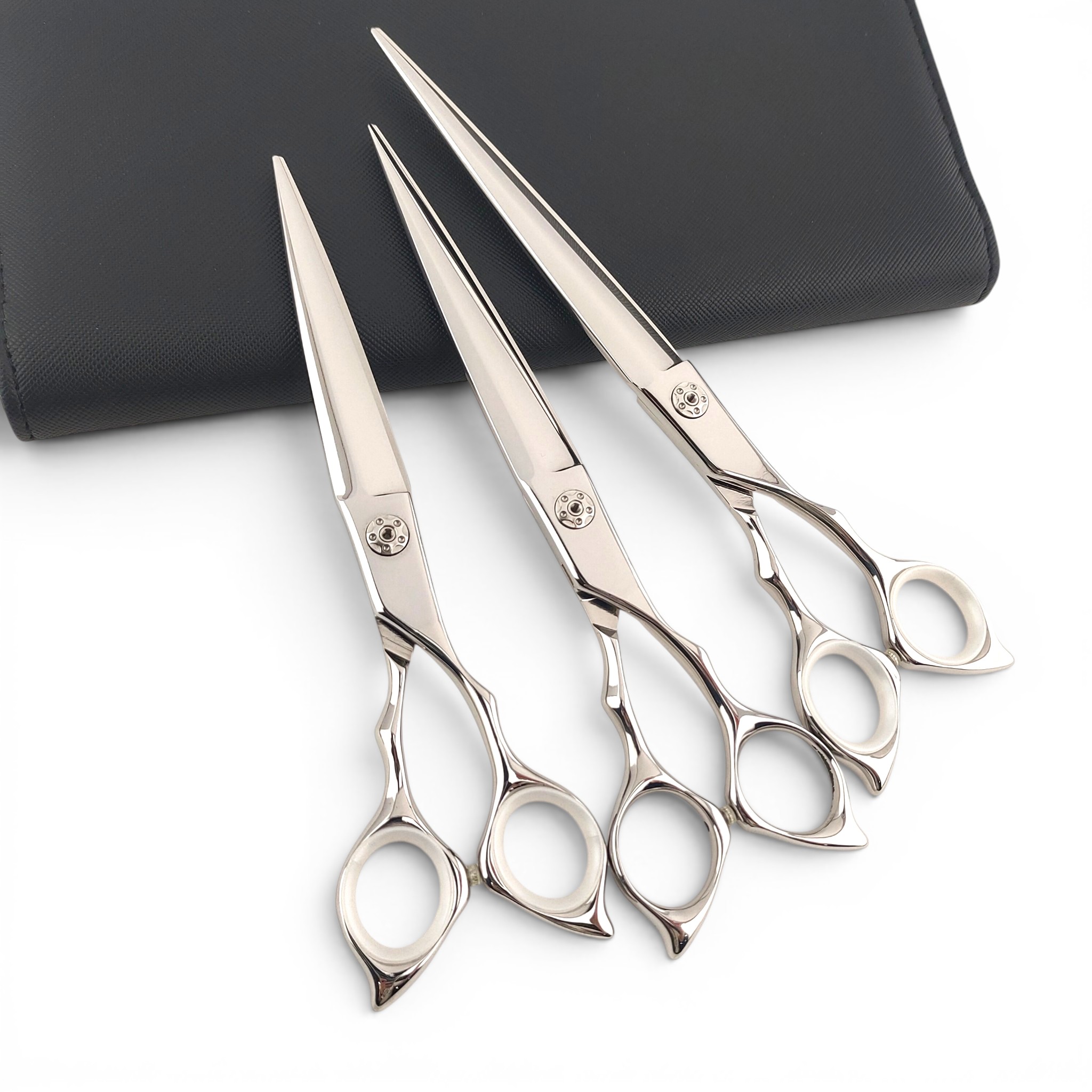
For brands and retailers the barrier is usually the minimum-quantity commitment, since cash is easily tied up in over-stocked, slow-moving product.
Our floor is deliberately low: a single-piece minimum off the shelf, custom orders from 50 pieces, and samples in as few as three days, unlike suppliers who expect 500 units or more. MATSUOPRO engineers the program around your catalog, not ours.
| Program | MOQ | Lead time | What you can customize |
|---|---|---|---|
| Stock reorder | 1 pc | Ex-stock | Ships as spec’d |
| Sample | 1 pc | ~3 days | Evaluate before you commit |
| Custom / OEM | 50 pc | ~60 days bulk | Steel, tooth count, curve, handle, finish, engraving, packaging |
Importers weigh factory-direct savings as a total-cost question, not a per-unit shelf-price comparison. We support DDP (Delivered Duty Paid) quoting with customs documentation, shipping and taxes plus consolidated freight, so your landed cost and compliance paperwork stay predictable. Ask for a custom quote scoped to your destination and order volume.
Our shears are built for re-sharpening, so this program also safeguards your future cost. It’s less expensive to keep sharpening your shears for years than to dispose of them once they dull and purchase new ones – it’s the actual meaning of factory-direct value, not some made-up savings figure.
A reasonable question of any convex edge is, does it go dull fast? It’s the sharpest geometry on any pair of scissors, yes, but also more susceptible to damage, like dropping, than a blunt bevel. This is where hardness and honing come into play and where we make for the long game.
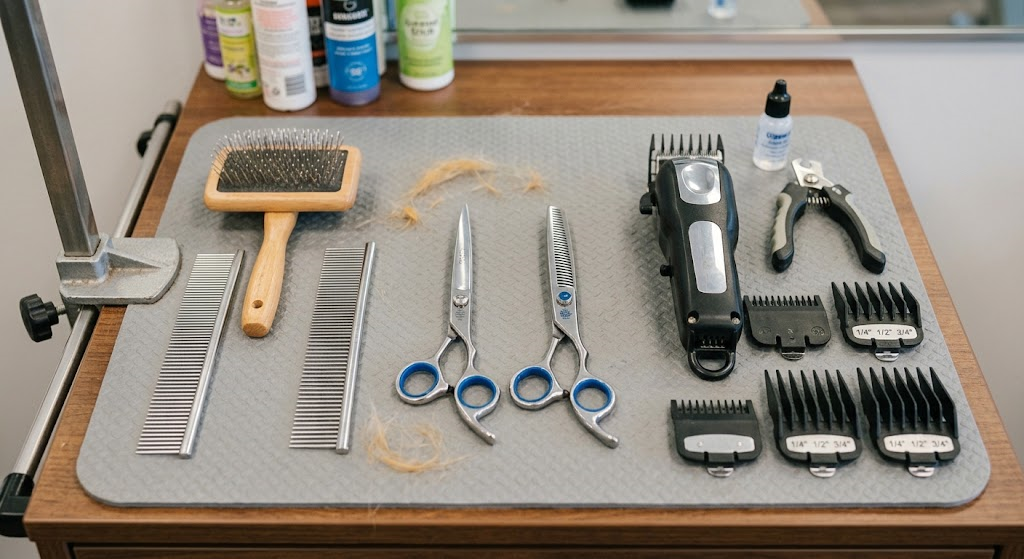
Hardness is measured on the Rockwell C scale, and higher is not always better; above about 62 HRC an edge lasts longer but is much more prone to chipping. MATSUOPRO cryo-tempers and heat-treats all our own blades in-house because the performance life of a cutting edge is dictated by the heat of the furnace and the precision of the hone – not the number on the package. For the dog line we shoot for 58-60 HRC; that’s the “sweet spot” where edge retention and durability is optimal for working groomers.
Identify optimal shear specifications based on distinct dog coat types and breed requirements.
Precisely calculate the expected hair removal percentage to match specific grooming standards.
Analyze long-term investment efficiency and per-grooming cost metrics for salon operations.
Define custom blade dimensions, handle ergonomics, and steel grades for bulk manufacturing.
Troubleshoot common cutting issues and blade performance anomalies for immediate resolution.
Don’t keep rebuying dull shears or overpaying for specs that don’t exist. Share the coat types, volume and tooth counts you work with, and MATSUOPRO will quote a factory-direct 440C build verified to 58-60 HRC on the Rockwell C scale, or ship a sample first. We ship direct from our own line to 40+ countries.