Get in Touch with Mackayhairscissors Company
We use submitted details to respond to your quote request. Read our Privacy Policy.

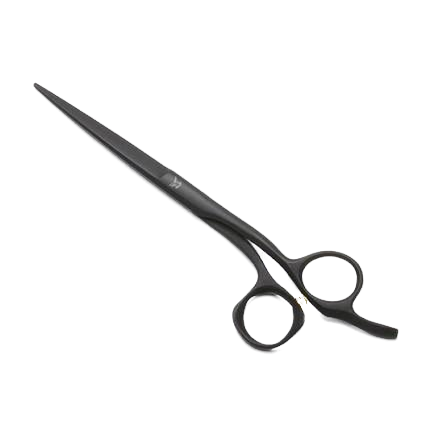
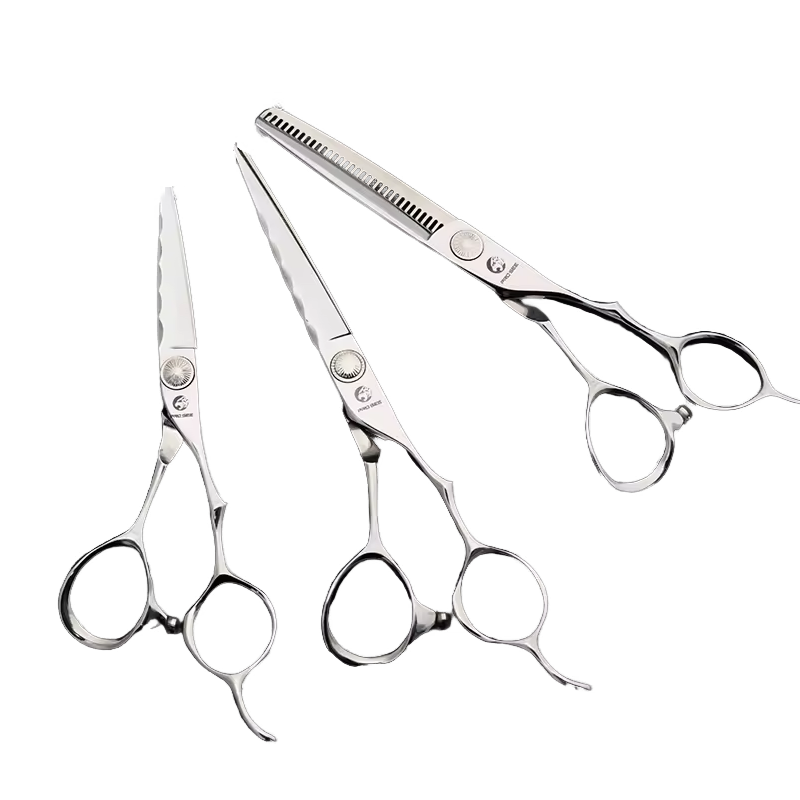
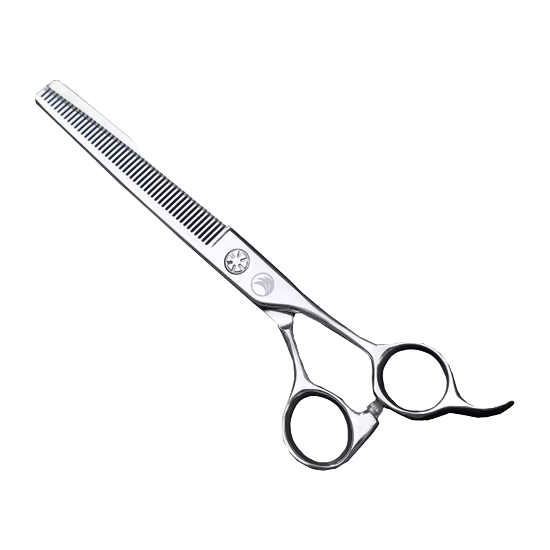
China 440C steel hair scissors by MATSUOPRO offer you a genuine Rockwell-tested steel – no mystery-metal “value” line disguised with a generic “Japanese steel hair scissors” sticker. Each pair is CNC-cut, convex-edged, and hand-honed at our Guangzhou facility before hardness verification and shipment. If you’ve spent time poring over 440C hair scissors Wholesale listings and 440C Stainless Steel hair scissors spec sheets that appear identical on paper, you’re looking at the Factory-Direct source behind many of them: the affordable entry point an up-and-coming brand, beauty school, or apprentice actually requires, without the obfuscation commonly associated with most budget-priced hair cutting shear product lines.
A quick search for “Japanese steel hair scissors” will return countless examples of boxes branded “Japanese” that never set foot in Japan. Independent scissor-industry writers have addressed this phenomenon directly, noting that “‘Japanese’ on a scissor box can legally mean anything from ‘forged in Seki by a master smith’ to ‘designed in California, made in a factory in Pakistan, with a Japanese-sounding model name.’ There’s no protected definition.” Indeed, one Reddit thread compiling common scissor sales tactics lists “‘Japanese Steel’ means Made in Japan” as the number one myth to dispel. This is precisely the ambiguity that MATSUOPRO aims to avoid with the China 440C series.
Indeed, one Reddit thread compiling common scissor sales tactics lists “‘Japanese Steel’ means Made in Japan” as the number one myth to dispel. This is precisely the ambiguity that MATSUOPRO aims to avoid with the China 440C series.
Every pair in this line under goes the same 80+ step process used across MATSUOPRO’s entire production facility: CNC blade cutting, Vacuum Heat Treatment, hand-honed Japanese-style Convex Edge, hand-tensioned construction, and piece-by-piece quality control within a structured ISO 9001 quality system.
The only variation is the steel grade and its associated cost. This adherence to process, rather than shortcuts on the production method itself, is the structural reason why the China 440C series is considered a genuine value tier and not a compromised one. Unlike generic, unbranded imports, each pair has a verifiable production lineage traced back to a single factory, a single QC system, and over a decade of manufacturing experience.
Commonly at this price point buyers comparison shop solely on cost, and quickly learn that “440C” on a product page can obscure an enormous spec delta—no published hardness, no confirmed edge type, no stated tolerances. MATSUOPRO’s China 440C line, by contrast, focuses on one proven, fully-specified configuration, not an ever-expanding list of poorly documented SKUs that are difficult to quote and problematic to private label consistently at volume. Where a Wholesale listing’s rows are often placeholder text, ours are actual numbers that you can hold us to.
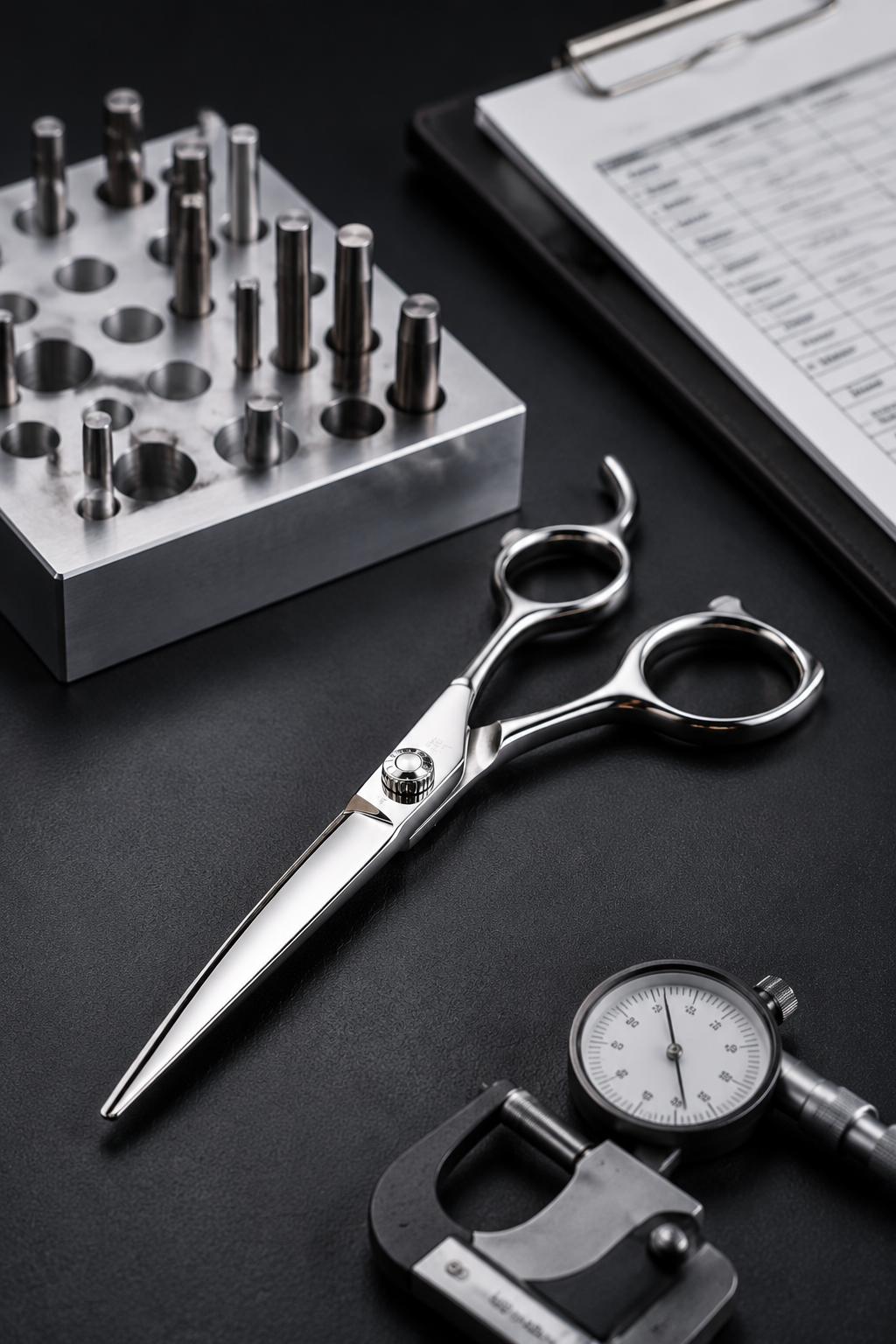
Handle ergonomics for this line are currently still in process at the factory. MATSUOPRO isn’t going to make claims about having an “offset ergonomic handle” until we’ve a confirmation from the production line, not from a catalog photo of something else—this is precisely the type of unverified claim buyers have become understandably skeptical of. It’s the right choice to make, even though a definite figure would look more attractive on the page. If handle shape is important to your order, please ask to see the current spec sheet prior to sampling.
“We make the China 440C line on the same CNCs and with the same heat treat profiles as our VG10 shears. The difference is in the steel grade, and the tempering temperature – that is the extent of it. We treat the blades with care.”
MATSUOPRO Engineering Team
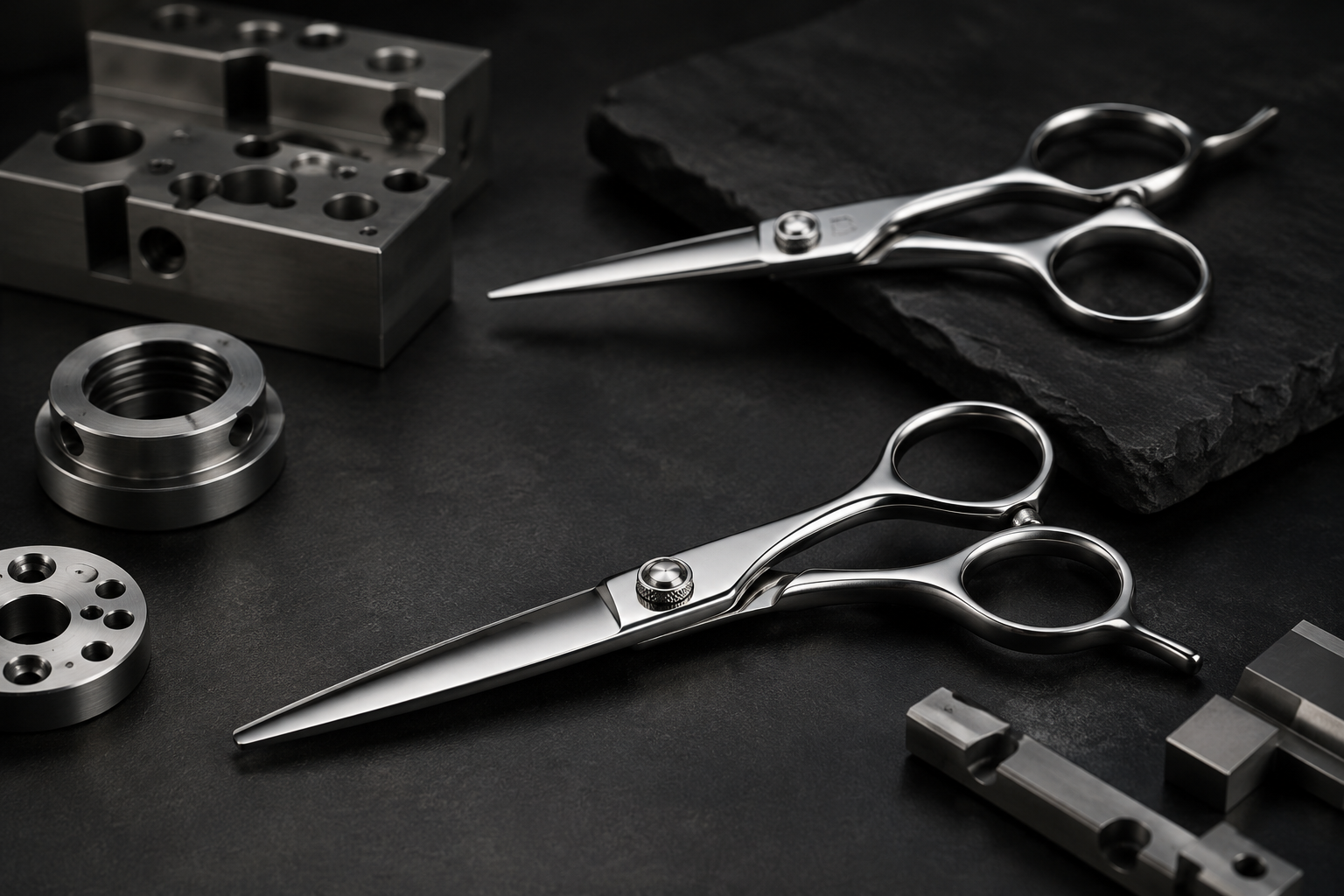
You can also compare steel grades and sourcing options across the available product lines.
MATSUOPRO brings this line to three ongoing use cases and, depending on each customer’s intended usage, different risks they aim to mitigate. We designed the specification sheet and MOQ with these all in mind rather than focused on just one industrial consumer type.
Building a private-label test order?
Download Steel Comparison Chart →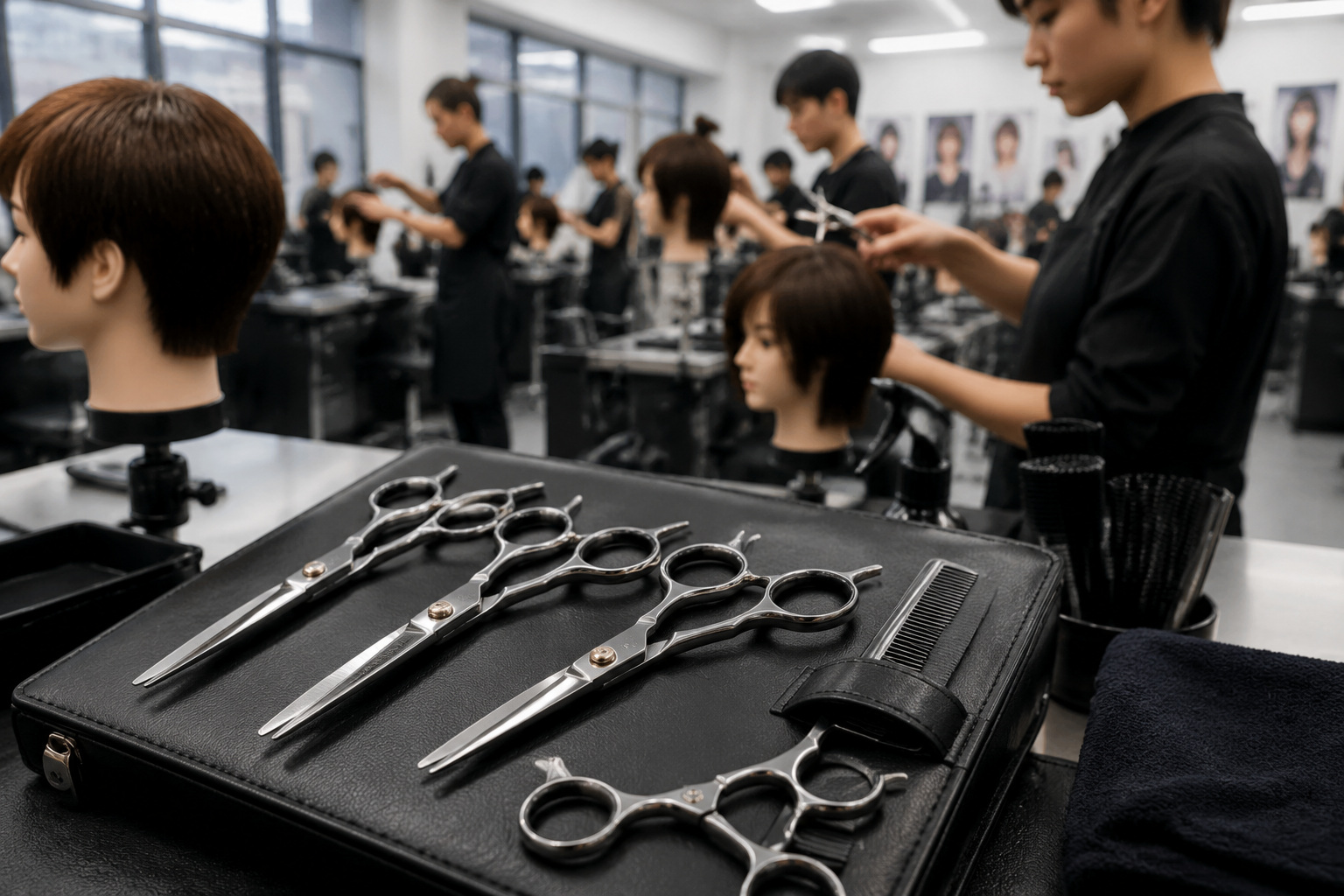
Suppliers equipping cosmetology schools often opt for 440C as a good working steel that withstands the rigor of training. It allows students to upgrade from “crappy” beginner sets to verifiable quality without breaking the bank.
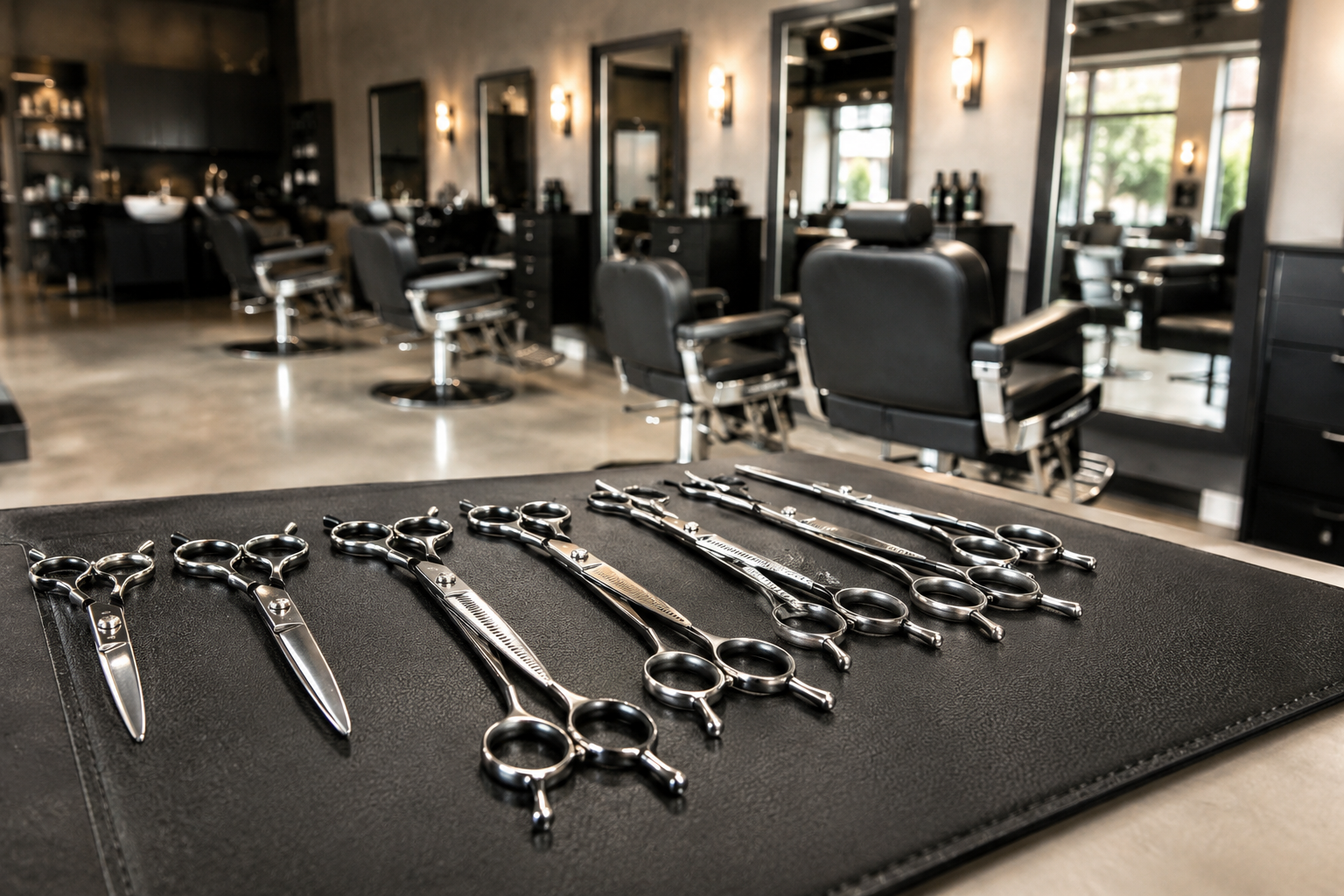
Young shops needing to fill styling chairs affordably prioritize authentic quality over slick finishes for their newest hires. (Shops fading and tapering all day should also explore our Japanese steel line for harder edges.)
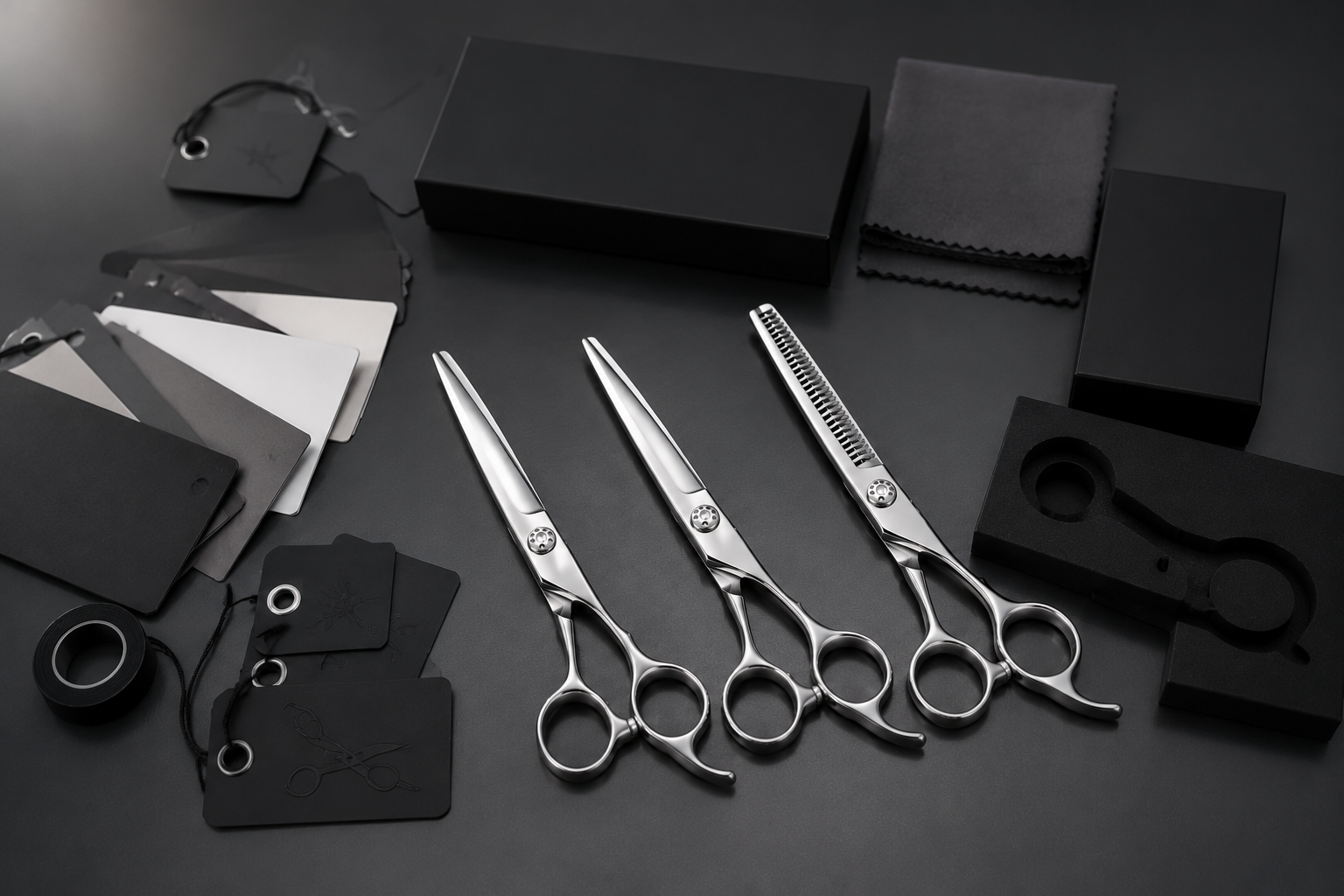
Entrepreneurs can pilot models safely. Gauge demand, packaging, and engravings before investing heavily in more expensive long-term tiers like our VG10 or ATS-314 models.
A quick search for “Japanese steel hair scissors” will return countless examples of boxes branded “Japanese” that never set foot in Japan. Independent scissor-industry writers have addressed this phenomenon directly, noting that “\‘Japanese’ on a scissor box can legally mean anything from \‘forged in Seki by a master smith’ to \‘designed in California, made in a factory in Pakistan, with a Japanese-sounding model name.’ There’s no protected definition.”
Indeed, one Reddit thread compiling common scissor sales tactics lists “\‘Japanese Steel’ means Made in Japan” as the number one myth to dispel. This is precisely the ambiguity that MATSUOPRO aims to avoid with the China 440C series.
Leverage our proprietary calculators to plan your inventory, assess ROI, and configure the optimal shear specifications.
Compare China 440C against premium alloys (VG10, ATS314) to determine the optimal specification balance for your target demographic.
Calculate the true return on investment over time, factoring in edge retention, sharpening frequency, and replacement cycles.
Plan your inventory and private label production schedule accurately based on current Guangzhou factory batching capacity.
440C is a martensitic stainless steel characterized by its 16-18% chromium content, lending it adequate Corrosion Resistance performance in typical salon settings; it still requires routine cleaning and pivot oiling just like any professional steel shear.
At average professional usage levels (20-25 clients/week), scissors of 440C grade generally need resharpening approximately every three to four months, as opposed to every two to three months for higher hardness VG10/ATS-314 steels, because softer steels experience a higher degree of wear during each sharpening pass.
China 440C in this line uses the same core alloy composition (ASTM A276) as the premium Japanese 440C range, with a different sourcing and tempering target: Our Japanese 440C is typically tempered to HRC 57-59 on Japan-sourced plate steel, whereas this line is tempered to HRC 56-58 to provide a more budget-friendly option. Both are genuinely produced steels; the disparity in hardness levels is explicitly communicated rather than blurred.
Yes, we offer laser engraving of logos and custom packaging starting from 50-piece custom orders, in the same OEM capacity as our other steel lines.
This is genuine professional-grade steel, with the caveat that volume matter. If you’re operating at or above 20-40 clients per week and plan on using shears for many years, higher hardness steels are cost-effective due to the reduced sharpening frequency and extended blade life. For apprentices, moderate stylists, or private label trial runs, 440C represents an excellent entry point rather than a compromise.
Current production schedules allow custom color finishes on this line to be batched in orders of 200 units; standard mirror finish custom orders (including logo/packaging but without color alteration) begin at 50 units. For distributors looking to establish long-term hair scissor manufacturing partnerships instead of single-order procurement, please contact us for our tiered pricing on orders of 500+ units.
Yes, our hair scissors for beauty schools are precisely why this line was created, offering the necessary hardness (HRC 56-58) to withstand training rigors without the unnecessary expense of fitting an entire class with higher-end steel that will be frequently replaced.