Get in Touch with Mackayhairscissors Company
We use submitted details to respond to your quote request. Read our Privacy Policy.

Japanese 440C hair scissors sit in a particular gap most catalogs gloss over: harder and better controlled than the unbranded 440C sold as a generic “budget” grade, priced well below VG10. MATSUOPRO’s Japanese 440C line is heat-treated to the narrow 57-59 HRC band where this alloy performs at its peak – hand-honed to a convex edge across 80+ production steps, with composition and heat-treatment data disclosed rather than hidden behind a steel name alone.
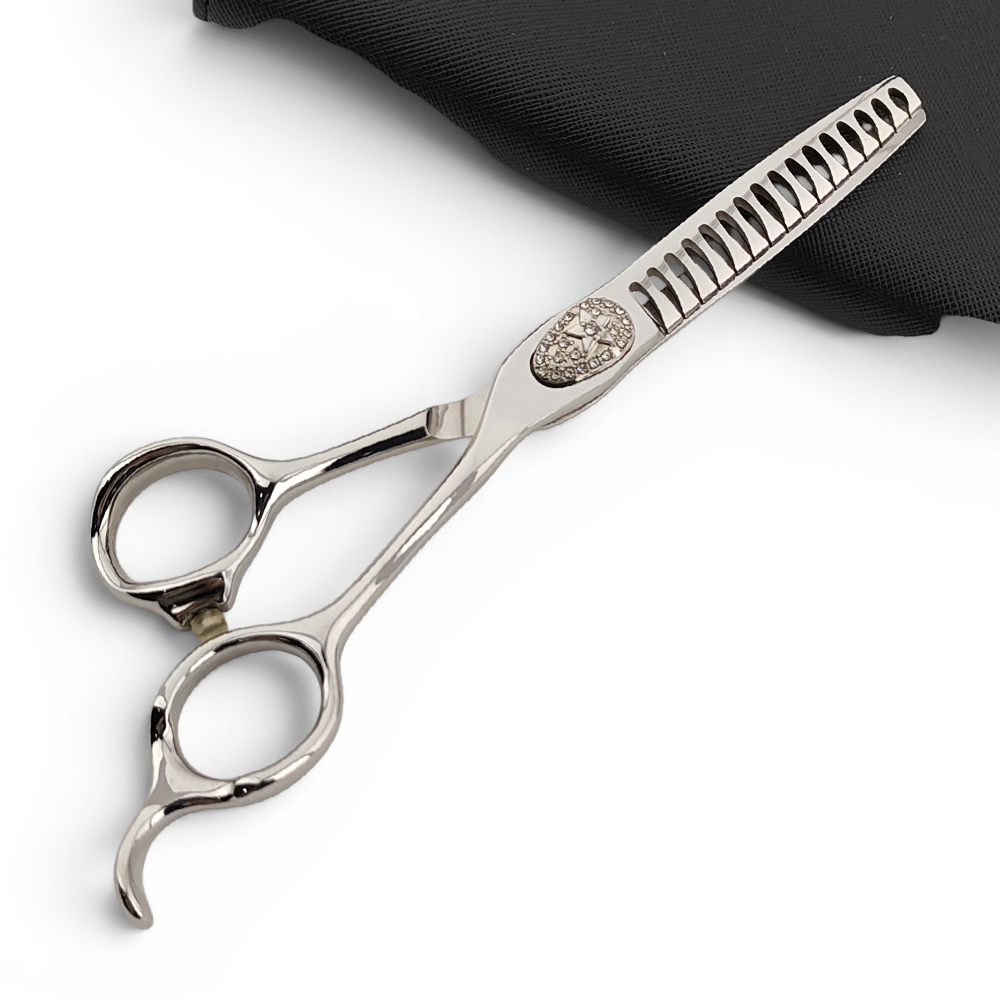
01 Japanese 440C hair scissors are miscategorized more than any other steel type in this category. I recently read a five-year, forty-stylist, “total cost of ownership” study which bundles “440C steel” into its lowest $150-$250 price tier along with brands with no relation to Japanese shears. That classification isn’t wrong for generic, uncontrolled 440C – the risk there is real, and buyers who’ve been burned by it know it. I went on Amazon once and paid less than $3 for a pair, just to see – they felt like they’d fall apart in your hand, and after the wobble, a slip-blade cut felt almost inevitable, not just unlucky. That’s the actual failure case for “cheap 440C”.
02 What that same study ignores is a real distinction it never tests: the same 440C alloy, built to the same ASTM A276 composition spec, can land anywhere from 56 to 60 HRC depending on how tightly the heat-treatment process is controlled – it’s not solely determined by the name printed on the packaging. This leads to a common error among buyers – treating “440C” as a singular quality tier rather than a broad specification with significant variation between lots. The difference between a 56 HRC batch and a 60 HRC batch is the difference between a scissor that dulls out of the box in two months and one that can go a full cutting season before needing a sharpen.
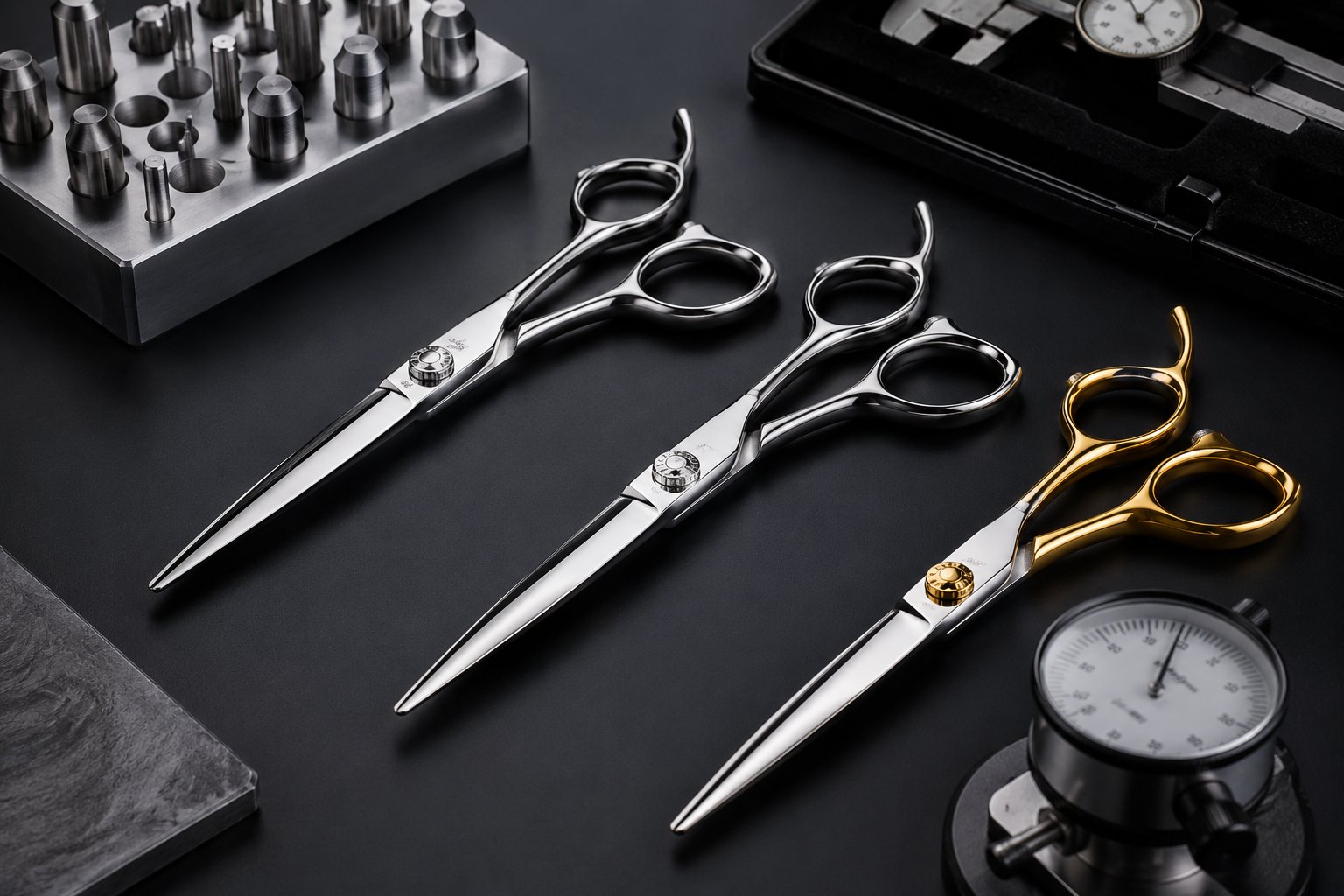
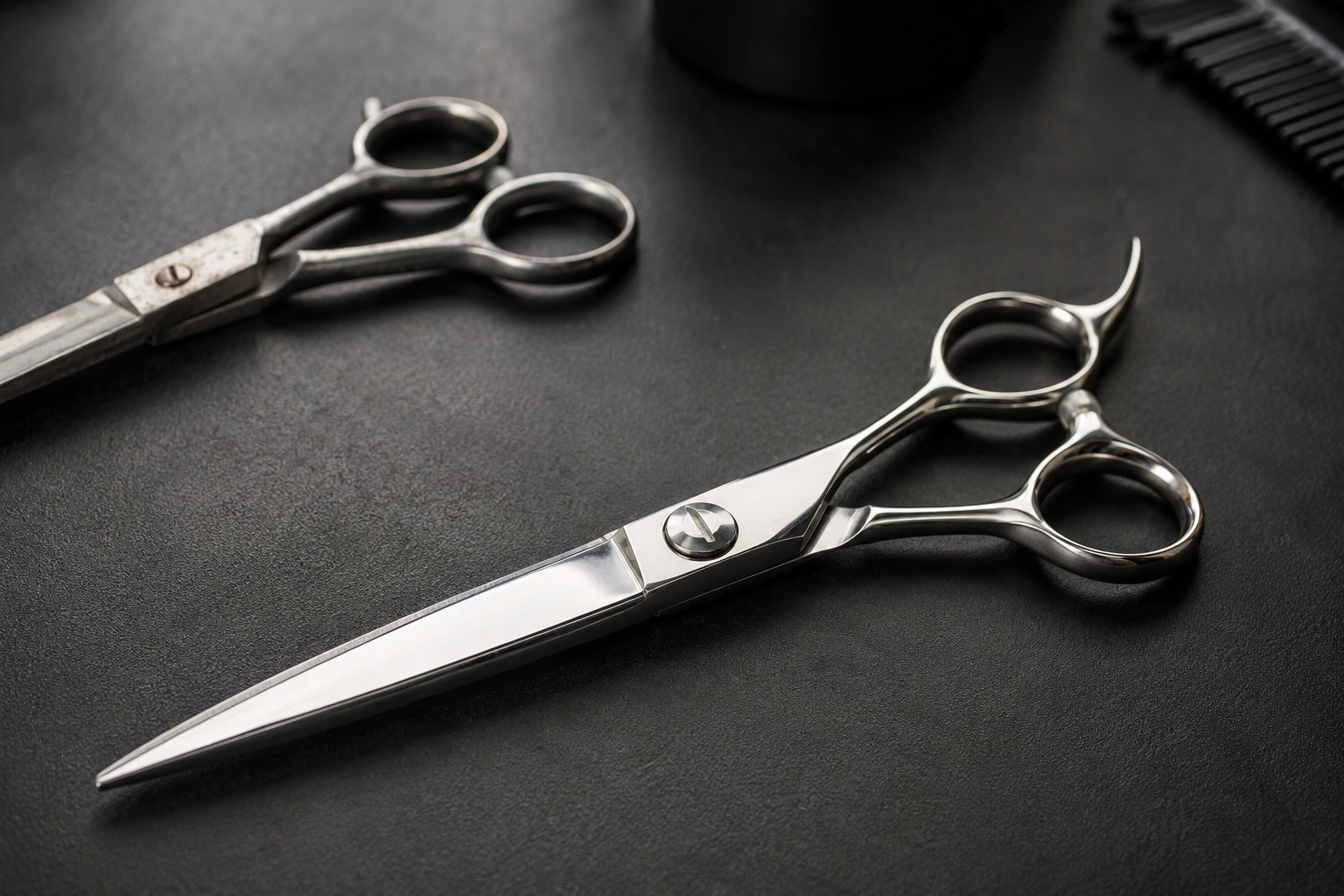
03 This variation is precisely why MATSUOPRO doesn’t offer a “440C” line. Our Japanese 440C hair scissors are heat-treated and finish-ground to hit the tight, high end of what the ASTM A276 specification allows for this alloy – 57 to 59 HRC – verified per batch, not estimated. This positions our Japanese 440C shears between the China 440C at the entry-level tier in our line and the premium cobalt-alloy VG10 shears, occupying the high-volume, best-value segment that buyers looking for Japanese 440c shears or Japanese 440c scissors are searching for.
04 For any salon owner, distributor, or private-label buyer, that mid-tier is the core offering, the best-selling segment of the entire shears category. These buyers aren’t looking for buzzwords, they’re looking for documentation. What follow is that documentation: we’ll demonstrate why our 57-59 HRC value represents best-in-class for this steel and how it compares to both the entry-level China 440C and our premium VG10 hair shears line. Once you’ve seen the data, request a wholesale quote, or continue for a detailed side-by-side comparison.
All Japanese 440C shears in the line start with the same base alloy and heat-treatment target, and vary by size, handle config and thinning blade tooth count depending on the specific cutting technique it’s built to handle.
Which configuration to spec depends mostly on the cutting technique your target buyer runs most. Standard 5.5"-6.0" cutting shears fit general salon layering; the longer 6.5"-7.0" barber-length version is built for the sweeping strokes fades and tapers require - see our dedicated Japanese steel barber scissors line if fading and tapering is your primary technique.
Our 20-tooth thinning shear removes bulk gently for soft blending, while the 30-tooth version is built for coarser, denser hair where a single-pass thinning shear would leave visible steps. Swivel-handle variants add an ergonomic layer for stylists running a full six-day chair, where wrist and elbow fatigue - not blade dullness - is usually the first thing to fail.
| Model Configuration | HRC | Size | Edge / Blade | Handle | Best Fit |
|---|---|---|---|---|---|
| Cutting Shear, Standard | 57-59 | 5.5"–6.0" | Convex Edge (Hamaguri edge) | Offset Handle | General salon cutting, precision layering |
| Cutting Shear, Barber-Length | 57-59 | 6.5"–7.0" | Convex Edge | Offset Handle | Fades, tapers, scissor-over-comb work |
| Thinning Shear, 20T Blender | 57-59 | 5.5"–6.0" | V-Shaped Teeth, 20-tooth | Offset Handle | Soft blending, subtle dimension |
| Thinning Shear, 30T Texturizer | 57-59 | 6.0" | V-Shaped Teeth, 30-tooth | Offset Handle | Heavier bulk removal, thick/coarse hair |
| Swivel-Handle Cutting Shear | 57-59 | 5.5"–6.5" | Convex Edge | Adjustable Swivel Thumb | Full-day chairs, wrist-fatigue reduction |
Explore the Japanese steel hair shears range for related options.
Alternative Tier: Looking for the true entry-tier? See our China 440C value line, built on the same alloy at a lower heat-treatment target for beauty schools and test runs.
Buyers often try to figure out which scissors are processed to a tighter spec versus which just carry a "Japanese steel" sticker. Because the composition numbers on a 440C spec sheet look identical either way, the origin label is used as a crutch. The real driver behind edge retention isn't the country—it's the heat-treatment precision.
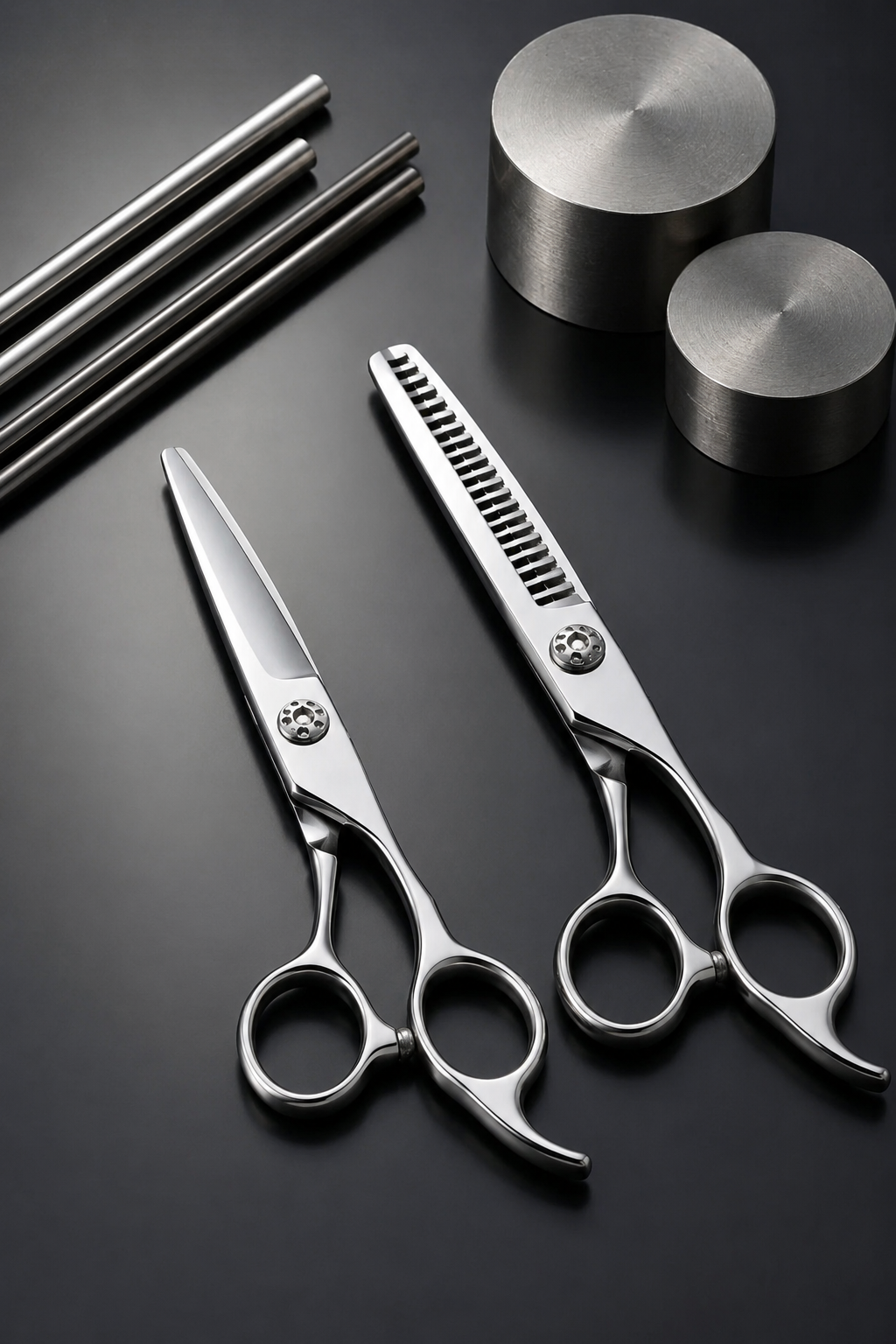
A joint metallurgical study austenitized 440C rings across a 1900-2000°F range. At 1925°F (a common industry minimum), samples failed the 58 HRC threshold. At 1950°F+, every sample passed. The primary carbide phase shifts directly with temperature. Same spec, different execution, different hardness.
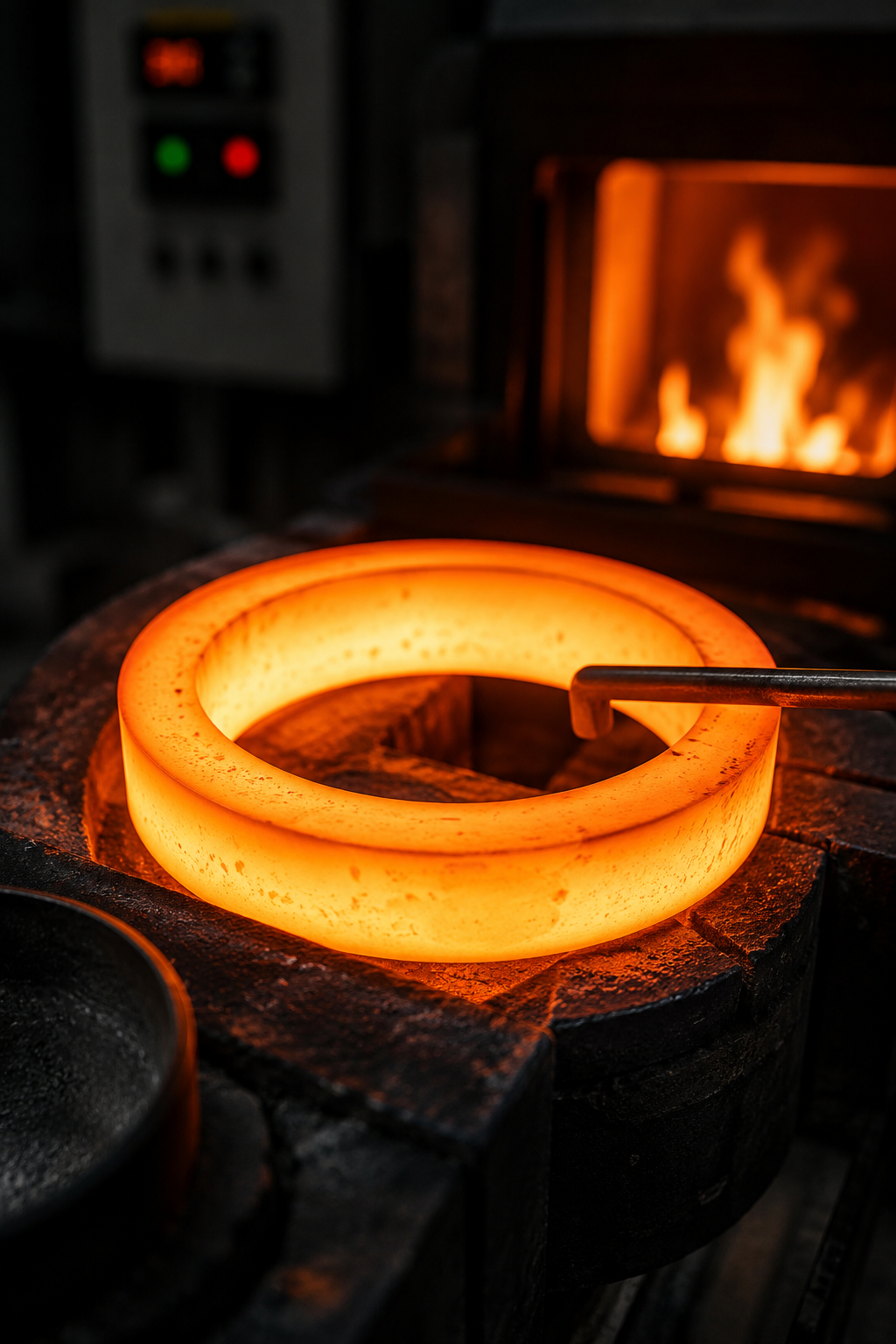
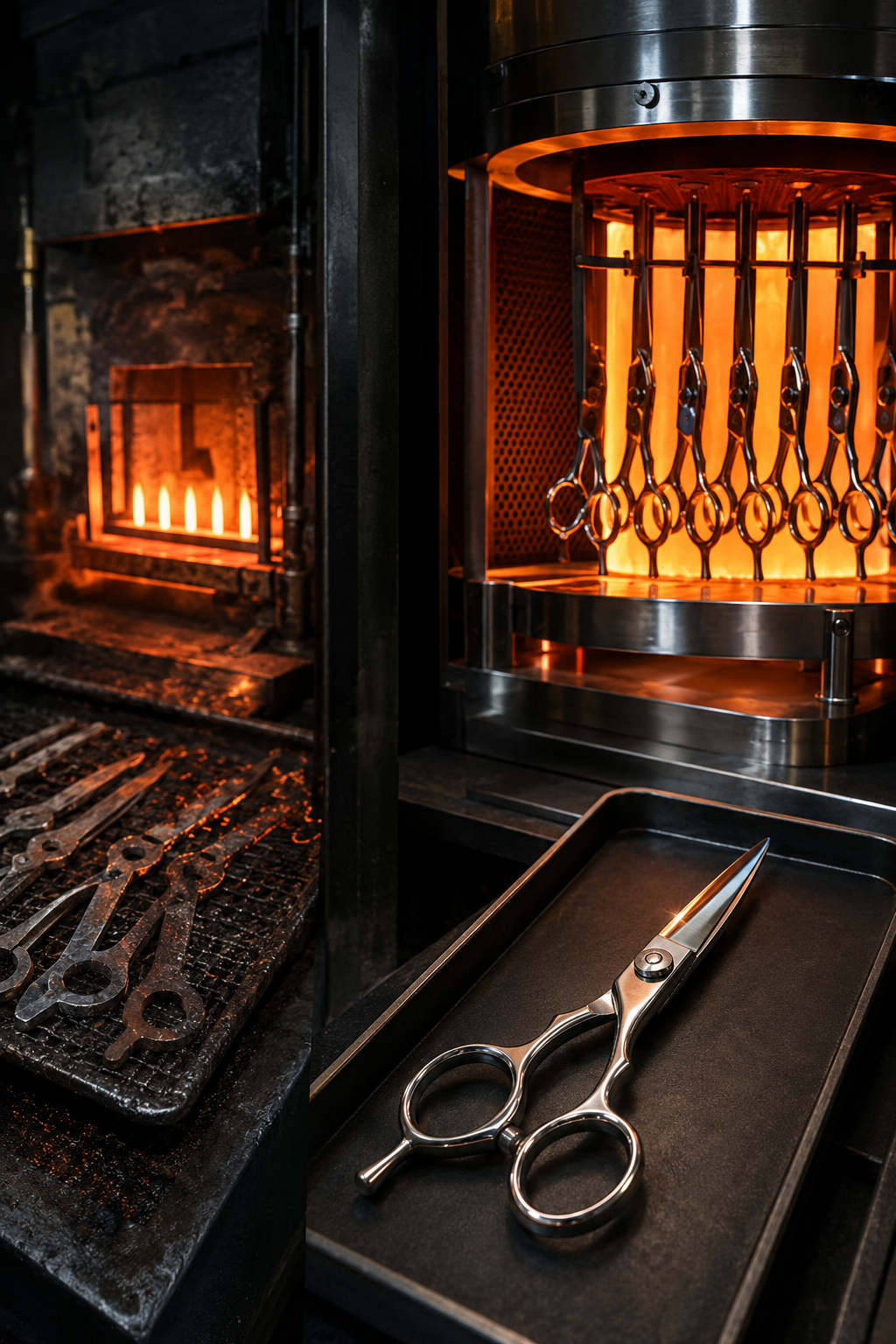
A 57-59 HRC target requires the slower, more expensive 1950°F+ cycle. Cheaper 1900°F cycles legally pass basic composition checks but yield volatile 54-58 HRC results. Process consistency is a heat-treater execution statement, not a geographic one—which is why MATSUOPRO discloses the batch report.
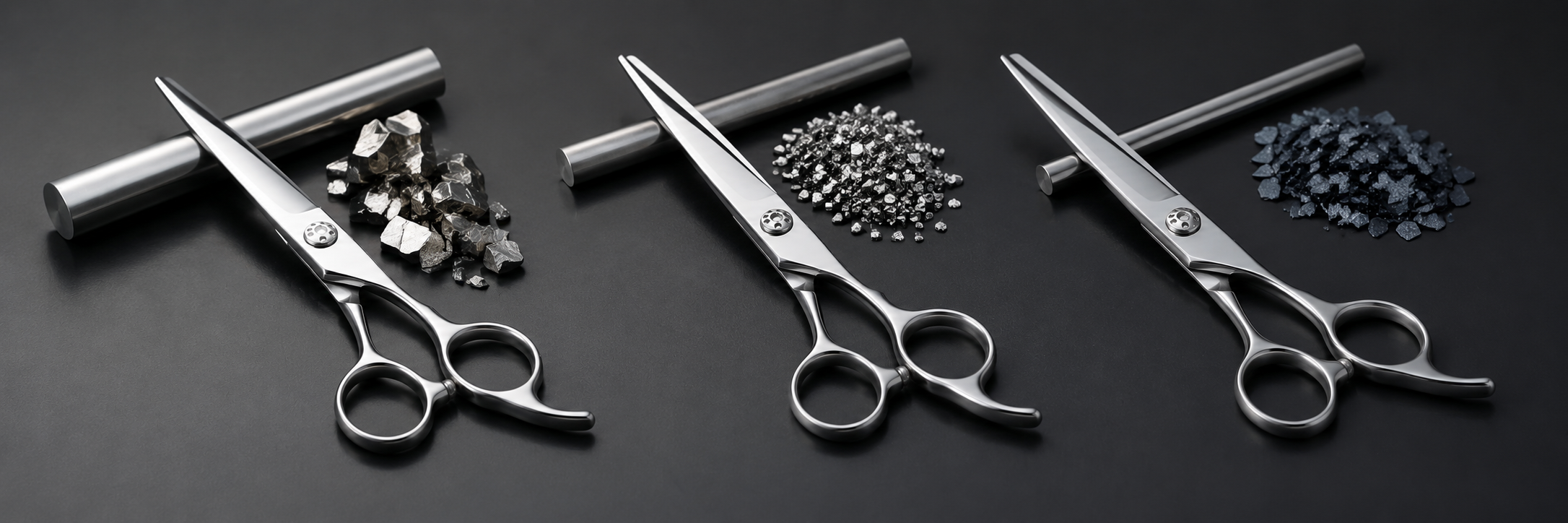
| Metric | Generic 440C | MATSUOPRO 440C | VG10 (Ref) |
|---|---|---|---|
| Composition (C/Cr/Mo) |
0.95–1.20% / 16–18% / ≤0.75% (unverified) |
0.95–1.20% / 16–18% / ≤0.75% (disclosed) |
~1.0% / ~15% / 1.5% Co |
| Hardness (HRC) | 54–58 (high variance) | 57-59 (verified) | 60–62 |
| Edge Type | Beveled / Basic | Convex (Hamaguri) | Convex (Hand-honed) |
| Resharpen Interval | 3–4 months | Upper end of range | 5–8 months |
Third-party shear-hairdress sources rate ATS-314 at 57-59 HRC, maintaining use on a convex edge for about a year of full-time salon work before resharpening is needed, while stainless steel that lurks at 54-56 HRC (like unbranded "stainless steel" scissors with no disclosed HRC target) "won't endure a busy week" of high-friction slide-cutting. MATSUOPRO's Japanese 440C sits in that same 57-59 HRC zone of performance, not in the undisclosed-hardness danger zone.
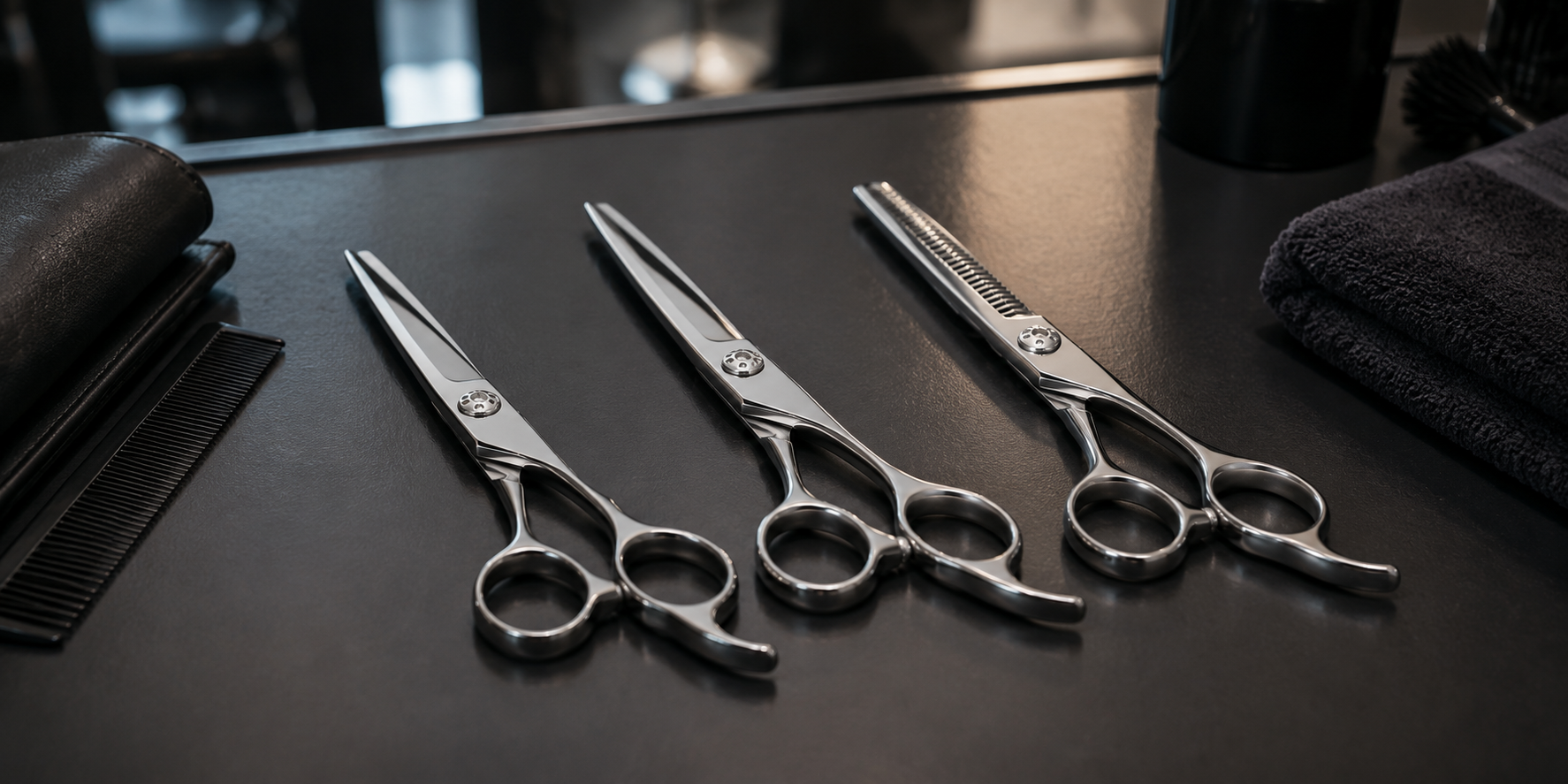
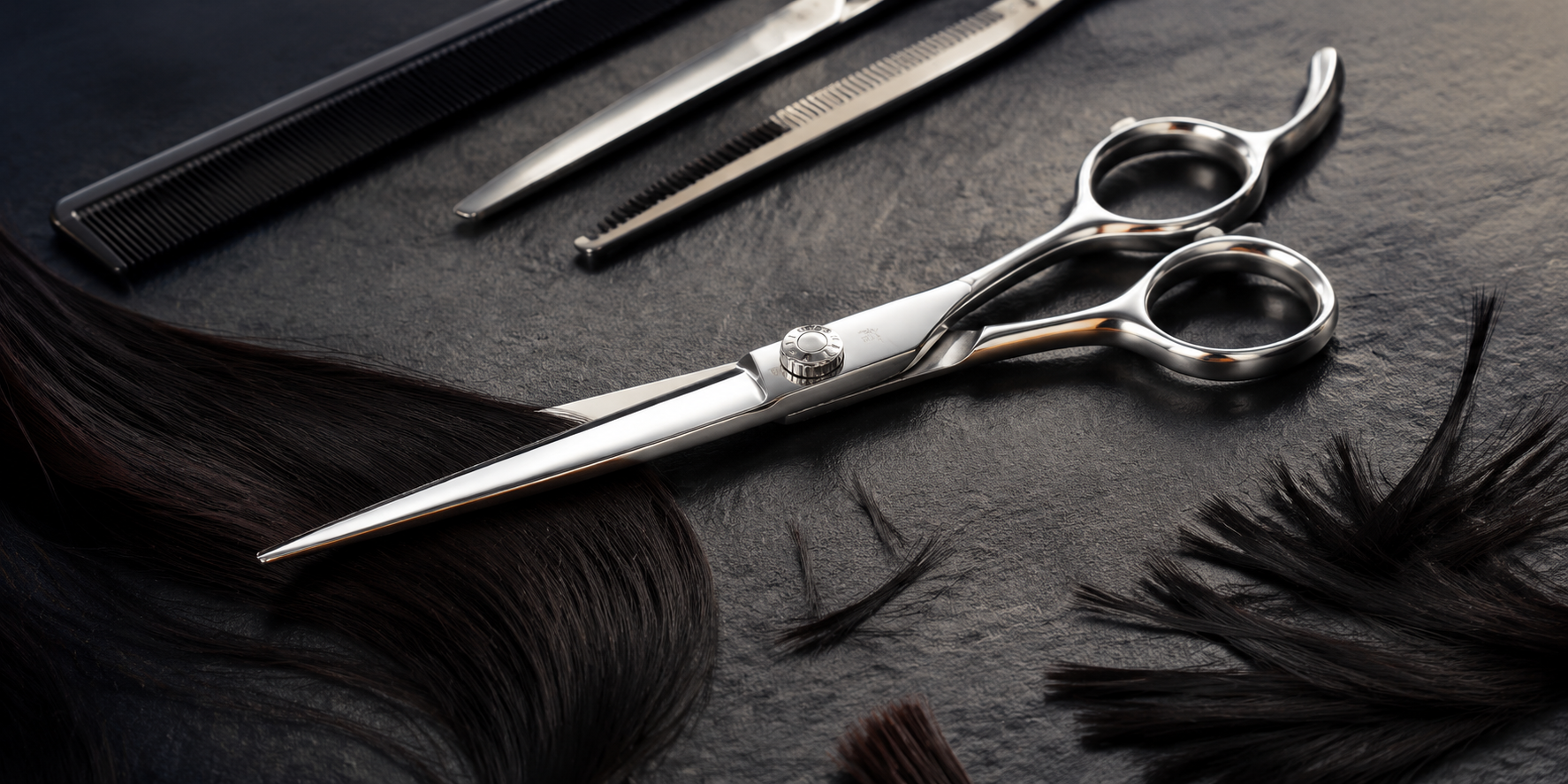
Slide cutting keeps the blade in contact with the hair over a long stroke, thus generating far more edge friction than with a single, stubby chop - which is why a convex, hand-honed edge does better under slide work than a beveled one. Point cutting and texturizing put similar stress on the edge; straightforward blunt cutting is more forgiving and can deliver good results on steels at or below this target hardness. Our 57-59 HRC convex edge is designed for the entire range of technique, not just the most forgiving one.
That study finds the daily cost of the cheapest "440C" option is about five cents less per day than the VG10 option, but that difference boils down to which point in the 3 to 4 month sharpening cycle a set of shears are delivered in. Heat treat a batch of knives to the very top of what's possible, and you can expect it to retain optimal performance longer in that cycle before beginning to show performance decay - the payoff in the 57-59 HRC "premium" range versus 54-58 HRC "value." So whereas a tier 3 outfit might talk about "440C" and provide no hard data to back up what that represents, MATSUOPRO puts hard data (hardness reports) on their "440C" numbers so you can compare them with a sample before you commit to bulk quantities. Good deal for anyone who's been burned by "close enough" specifications before.
Corrosion resistance follows the same logic documented in the Sandia/Timken/Hayes heat-treatment study. 440C's 16-18% chromium content gives it real resistance to rust and staining from routine wet-cutting and product exposure - comparable to 410-grade stainless, though not as high as the fully austenitic 300-series alloys used in non-cutting applications, since 440C trades some corrosion headroom for the carbon content that gives it cutting hardness in the first place.
A disclosed HRC number is only as trustworthy as the factory behind it. MATSUOPRO's manufacturing runs under an ISO 9001 quality management system, audited to BSCI social-compliance standards, with SGS-verified third-party inspection available on request - the same three-layer verification stack used across MATSUOPRO's full shear line, not a claim unique to this page.
Quality management system
Factory social compliance audit
ISO 9001’s quality certification is for the system that processes (the HRC band itself) - not for the alloy spec or actual HRC number. Knowing that difference can be huge before you place your order - because the factory can still be ISO 9001 approved and ship a batch with random HRC levels if its own HRC checks aren’t part of that certified system. Unlike a supplier that treats "ISO-certified" as the whole answer, MATSUOPRO's hardness verification is written into the QC line as its own step, because "certified" and "hits the disclosed HRC band every time" are two separate guarantees, and buyers deserve both. That's the standard fix for the trust gap most 440C listings never close.
Need a hardness or material report for your own QC file?
Request Wholesale Quote →Japanese 440C acts as the readily available, mid-level entry point to MATSUOPRO's line of Japanese steels, often representing the first order for private label brands and distributors wanting to test the waters before making the leap to VG10 or Damascus SKUs. As one salon-coaching veteran with 30 years running salons has put it, stylists get sold on brand names and flashy marketing over and over again, ending up with tools that break or cost a fortune to sharpen - the same risk apply one level up, to the distributors sourcing those tools in the first place, whenever a supplier's spec sheet can't back up its steel claim.
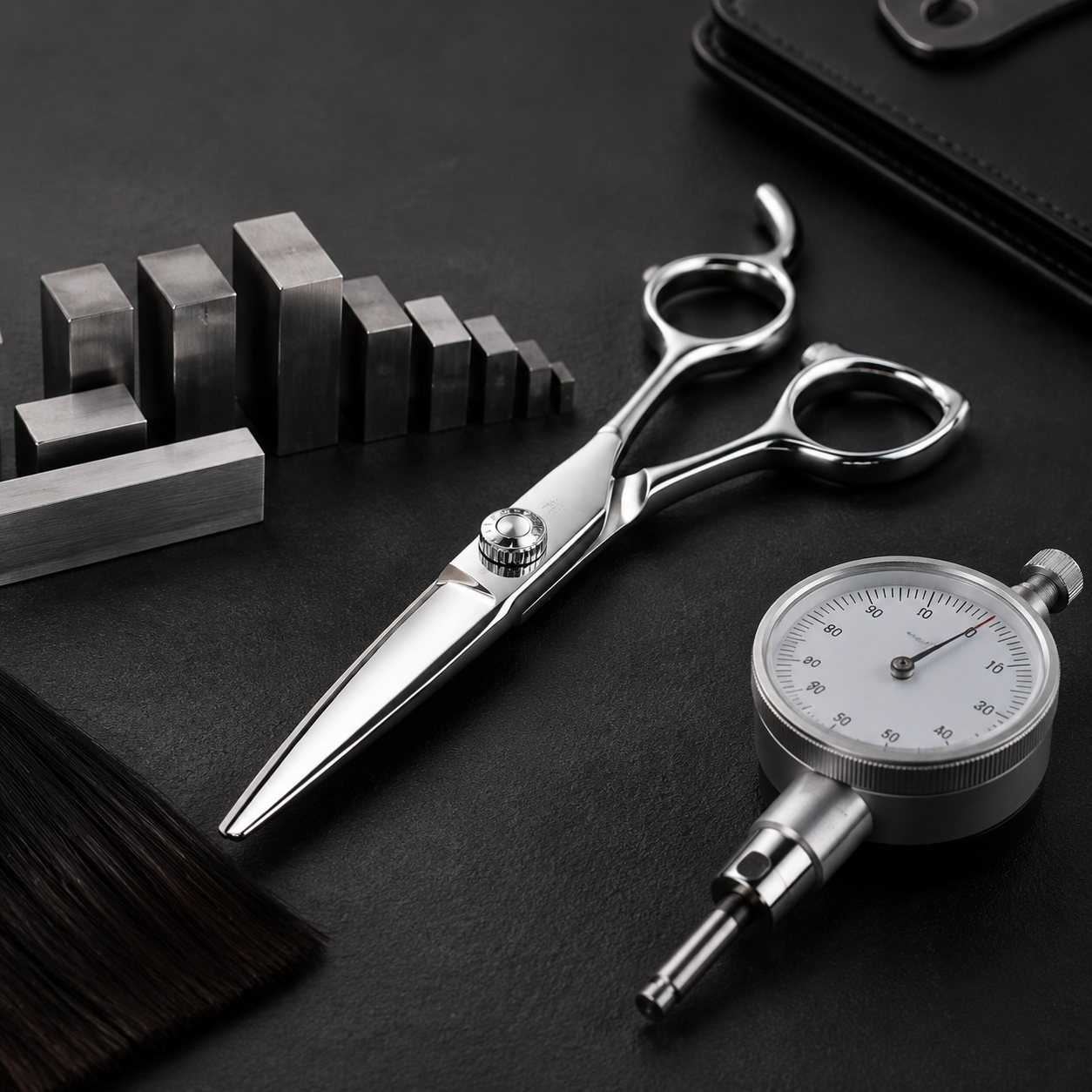
This ordering approach of small samples first, rather than full-volume commitment at the start, exists because of a cost problem buyers only discover after the fact: a cheaper pair of shears may not stay sharpened for very long, so a supplier that ships a full 500-unit order on undisclosed 440C can leave you fielding return complaints for a year before the pattern is even visible. It might cost $30 to $50 per sharpening to keep a batch performing, and that's a manageable line item - but only if the hardness was verified going in, not discovered going wrong six months post-shipment.
No matter the supplier, the questions you need to ask remain the same: (1) what's the HRC band the factory *actually* measures against, and not just claims? (2) Is hardness checked on a per-batch basis or simply assumed based on the steel type? and (3) will the supplier share a hardness report from their latest batch of sample production, *before* you commit to an order? In general, if a supplier can’t be specific, they’re likely reselling generic steel under a well-known name, a risk that a 3-day sample is precisely designed to prevent at a small scale, rather than an entire year of returns.
Our typical ordering process for the Japanese 440C line starts with a 3-day sample using the specified handle, blade length, and edge - once that is approved, the production process can commence for the remaining bulk order, taking approximately 60 days to complete. Given that this line uses the same production and QC processes as MATSUOPRO’s other lines (including VG10 and China 440C), there is no significant increase in lead time for sample orders when multiple tiers are sampled simultaneously. A China 440C sample alongside a Japanese 440C order, for instance, will still only require a 3-day ISO 9001 process. Our samples are manufactured with the same in-line batch verification of steel hardness, which is unlike trading companies that might resell under our name.
The majority of questions outlined below are reflections of typical buyer search terms in this product category, from "Japanese 440C scissors" to "japanese 440c shears" and "japanese stainless steel hair shears." All these terms lead back to one core query: what's the actual cost-benefit value of 440C and is the advertised hardness level legitimate and verifiable?