Get in Touch with Mackayhairscissors Company
We use submitted details to respond to your quote request. Read our Privacy Policy.

Your brand only gets the kind of top-quality manufacturing the end customer expects when the factory behind the steel, the edge, the engraving and the packaging are all one and the same entity. Mackay is a wholly vertically integrated manufacturer – from Japanese steel and a hand-honed Japanese convex edge, through to the in-house laser engraving of your logo. That means when a brand, distributor or academy partners with Mackay, they receive the Japanese-quality finish that salon-identified tools deserve – at factory-direct prices, on minimum orders of just 50 pieces.
In fact, some of the leading names already recommend Chinese-assembled shears, as long as they are forged with legitimate Japanese steel (the community wisdom is that country of assembly is less important than origin of the steel). At Mackay, that’s precisely the approach we take. We draw the raw plate for our ATS-314 steel directly from Japan’s Hitachi Group, use Japanese VG10 from Takefu, and back up every assertion we make on this page with a specification sheet you can literally drop into a purchase order.
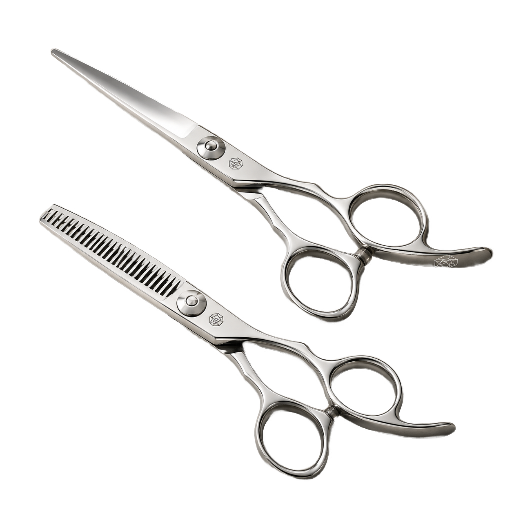
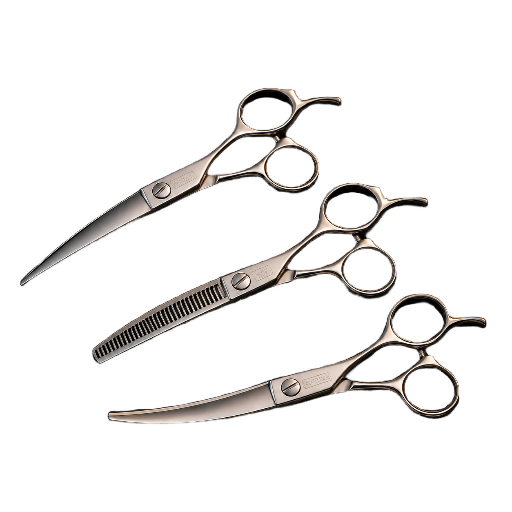
A ‘standard’ generic shear simply resells another brand’s reputation. If your brand appears on a tool that a distributor or academy didn’t actually commission – from specification to delivery – they’re also taking on the responsibility for whatever steel grade, edge bevel and tension the supplier happened to be working with on any given day, with absolutely no means of proving that quality to their customer. Custom hair scissors tackle both your branding problem and your quality problem: brand your blade, and we’ll put the spec sheet behind it. It doesn’t matter if your customers recognize them as salon hairdressing scissors, or the very same barber shears – the branding disconnect is identical and only bridged by controlling the steel.
And this is not an abstract problem. We often hear stories from stylists about blades that aren’t sufficiently hardened and “push” or “fold” the hair instead of slicing cleanly, leading to excessive sharpening, increased service time, and visible hair damage at the ends. Many customers have learned that claims of “Japanese steel” for $50 in a marketplace are virtually never legitimate. In the end, a brand that lends its name to an unverified product walks away from thousands of dollars in lost orders.
Mackay works with high-grade Japanese steels, including 440C, VG10, ATS-314, and cobalt alloys, before vacuum heat treating and cryogenically tempering each blade. The convex edge is honed entirely by hand, and each pair undergoes an individual inspection. It’s this end-to-end control that enables us to provide emerging brands with the manufacturing quality of the top Japanese and German houses, without the prohibitive cost – and to back it with an ISO 9001 quality system and objective, third-party hardness testing reports.
Consider a barber academy ordering 200 branded pairs for its students, or a distributor launching a wholesale hair scissors line of professional hair cutting scissors: they can buy stock and join dozens of other sellers listing the exact same tool. Alternatively they can commission the forge to produce custom hair shears and custom barber shears and own an edge that no marketplace listing can undercut. This is the distinction between a re-brander and manufacturer and is what buyers are asking when they say they want “real Japanese steel at minimum, before I trust anyone’s logo.” Cheap scissors result in split ends and force more frequent hair cuts. Therefore the best custom hair scissors are not made on a slogan but on a specific grade of steel at a precise hardness. The following section covers the details a procurement team requires before they sign off.
Explore the OEM and private-label hair scissors services for related options.
Most custom-shear pages have “steel options” and stop there, forcing an impossible decision about which steel, at which hardness and in which configuration works best for a specific hand, technique, climate etc. Two shears which might both be described on paper as 58 HRC Japanese stainless become difficult to differentiate. Below is a true spectrum of the grades we use, along with their pros and cons.
Harder is not better on every axis. Of the Japanese trio, ATS-314 holds the hardest edge, but its lower chromium gives it only good corrosion resistance — while the softer 440C, with 16-18% chromium, resists rust best of the three and tends to bend rather than chip if dropped. The hardest options, ATS-314 and cobalt, hold an edge longest but are the most prone to tip chipping. A US patent covering barber-scissor manufacture clearly states that hard-metal (cobalt) edge hardness is concentrated in the cutting edge region to reduce cracking risk during fine setting (US20080155836A1). A single “best steel” does not exist – there is only the best steel for your hand, your style and your climate which custom production can deliver.
Reaching 60-61 HRC on cobalt stainless requires precise temperature control and process – it is not a number achieved on the label. A US granted patent for a professional hair shear describes how a cobalt stainless steel (1.49% Co) is heat-treated using double temper and double cryogenics in liquid nitrogen to achieve 60-61 HRC (Rockwell C), starting from 21 HRC annealed. (US11865734B2). Our in-house facility replicates this high performance heat treatment.
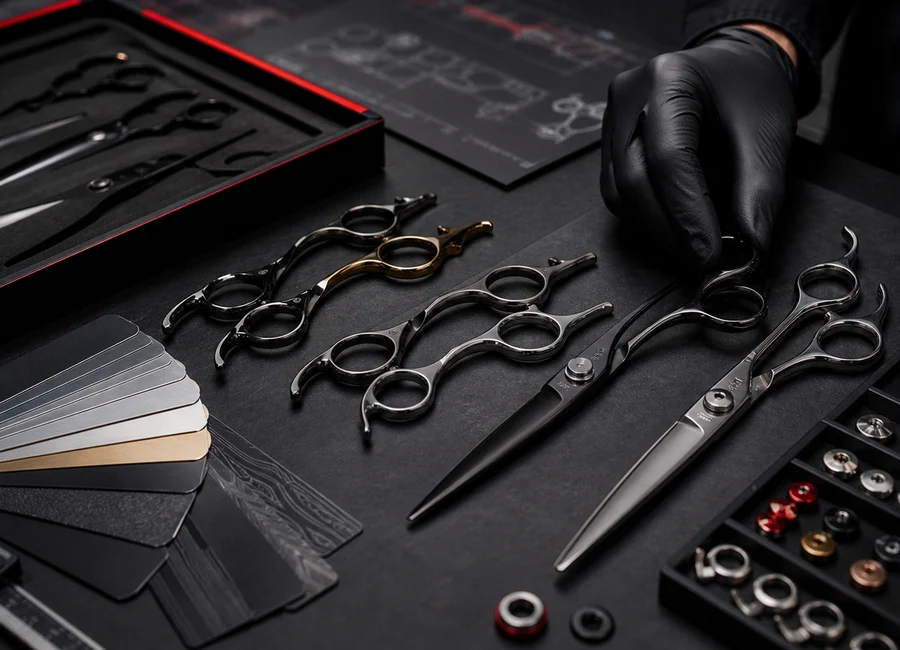
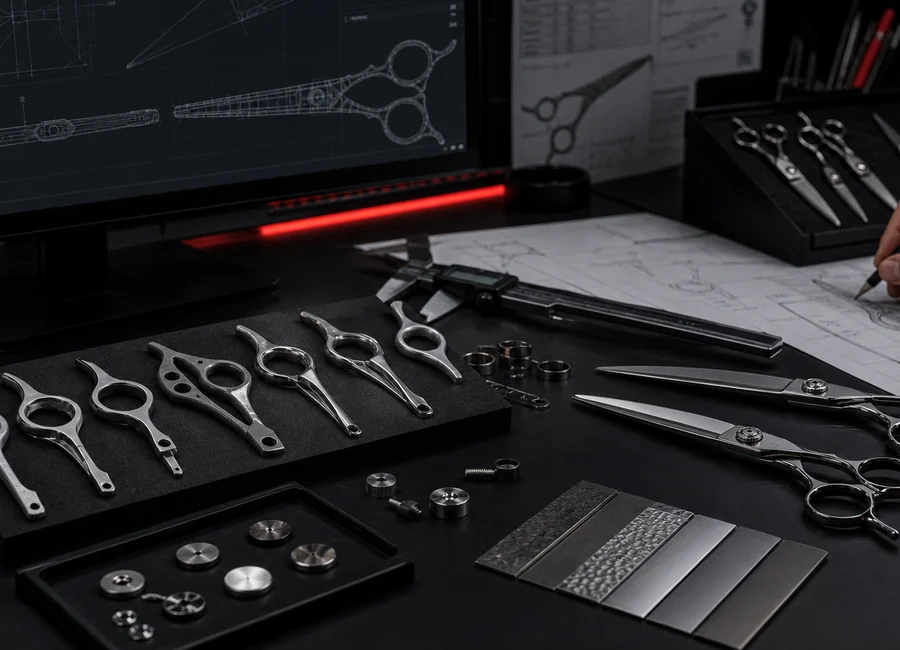
Beyond the steel type, you specify the whole product, from blade (plain cutting scissor, texturized or tooth count thinning scissor, to a curved bending blade needed by pet groomers) to handle type (offset ergonomic, swivel thumb, or opposed grip), handle length (5.0” to 7.5”, with 6.5” the most popular with stylists), finish (PVD colour, mirror, or matte), logo etching, and custom packaging. Our facilities manufacture both hair grooming and pet grooming lines, enabling one catalogue of branded goods.
Not every brand requires a fully ground-up build for day one. What is critical is avoiding both the premium price for full OEM tooling when a semi-custom run will suffice, and avoiding selling a stock item when customers are expecting a proprietary blade design. We help you select the right option for where you stand, based on your goals – not on a simple best-good-better table.
The economics also favour buying direct. Industry teardowns of the reseller channel report markups around 350-400% over wholesale — a pair costing $50-200 at wholesale can reach $400-1200 at retail, sometimes with steel mislabelled “Japan.” You save that expense by working directly with the manufacturer-the markup your private label brand can claim. Regarding steel itself, patents are often a reliable reference. For example, Japanese patents have revealed that increasing raw hardness beyond a certain point for a blade does not further improve sharpness retention. They have shown a “sweet spot” that exists in the middle rather than a push to the highest possible numbers (WO2011090066A1). We know that aiming for the maximum possible number doesn’t equate to purchasing the highest-performing blade.
Buyers would be right to be wary of the ‘custom’ label itself, though: groomers and the stylists have seen too many shears passed off by suppliers as custom when it’s really just a re-packaged generic line, and thus a true pre-production sample and a specific steel grade matter a lot more than words. A semi-custom run of 50 units is enough to prove out the tool before you invest a whole season’s budget in it.
Weighing a wholesale hair scissors line against a full custom build?
Request a custom quoteThis is the one step that just about every custom-shear supplier leaves foggy, and the one that separates a product with an honest brand mark from one with a printed one. What can be described as “engraving” actually means one of three very different things, and it will show up the first time a blade gets cleaned or sharpened.
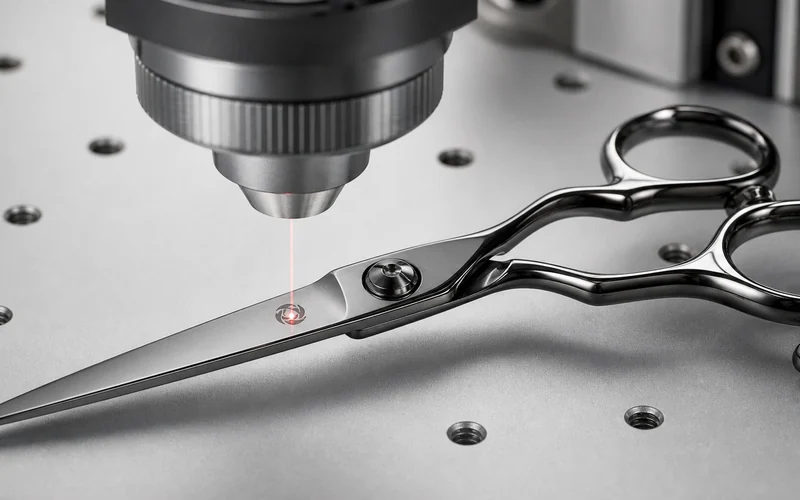
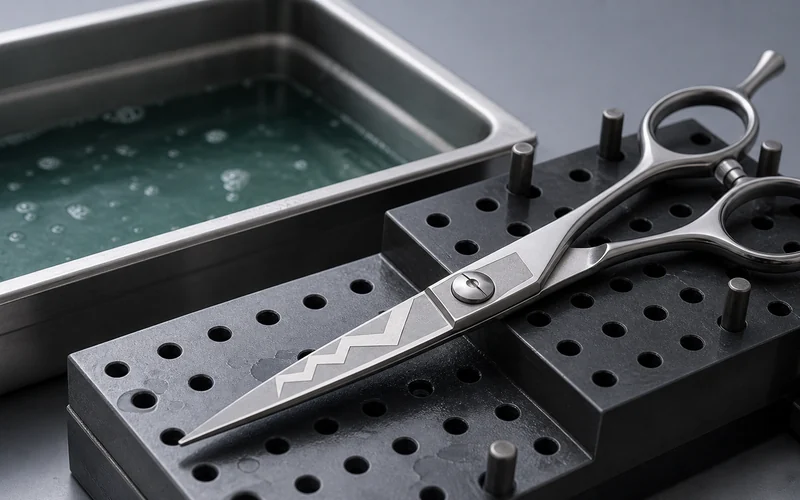
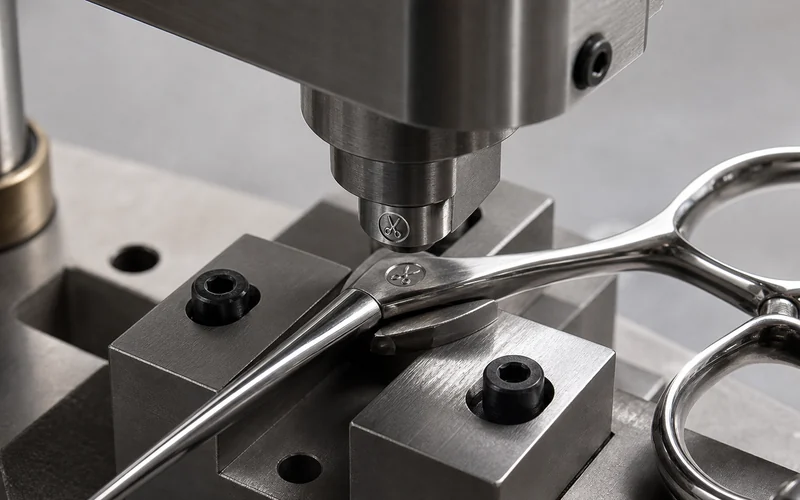
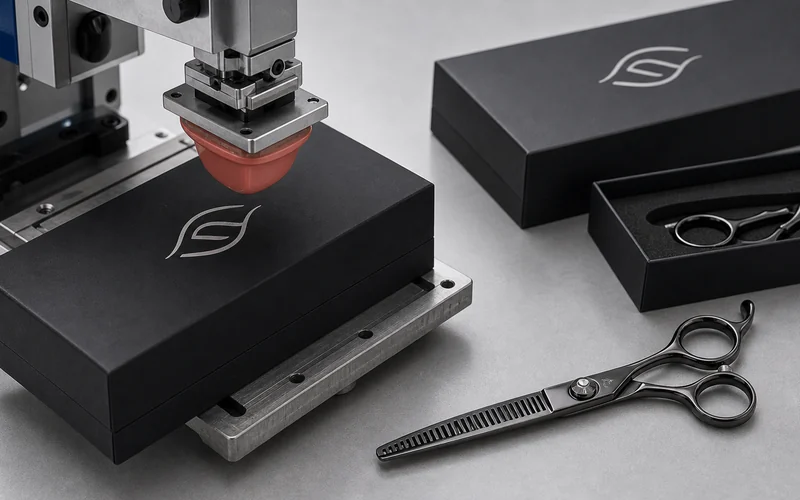
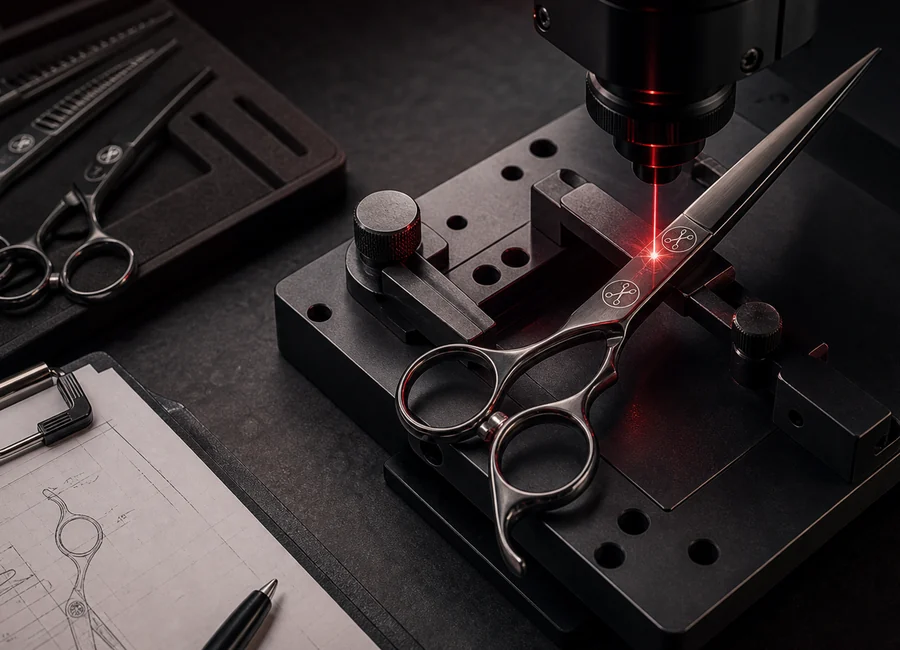
The importance of this may be greater than it appears. A shear made elsewhere can still claim to be “Forged from Japanese steel,” as that applies to the material itself and doesn’t indicate manufacturing location. In this industry, a “Japanese steel” claim means nothing to verify location, only that you bought your raw materials somewhere over there. A permanent engraving on the blade itself (not the box) is the one verifiable proof of a product’s country of origin. That, and it can serve as a serial number. That keeps customers from bothering to seek out a random forum member to help authenticate their purchases by eye. It’s one thing to have your customers believe a product comes from Japan, but for private-label sellers of engraved hair shears, a permanent, laser-etched mark on the product and its batch means something. As most marketplace customers know, you are looking at a counterfeit when buying “Japanese steel” below $50 – but an in-house laser marking means yours isn’t. This is a well-known, hard-and-fast marketplace rule. In the U.S., the CBP country-of-origin marking rules require a permanent mark on the item itself rather than the box. Our in-house laser gives you a product that meets these requirements, etched with your brand logo, the batch code, and country of origin — each logged against your ISO 9001 batch record. A permanent laser etching ensures a buyer of a 6.5 in blade or a 7.5 in blade that it is genuinely yours and greatly cuts counterfeit risk.
Want to see your logo on the blade before you commit?
Get a free branded mockup — we render your artwork on your chosen model.What is a technically literate buyer actually paying for? If he or she is honest, it isn’t the steel name. It is what is done to the steel once it arrives. The same steel could cut beautifully or fold hair, depending on heat treat, edge geometry and hand finish. None of that can be seen in the shop. Every premium Mackay pair passes through over 80 separate operations for precisely that reason.
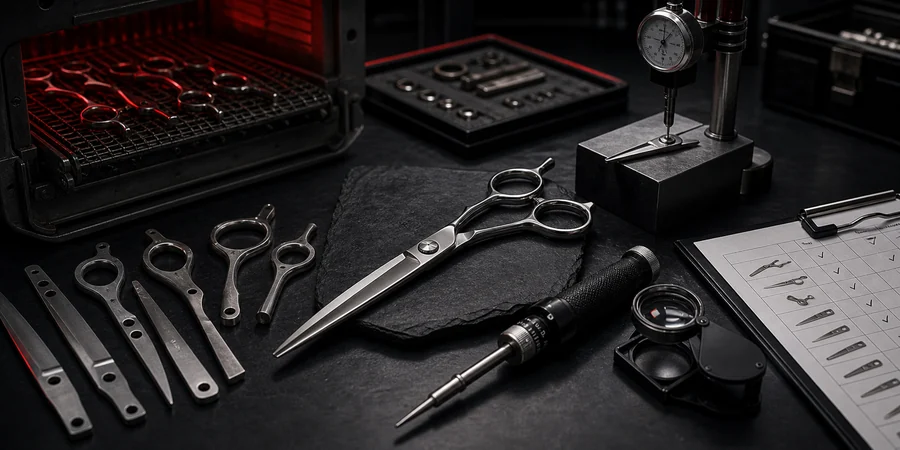
Our steel — including ATS-314 plate sourced directly from Japan’s Hitachi Group — first goes through our CNC cutting and shaping. After this, the plates receive a vacuum heat treat up to 60-62 HRC (or up to 64 HRC for our flagship cobalt lines) plus a cryo cycle. CNC grind to our patented profile, then hand hone to a Japanese convex edge and mirror finish. Our unique surface treatment, which includes PVD colors, follows. Next is assembly and hand tensioning. Lastly, each piece is subject to individual QC (edge sharpness, balance, tension, and finish) before being engraved and packaged.
And what makes our edges hold an edge much better than a machine bevel? Tests show that a low-angle edge is the number one factor driving edge longevity, far outperforming steel type alone; a thin, low-angle edge like our hand-honed convex profile outcuts an obtuse bevel by a wide margin under the same load (edge-retention testing).
Our convex profile incorporates a handmade ‘ride line,’ allowing the blades to glide over the hair without catching-it’s the very reason our craftsmen hone each premium edge by hand, traveling twice a year to premier workshops in Japan and Korea for continued instruction.
“We tension and hone every premium pair by hand, then run a single-ply tissue test to the tip before it ships. Vacuum-hardening and a double cryo cycle are what actually hold a convex edge past a season of full-time cutting — the steel grade only sets the ceiling.”
Our adjustable tension screw isn’t a cosmetic piece — tension adjustability is a load-bearing mechanism documented in professional-shear patents (US9815214B2), and it is the cause of most “my new shears feel dull” complaints. By controlling the entire process-from forge to engrave-we are able to fine-tune each tool’s performance individually.
Evaluating us against a current supplier?
Request a sampleand run it against your own tissue and balance tests.
We’ve all seen it. A procurement team orders an item labeled ISO 9001 only to find no certificate number on audit, or a shipment that fails a hardness test. Where a re-brander has no inherent knowledge, a professional hair scissors manufacturer will give you all the data you need – that’s why we lead with evidence, not logo-walls, to include third-party hardness tests to 58-64 HRC per grade. BSCI/SGS audits, ISO 9001 quality system and national quality inspection center partnership are a minimum; request per-batch third-party hardness and material reports and tap our R&D (80+ IP rights).
Social-compliance audit
Third-party inspection
Quality management system
Tools & hardware partner
Original design & engineering
One small honest note for the procurement teams who will find this out anyway: a ISO 9001 certificate confirms there’s a quality system (traceability and corrections), not a perfect shipment. This is why we back it with an ISO 9001 quality system plus per-batch third-party hardness testing to Rockwell C (the hardness standard from ISO 6508 / ASTM E18) and a unit-level final inspection process you can actually audit. Don’t forget to ask for the certificate number and batch report; you have both before payment.
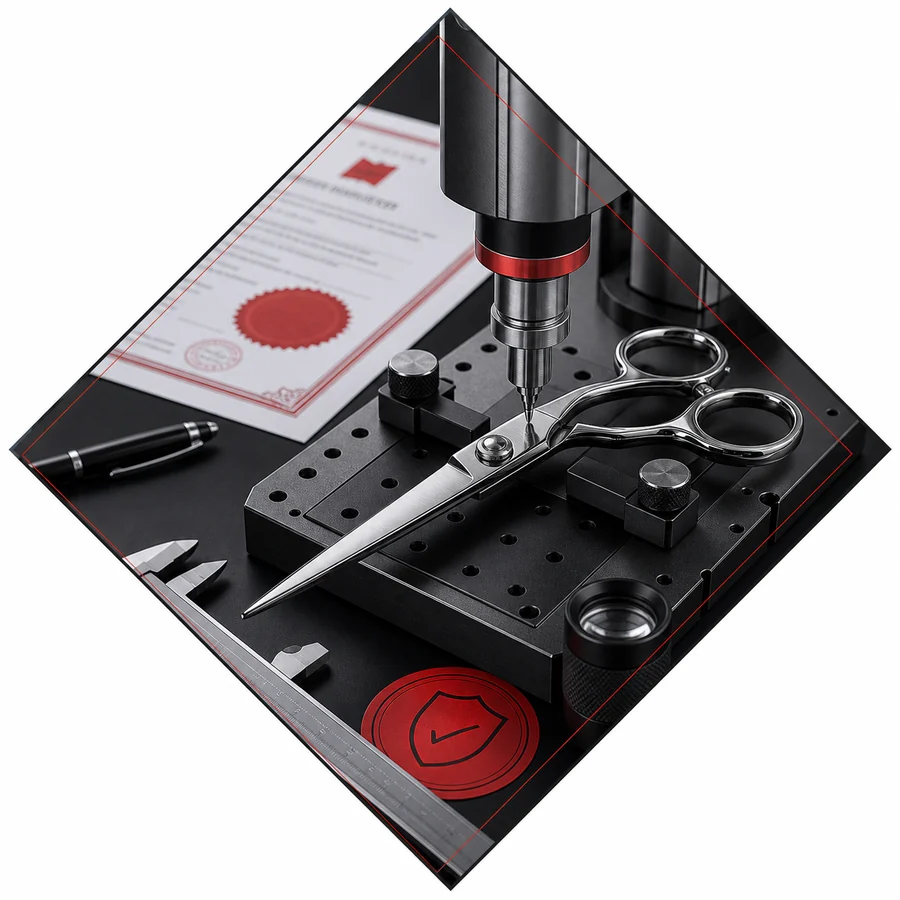
Need documentation for a vendor-approval file?
Download compliance packAnswer three questions and we will match your line to the steel grade that fits — with the honest trade-off, not a blanket “premium” label. All figures are real per-grade specs.
Initialize ToolThe sticker gap between steel tiers is wide; the ownership gap is not, because harder steel needs sharpening less often. This is an illustrative model built on real resharpening cadences — not a quote.
Initialize ToolBuying factory-direct removes the reseller markup (documented at 350–400% in the traveling-salesman channel) and hands that margin to your brand. Enter your own numbers to model a private-label run.
Initialize ToolYes. We laser-engrave your logo, wordmark, batch code or serial number directly into the blade, tang or shank, and it is fused into the steel – it survives cleaning and sharpening. Packaging is branded separately, too. Full private-label and OEM/ODM programs are supported for brands, distributors, salons and academies.
Four things: the steel grade (or the performance you want and we recommend one), the models and sizes, the quantity, and your logo artwork plus finish and packaging preferences. From that we build a spec sheet and a mockup for your approval.
Yes – a single 50-piece custom order can span straight cutting shears, tooth-counted thinning and texturizing blades, and curved pet-grooming shears, all under one brand. Tooth count and cut ratio are specifiable.
Custom orders start at 50 pieces; in-stock styles ship from one piece. We manufacture hair, barber and pet-grooming shears – including 7″-7.5″ dog-grooming flat and curved blades and 56-tooth fine blenders – on the same lines, so hair and pet lines can share one branded catalogue.
Use the matrix above: 440C (58-60 HRC) for daily wet cutting where corrosion resistance matters most; VG10 (60-62 HRC) for a slice-cutting upgrade; ATS-314 or cobalt (up to 64 HRC) for flagship dry-cut edge retention. Harder is not automatically better – it trades some corrosion resistance and chip tolerance for edge life. Tell us the technique and climate and we will match the grade.
Usually not. Poor performance is often mistaken for a dull edge when the real culprit is tension. The most common cause of a “dull” feeling on a new pair is the pivot screw needing adjustment to the blade, not the steel. We hand-tension every pair and set it on the sample so you learn the correct feel before the bulk run.
Yes. Left-handed versions are available across sizes and can be included in a custom order – true left-hand blades, not a reversed-handle right-hand pair.
We do this two ways, both built into our process. Third-party hardness and material reports come with every batch, and we can laser-engrave grade and origin directly on the blade for a permanent identifier that you (and your customer) will have much greater confidence in than the claims in a spec sheet.
You’ll receive and approve a pre-production sample prior to bulk production. Lead times for custom parts will vary depending on steel, volume and engraving capabilities, and we will provide an exact timeline with your quote – it’s better to quote an honest schedule than risk promising one that’s too good to be true.