Get in Touch with Mackayhairscissors Company
We use submitted details to respond to your quote request. Read our Privacy Policy.

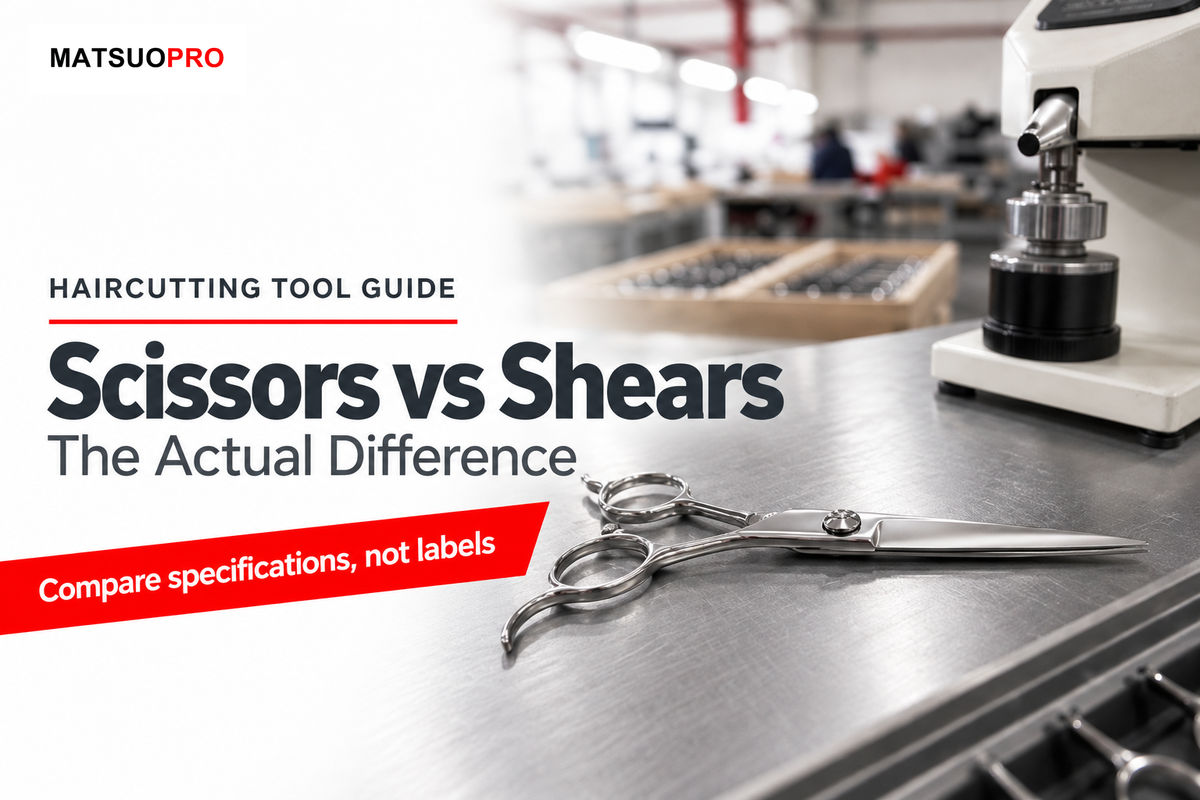
This is mostly a question of vocabulary. In professional hairdressing, shears and scissors are often synonymous. A pair of scissors can be salon equipment and a pair of shears can be for occasional home trimming. Pick by the blade, fit and cutting task.
Hair cutting scissors vs shears: the names overlap in hairdressing. Neither word sets a universal six-inch cutoff or quality grade. Match the tool’s dimensions, edge and handle to your cut.
Hair cutting scissors and hair shears are synonymous rather than distinct grades of equipment. In professional hairdressing, either can be a tool with two pivoting blades, operated by hand. Longer reach, a convex edge or an offset handle describes a particular design; none is a definition of the word shears.
Yes, hair cutting scissors are often called shears by stylists, barbers and suppliers. Professional terminology also uses scissors: the WorldSkills Lyon 2024 hairdressing standards list scissors among professional cutting tools.
A Tricoci University student account of choosing shears also uses the names interchangeably. Shears and scissors can arrive in different packaging while sharing cutting specifications. A pair of shears is worth comparing with a pair labelled scissors when the intended job matches.
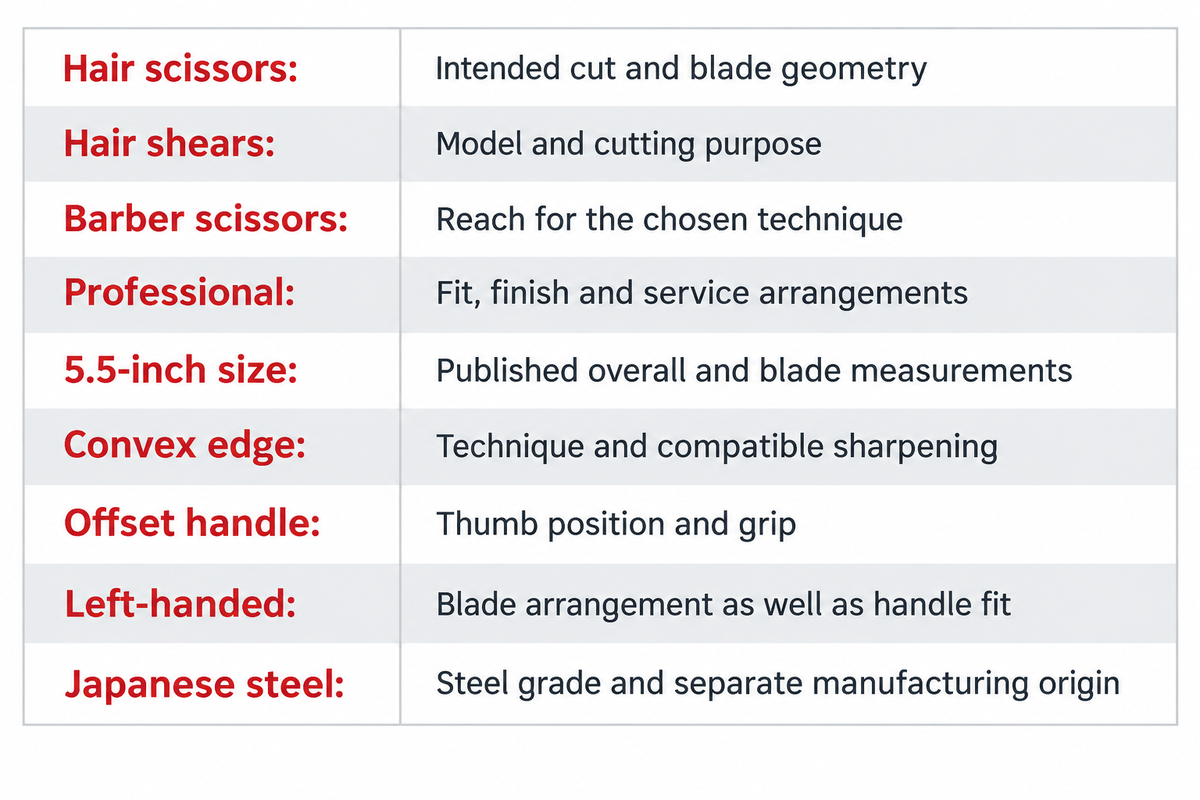
Name-to-Spec Translation Table translates labels into useful buying fields.
| Label or configuration | What it describes | Useful specification to compare |
|---|---|---|
| Hair scissors | A haircutting tool | Intended cut and blade geometry |
| Hair shears | The same broad working category | Model and cutting purpose |
| Barber scissors | Professional context | Reach for the chosen technique |
| Professional | Seller’s positioning | Fit, finish and service arrangements |
| 5.5-inch size | A nominal catalogue size | Published overall and blade measurements |
| Convex edge | Edge geometry | Technique and compatible sharpening |
| Offset handle | Relative handle position | Thumb position and grip |
| Left-handed | Hand orientation | Blade arrangement as well as handle fit |
| Japanese steel | Material description | Steel grade and separate manufacturing origin |
A six inch boundary is a naming convention used in some cutting-tool discussions; however, it doesn’t always classify haircutting tools as scissors and shears. Professional catalogs and educators use shears below that size. A nominal inch label also doesn’t always describe the blade that touches the hair.
For precise work, Aaron Klose of Hattori Hanzo recommends a 5-5.5 inch shear in American Salon’s 2017 interview on choosing shears. Hattori Hanzo sells shears, giving this professional guidance a commercial connection.
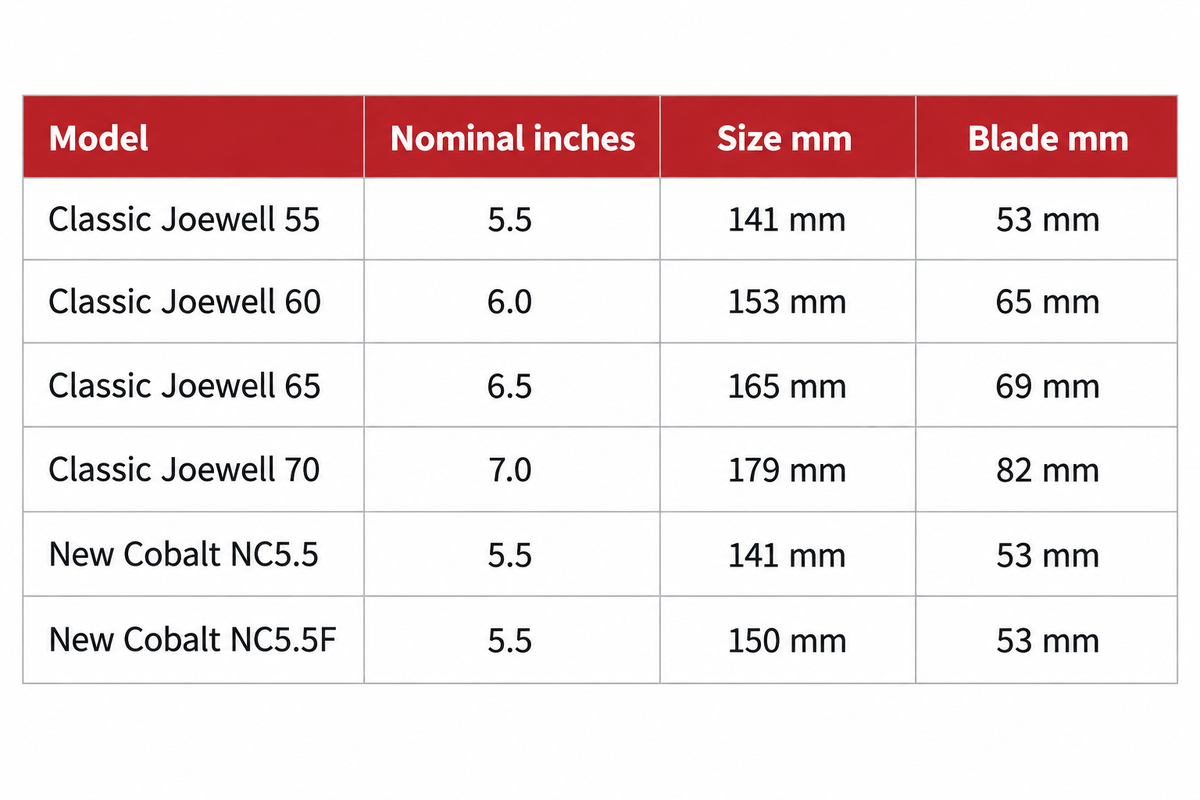
| Model | Size (inch) | Size (mm) | Blade (mm) |
|---|---|---|---|
| Classic Joewell 55 | 5.5 | 141 mm | 53 mm |
| Classic Joewell 60 | 6.0 | 153 mm | 65 mm |
| Classic Joewell 65 | 6.5 | 165 mm | 69 mm |
| Classic Joewell 70 | 7.0 | 179 mm | 82 mm |
| New Cobalt NC5.5 | 5.5 | 141 mm | 53 mm |
| New Cobalt NC5.5F | 5.5 | 150 mm | 53 mm |
Joewell’s measurement note doesn’t include a removable finger rest and includes a permanent one. Therefore, nominal 5.5-inch models can have different size measurements, even if they have the same 53 mm blade. Multiplying the nominal inch number by a conversion factor will not recreate every maker’s measurement convention.
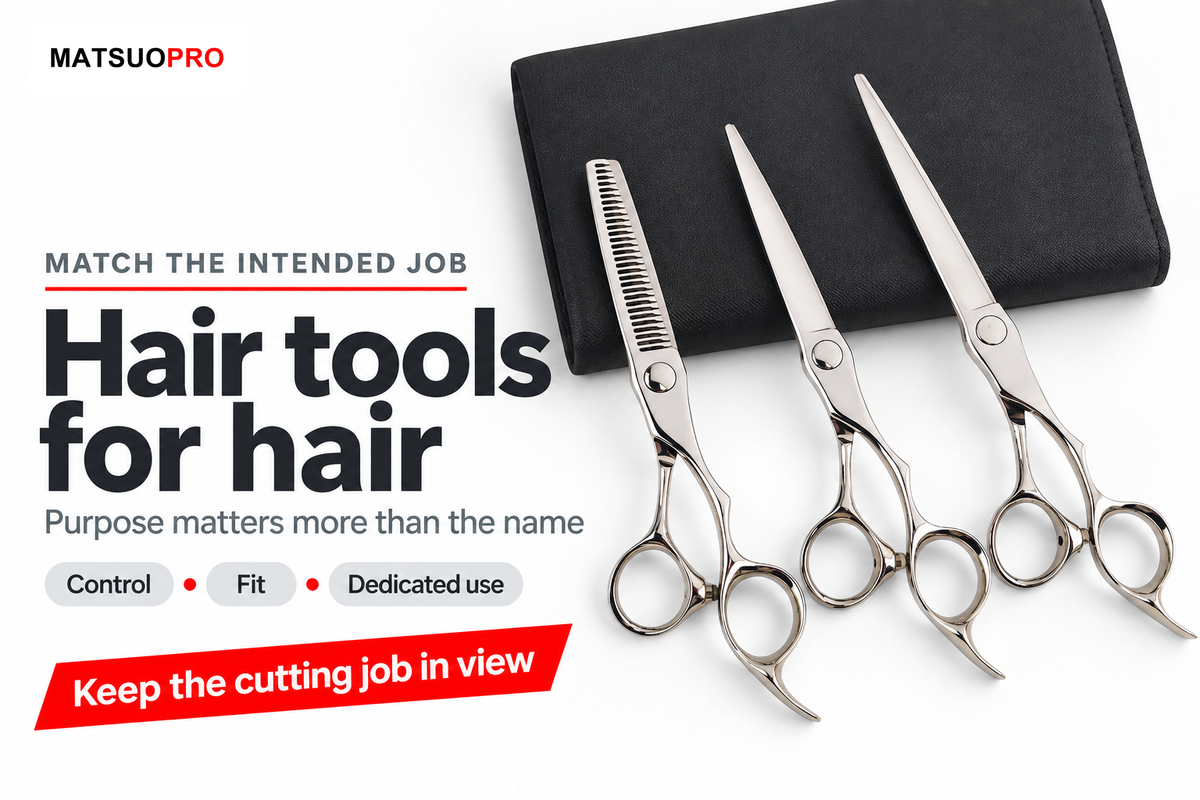
The difference between hair tools and regular scissors is their intended cutting job. Kitchen scissors, paper scissors and fabric scissors are made for other tasks, even when they feel sharp. Hair shears are designed for haircutting control. This comparison doesn’t yield a universal difference between scissors and shears.
Use hair cutting shears instead of household scissors because they are designed to cut hair with the control needed for trimming and shaping. Hair specific scissors fulfill the same purpose. You can use regular scissors to cut a loose strand, but that alone does not make a kitchen pair suitable for a haircut.
When trimming your hair at home, keep a dedicated pair meant for hair. Cutting paper or fabric with a pair meant for hair can affect the condition of its cutting edge. American Salon’s maintenance recommendations reserve hair tools for hair. They recommend professional sharpening. A blade that pushes instead of cutting needs attention; pressing harder isn’t a good substitute. Scissors might feel sharp on paper yet fold a fine hair section.
For a more complete comparison, see why use hair shears instead of regular scissors. Keep the edge suitable for a clean cut when trimming split ends.
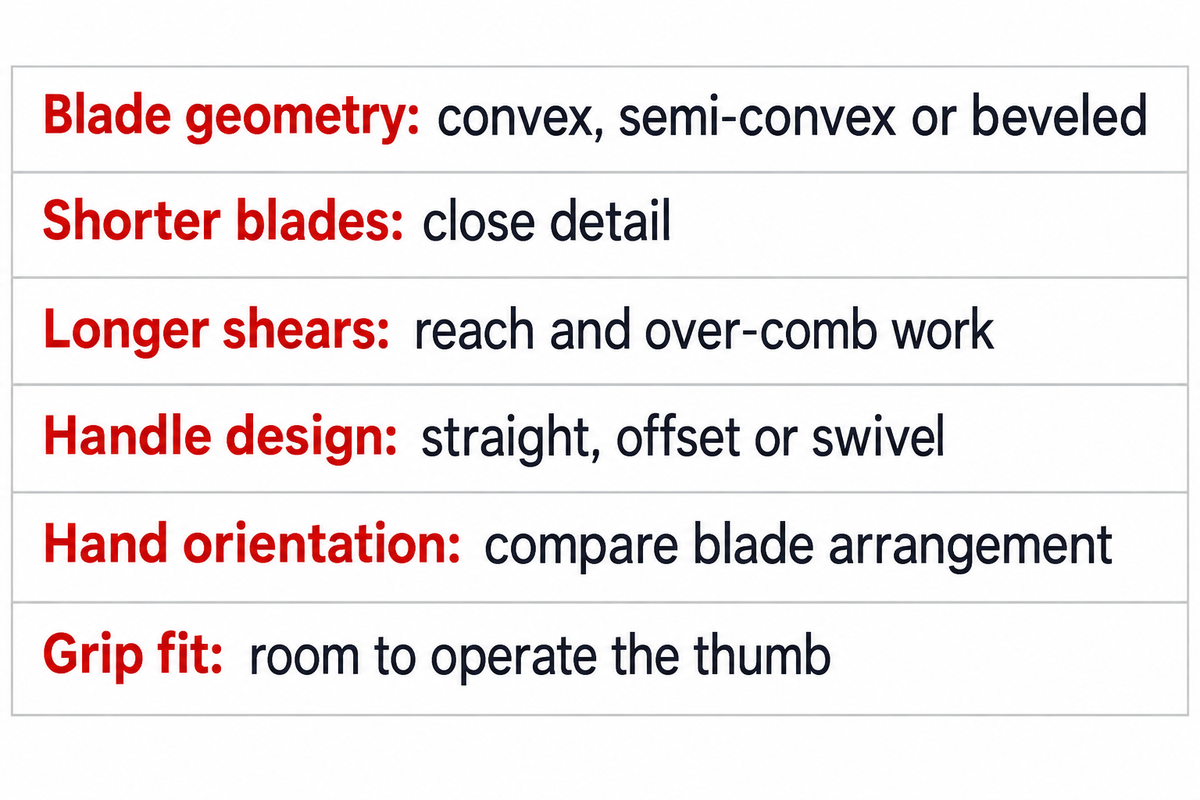
Blade geometry and handle design describe how a tool works more clearly than its name. Shorter blades suit precise cuts in close detail; longer shears offer reach for broader sections or over-comb work. Choose shears or scissors that let the hairdresser control the intended cut without fighting the grip.
Professional hairdressers use hairdressing scissors matched to their technique, including solid-blade cutting tools and separate thinning or texturizing tools. A barber may prefer longer barber shears for over-comb work, while a stylist chooses a shorter pair for detail work.
“For fine, precision cutting, you want as much control as possible, so opt for a shorter shear.”
Convex, semi-convex and beveled edges all appear in the tool range. Some scissors feature micro-serrations rather than a smooth edge. These shears differ in their contact surfaces; select for the technique rather than assuming sharper always means better. Our convex versus bevel edge guide explains the geometry and service differences.
A comfortable grip gives the user room to operate the thumb.
Specify length, edge and hand orientation separately from a “professional” label; assess “ergonomic” handles for fit with the intended user.
Offset describes handle position rather than handedness. Right handed scissors do not become left-handed through a mirrored-looking grip alone. Compare left-handed blade arrangements separately from straight, offset and swivel handle types. Finger rings, one for the thumb and one for the working finger, should allow movement without a completely closed grip.
Consider a stylist choosing between two 5.5-inch samples for fringe detail: if one feels awkward at the thumb, changing its sales label will not improve the fit. Different types of hair also change the job. Compare how each sample can cut through hair in the intended section, with the same preparation and user.
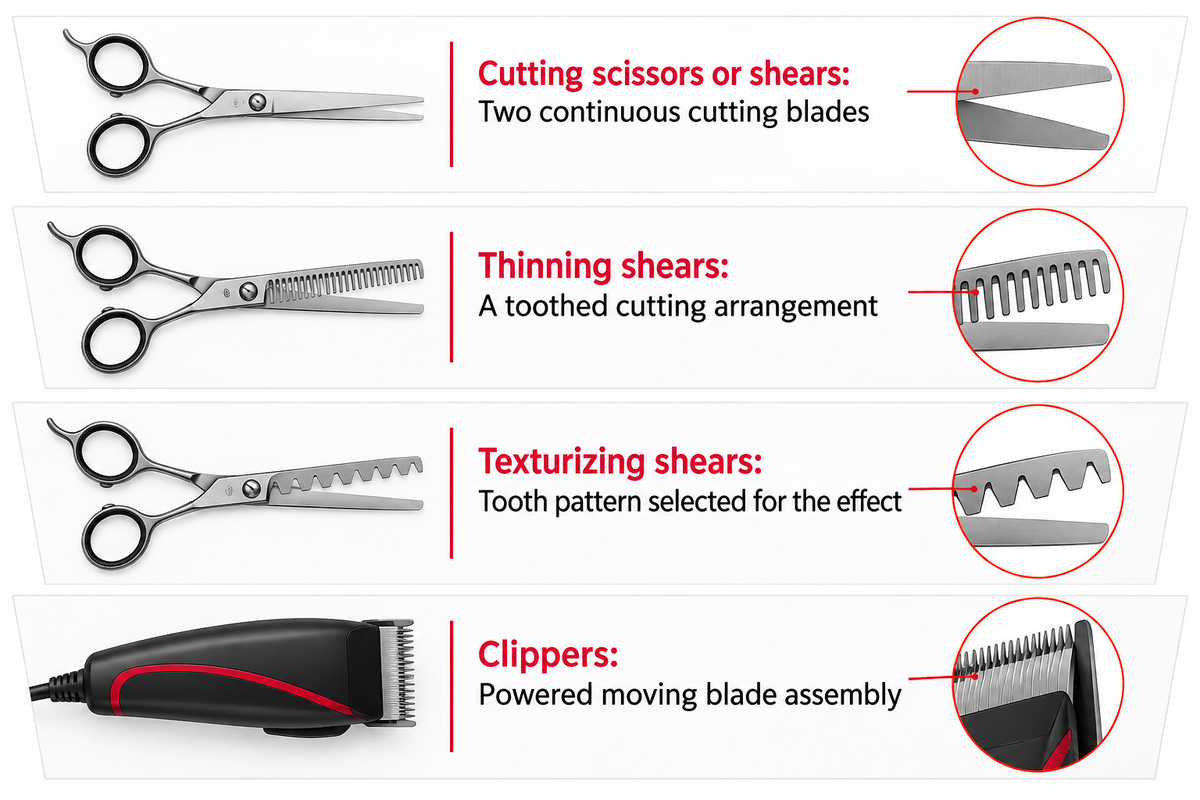
Solid cutting blades, toothed thinning blades, and powered clippers perform different actions. Categories of cutting affect how much hair is removed, and how it’s shaped. In a cutting-shears vs thinning-shears comparison, the modifier matters. Cutting and thinning describe different actions, while scissors and shears are synonyms for the hand tools.
| Tool category | Working structure | Typical purpose |
|---|---|---|
| Cutting scissors or shears | Two continuous cutting blades | Remove length and establish shape |
| Thinning shears | A toothed cutting arrangement | Remove selected hair within a section |
| Texturizing shears | Tooth pattern selected for the effect | Add separation or adjust bulk |
| Clippers | Powered moving blade assembly | Close cutting and blending |
WorldSkills differentiates scissors, thinning scissors, razors, and electric clippers in their cutting requirements. Solid blades are used to cut the hair to an outline; teeth leave selected strands between the cutting contacts. Types of thinning and texturizing tools overlap in sellers’ terminology; the tooth pattern and intended result deserve a closer look.
Someone who wants to thin thick hair needs a different action from someone trimming a straight perimeter. Our thinning and texturizing shears comparison covers that choice. Toothed shears are used selectively; they aren’t a replacement for every cut made with continuous blades.
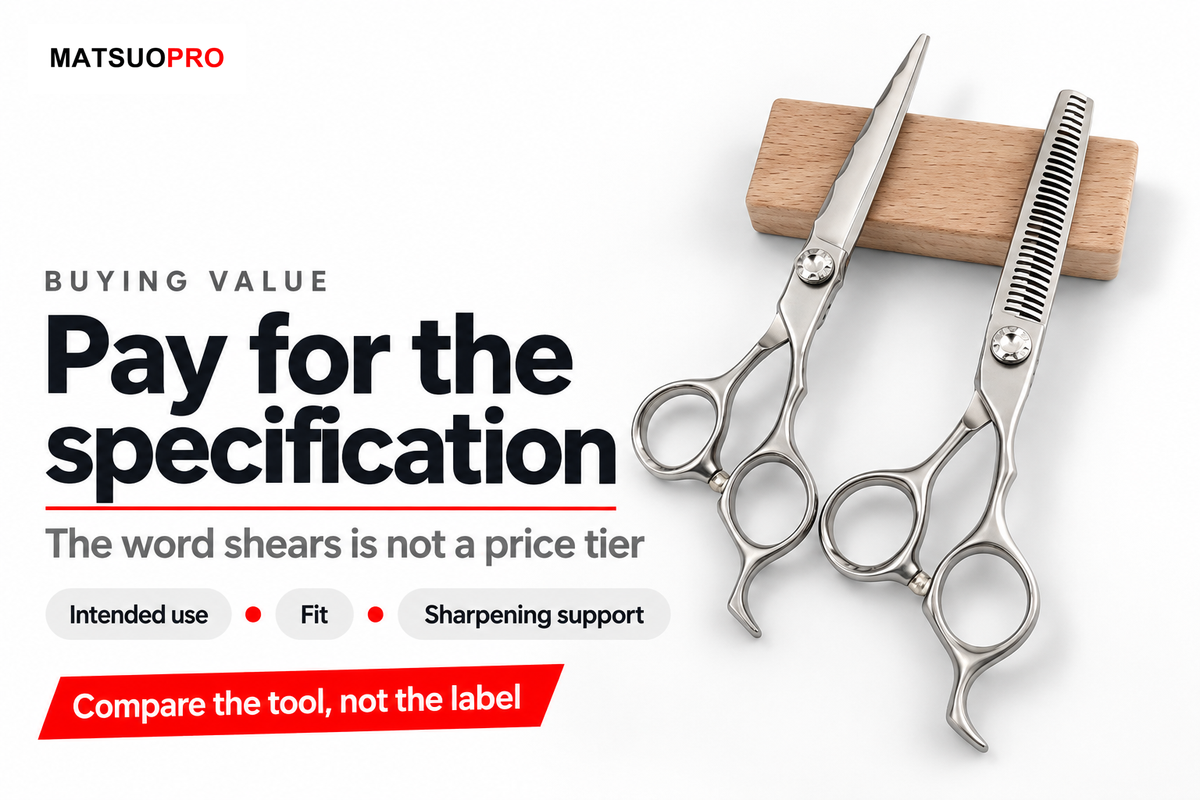
The word shears doesn’t set a price tier. Haircutting shears are sold for occasional home use as well as daily salon work. For a home trim, pick a hair tool that provides the best fit; for a salon, pick a tool with sharpening and consistent replacement specifications.
A dedicated home-trimming pair can cost around $31; that was the displayed US price of Tweezerman Spirit 2000 Styling shears, checked on October 22, 2026.
The product is described for at home trimming, and comes with micro-serrated stainless blades and a plastic handle. A tool listed for home use and a tool listed for salon use can share a noun to describe their function. Allure’s 2022 interviews with hairstylists recommend using hair-specific tools at home instead of kitchen scissors.
A salon owner will address another issue. An affordable but ill-fitting or poorly serviced pair can be problematic. Among the shears available, compare steel, finish and support. The professional hair scissors buying guide addresses the larger purchase without turning this naming game into a price game.
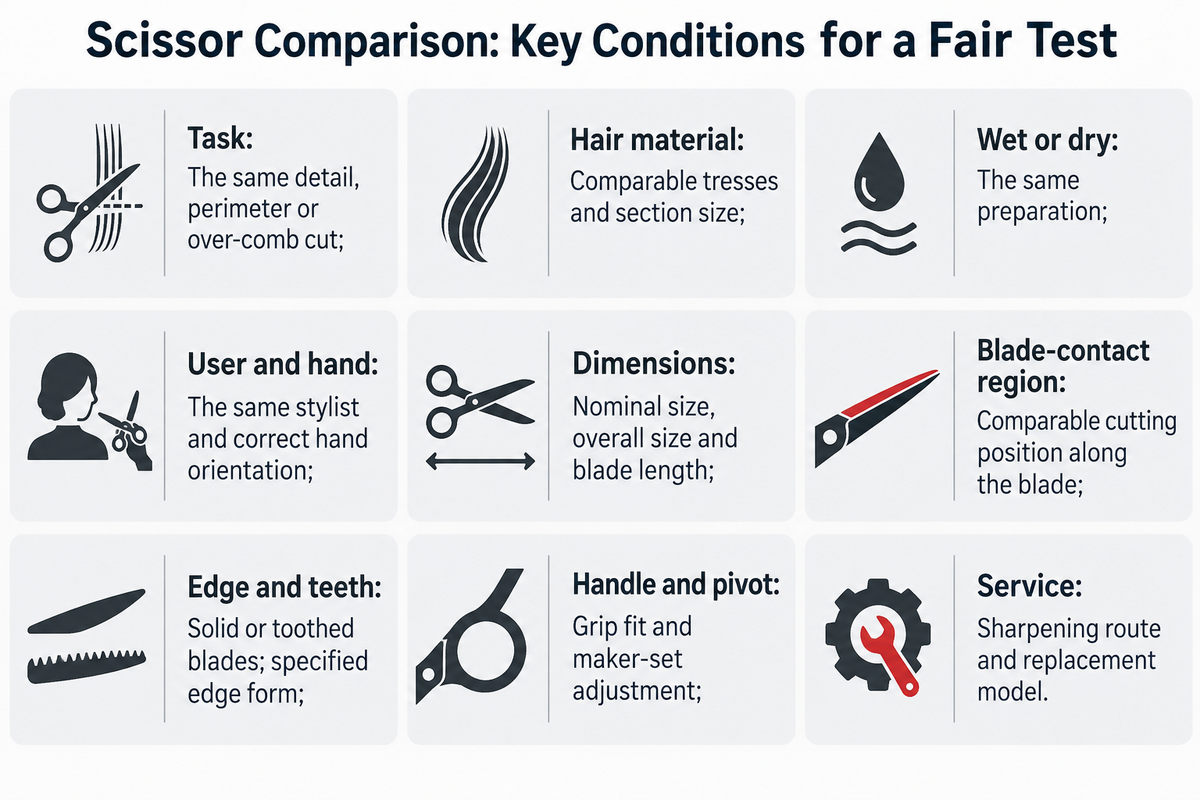
A sample brief typically begins with the cut and user, and specifies the tool. To choose a pair of scissors for repeat orders, record the blade, dimensions and handle separately. A private-label buyer needs those details to understand the difference between samples and repeat an approved design when placing a production order.
Mackay Hair Scissors, also branded MATSUOPRO, manufactures hair cutting shears in China and offers private-label customization. In our hair cutting shears collection, sizes are from 5.0 inches to 7.5 inches, with hardness bands published across grades from 55 HRC to 62 HRC. The model rather than the collection name is what determines the specs.
Same-Task Pair Check is an editorial sample-comparison method for a stylist, salon owner or brand buyer. Use comparable hair material and the same user rather than treating two unrelated cuts as a product test.
| Comparison field | Keep or record | Buying decision |
|---|---|---|
| Task | The same detail, perimeter or over-comb cut | Compare the intended use |
| Hair material | Comparable tresses and section size | Avoid comparing different hair conditions |
| Wet or dry | The same preparation | Keep cutting conditions comparable |
| User and hand | The same stylist and correct hand orientation | Separate grip preference from the sales label |
| Dimensions | Nominal size, overall size and blade length | Compare like measurements |
| Blade-contact region | Comparable cutting position along the blade | Do not compare a tip cut with a heel cut |
| Edge and teeth | Solid or toothed blades; specified edge form | Match cutting action |
| Handle and pivot | Grip fit and maker-set adjustment | Record comfort and smooth operation |
| Service | Sharpening route and replacement model | Plan repeat purchases and upkeep |
A 2006 study of hair-cutting scissors found that cutting position affected the measured load in its experiment. Compare samples at a similar blade position rather than using the heel of one and the tip of another.
For example, a brand comparing an offset sample with a straight-handle sample should keep the intended cutting job unchanged and record the grip difference.
For a manufacturer quote, include the fields above, then add the desired finish, engraving and packaging. Mackay’s OEM and private-label services support those choices. Have the steel grade and hardness specified together; a range across an entire collection isn’t a target for every pair.
The hook is a finger rest, also called a tang or finger brace. It supports the little finger while the tool is held. The Evergreen Beauty College cosmetology glossary calls it a finger brace. Some designs have a removable rest and others a permanent one; its presence doesn’t separate professional scissors from shears. Grip suitability still comes from the entire handle.
Replace them when suitable professional servicing can no longer restore reliable cutting and adjustment, or when damage makes them unsuitable for the job. A dull edge alone may need sharpening rather than replacement. Technicians who sharpen scissors need to work with the particular edge geometry. Follow the maker’s service instructions. There’s no single replacement calendar that covers occasional trimming, daily salon work and every blade design.
Dedicated hair cutting scissors are the best starting point for a small trim, with a comfortable grip and manageable reach. If you cut your hair occasionally, choose solid blades rather than thinning shears. A beauty supply store can offer several sizes, but the label alone won’t identify the best fit. Keep the pair reserved for hair and start with less length removed than your final target.
No. Japanese steel describes the material’s stated origin, while the scissors can be manufactured elsewhere. Japanese scissors and scissors made from Japanese steel are different descriptions. Mackay manufactures in China.
Choose hair scissors for trimming hair. Sewing scissors are specifically designed for cutting fabric, and sharp scissors alone don’t give you the grip or hair-cutting action you want. It’s possible to use many cutting tools to sever hair, but that’s a poor basis for choosing a haircutting pair. Keep sewing scissors for fabric; use hair tools for hair.
Yes. Hair cutting shears are scissors used for cutting hair. They cut hair without the need for a separate tool called scissors. Choose solid blades for removing length and toothed blades for selective thinning.
Send your cutting purpose, hand orientation and preferred dimensions, then add your branding requirements. Discuss a Mackay sample
About this comparison: Mackay manufactures and supplies hair scissors. This guide provides published tool specs, and is enhanced with professional insights and editorial sample methods. Catalogue dimensions are published by the manufacturer; retail prices are listed for a specific point in time. The examples are not results of a Mackay comparative laboratory test.
MATSUOPRO is the Mackay Hair Scissors manufacturing brand for professional hairdressing shears, barber scissors, thinning shears, and pet-grooming scissors. We support salons, distributors, academies, grooming brands, and private-label buyers that need factory-direct production with practical material guidance.
Our buying guides are written to help purchasers compare steel grades, handle styles, blade geometry, surface finishes, logo options, packaging, MOQ, and sample validation before placing an OEM or wholesale order. The goal is to make each scissors specification easier to discuss with a real production team.
Factory-direct supply since 2014, with product lines covering professional cutting shears, barber shears, thinning scissors, texturizing scissors, left-handed models, and pet grooming scissors for international B2B customers.
We focus on Japanese 440C, VG10, and ATS-314 steel choices, convex and bevel edge geometry, ergonomic handle balance, tension systems, logo engraving, private-label packaging, and sample-based OEM confirmation.