Get in Touch with Mackayhairscissors Company
We use submitted details to respond to your quote request. Read our Privacy Policy.

Updated July 2026
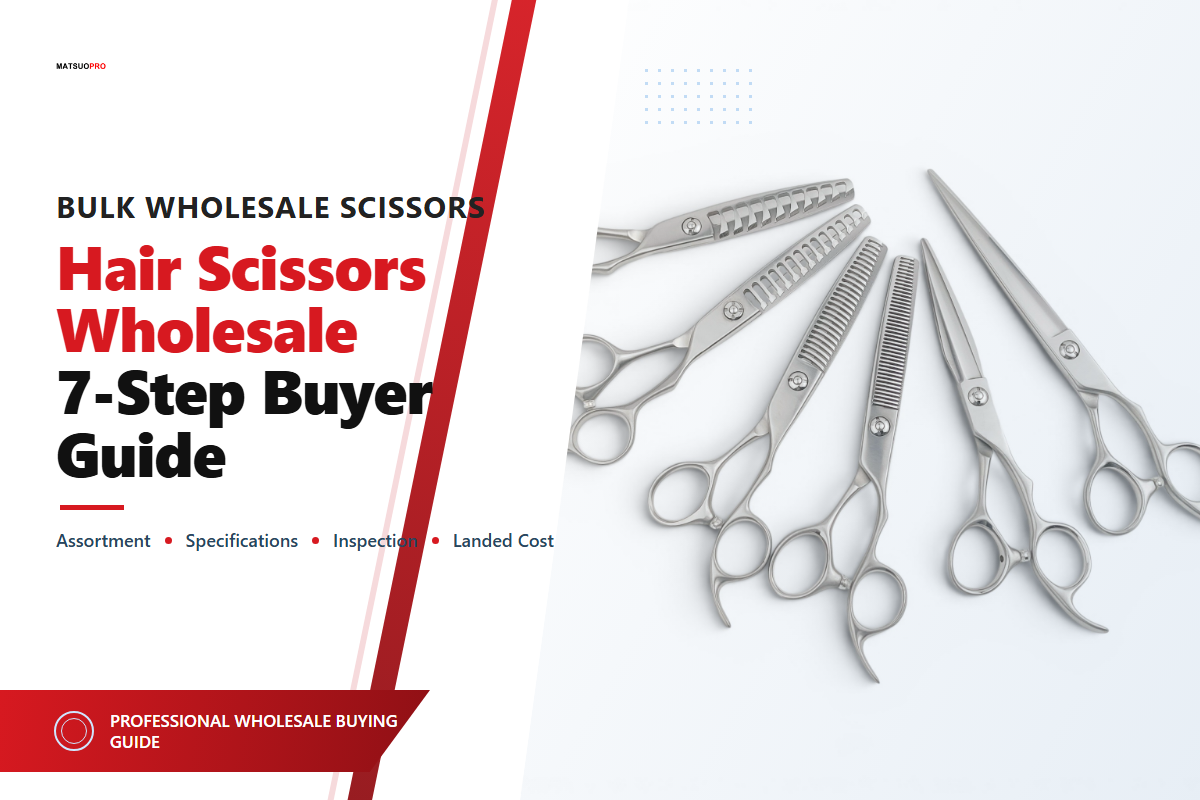
Buying hair scissors wholesale is less about finding the lowest unit quote and more about controlling what changes between the sample, the production lot, and the reorder. Bulk Wholesale Scissors refers to professional hair tools purchased in quantity in this guide, rather than general office or craft scissors. Professional buyers need an assortment brief, an inspectable specification, a signed reference sample, a batch-release decision, and a cost model based on sellable pairs. Without those controls, two suppliers can appear comparable while quoting different steel evidence, blade geometry, packaging, inspection scope, or change-notice terms.
This guide gives distributors, salon-supply buyers, private-label managers, and quality teams a supplier-neutral process. It doesn’t set a universal hardness, defect limit, duty rate, or minimum order. Those inputs depend on the product, market, contract, and risk tolerance. Decision visibility matters before money or inventory is committed.
| Primary buying unit | Inspected sellable pair, not ordered pair |
| Reference evidence | Specification, signed sample, measurements, photos, packaging record, revision code |
| Batch decision | Buyer-selected lot definition, defect classes, sampling plan, acceptance rule, and approver |
| Reorder control | Revision lock plus written change notice before production |
Key takeaway
The safest wholesale comparison uses the same written specification, the same evidence rules, and the same sellable-pair denominator for every supplier.
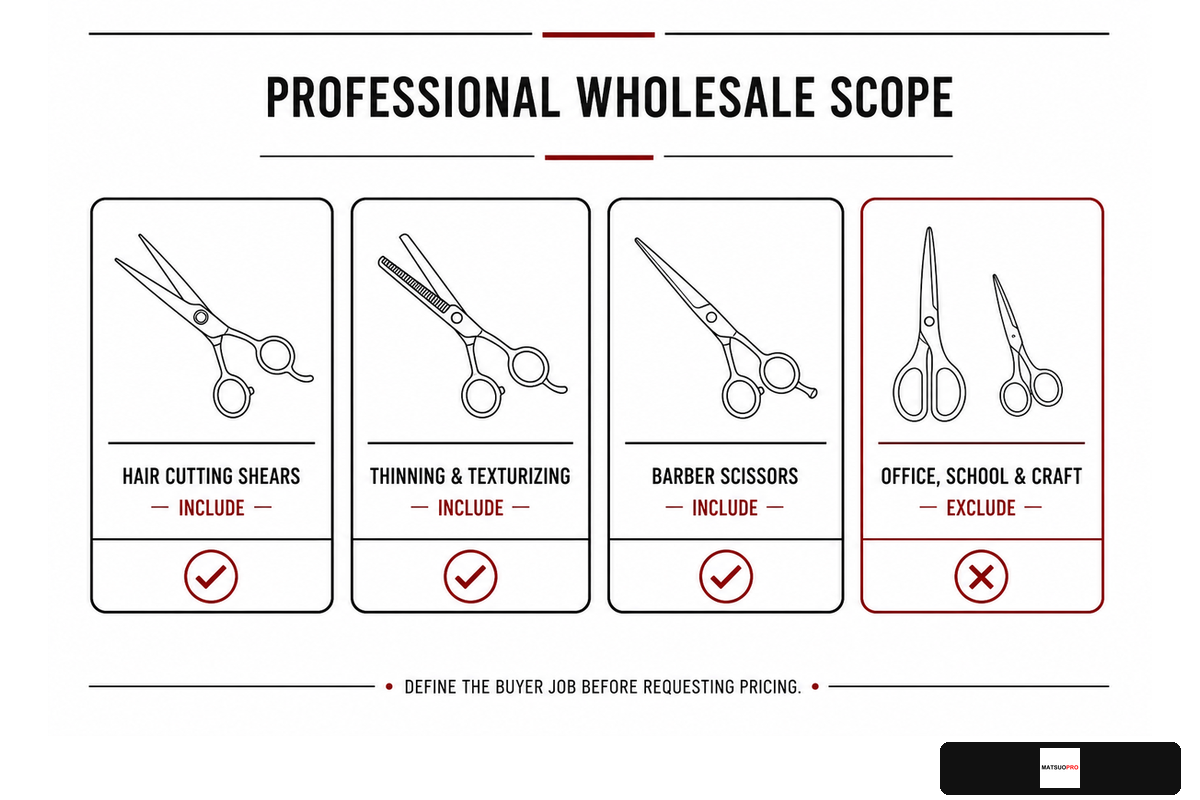
Hair scissors wholesale means sourcing professional cutting, thinning, texturizing, and barber shears for resale or business use under a repeatable specification. It excludes office, school, craft, kitchen, and general household scissors. Pet-grooming shears and other grooming scissors are adjacent categories and should be separated unless the range, packaging, and buyer channel deliberately include them. Marketplace labels such as “hairdressing scissors set,” “high-quality shears,” or “professional-grade salon hair” may describe the intended channel, but they don’t define a testable product.
Category boundaries matter because a broad phrase can attract the wrong search and product intent. Searches such as “cheap bulk wholesale scissors,” “bulk scissors for adults,” and “Oriental Trading wholesale” point mainly toward general merchandise. Location-led searches such as “bulk wholesale scissors USA” and “bulk wholesale scissors near me” also don’t prove professional salon-shear demand. “Hair scissors wholesale” and “wholesale hair cutting shears” give a professional buyer a cleaner starting brief. Search scope is a merchandising decision, not a customs ruling.
Nose hair scissors, a razor edge model, and pet-grooming tools can appear beside salon cutting tools in a broad catalog, but their use, construction, labeling, and risk controls are different. Put them in separate buying files unless the intended assortment and inspection plan deliberately cover those categories.
| Category | Include? | Buyer definition | Limitation |
|---|---|---|---|
| Hair cutting shears | Yes | Primary line and precision cutting | Size, edge, handle, and technique must still be specified |
| Thinning and texturizing shears | Yes | Bulk removal, blending, or texture control | Tooth count alone doesn’t define cutting feel |
| Professional barber scissors | Yes | Barber techniques and channel-specific lengths | Don’t assume every long shear fits every barber |
| Office, school, and craft scissors | No | General cutting tools | Different user, construction, test, and retail intent |
Write the category boundary into the buying brief before requesting pricing. If the immediate need is a commercial catalog or quote rather than this educational process, use the bulk wholesale scissors program as the separate supplier conversation.
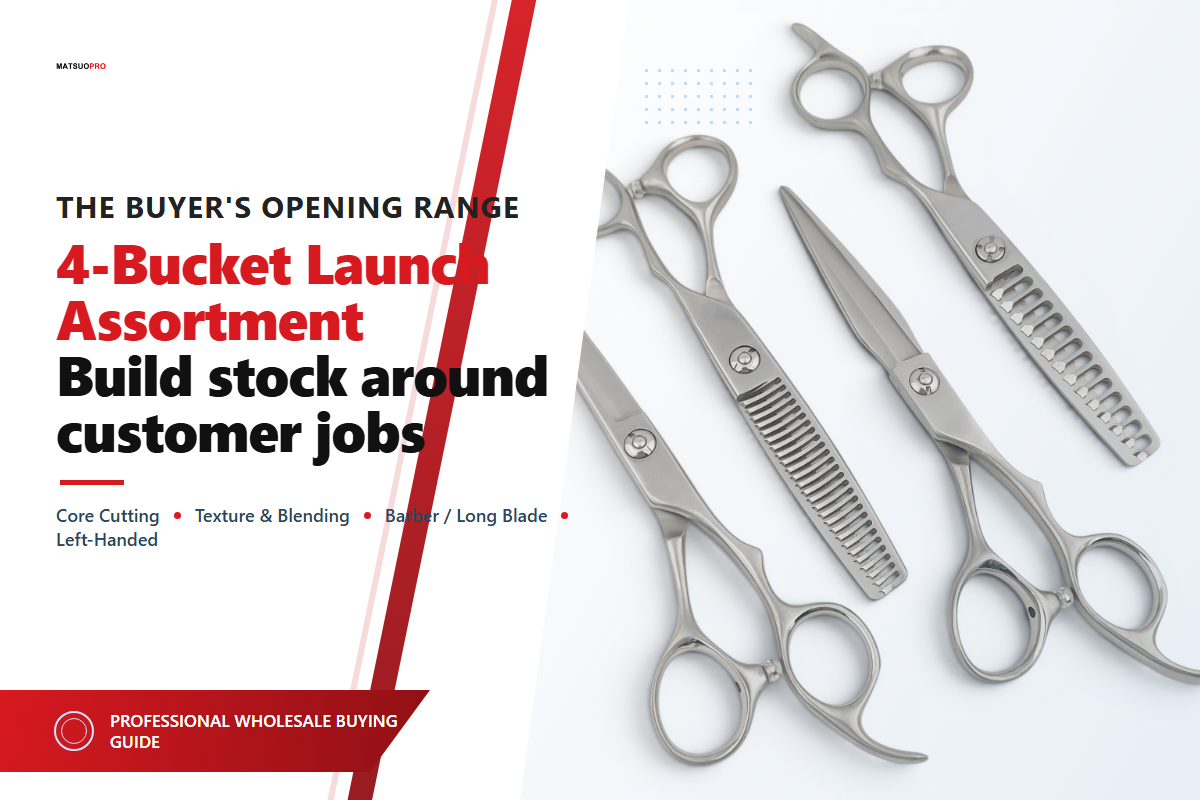
Build the first assortment around customer jobs rather than attractive finishes. Start with four buckets for barbers and stylists: core cutting, texture and blending, barber or longer-blade work, and left-handed access. Then assign units using the buyer’s channel history, stylist interviews, sample feedback, price bands, and available cash. This model organizes a decision; it doesn’t predict sales.
| Bucket | Customer job | Decision fields | Limitations / not suitable for |
|---|---|---|---|
| Core cutting | Wet or general salon cutting | Length, edge, handle, tension, price band | Doesn’t replace a dedicated dry-cut or precision need |
| Texture and blending | Weight removal, softening, or blending | Tooth pattern, cut ratio evidence, length, test method | One thinning scissor isn’t interchangeable with every texturizer |
| Barber / longer blade | Scissor-over-comb and larger sections | Length, weight, tip, balance, grip | Longer isn’t automatically more ergonomic |
| Left-handed access | True left-handed cutting mechanics | Blade orientation, handle geometry, size, finish | A reversed handle on right-handed blades may not solve the need |
Professional education sources distinguish wet-cut, dry-cut, blender, and texturizer jobs, while stylists frequently report that weight, balance, length, offset geometry, thumb fit, and finger inserts change how a shear behaves. Use those signals to plan test coverage, not to claim a universal best hair cutting scissor. Review Mackay’s hair cutting shears, thinning shears, and left-handed hair scissors as product-family examples, then test the exact models offered.
At sample stage, ask hair stylists to compare the actual hairdressing scissors for each haircut task. Professional hair cutting shears and professional hair cutting scissors may share a size label without sharing the same edge, balance, or handle. Hairdressers choosing professional hairdressing scissors for cutting hair may also need a separate shear set or hair thinning scissors. Record whether a model marked “5.5,” “6 inches,” or “6.0 inch” is a nominal catalog label or the buyer’s required measurement. Salon and barber channels, including independent barbershops, can justify different stock mixes. If the tool is meant to thin or blend, write that job into the model brief.
Don’t place a wide opening order when the sales channel can’t explain who will buy each style, the supplier can’t return the same specification for every stock-keeping unit, or the budget leaves no room for inspection and replacement stock. Rainbow finishes, swivel handles, curved blades, or attractive scissors sets may earn attention without proving fit. Marketplace wording such as “scissors for hair” or “perfect cut” should be treated as a search label, not acceptance evidence.
Inventory risk appears when products photograph well but create complaints about pulling hair, poor balance, a mismatched thinning action, or sharpening damage. Start narrower when demand is untested. Approve representative samples, expose them to the intended hair-cutting need, and record which users accepted or rejected each design. Expand only after the buyer has evidence about fit and sell-through. This approach can feel slower than ordering one of every style, but it protects cash and makes the second purchase easier to interpret.
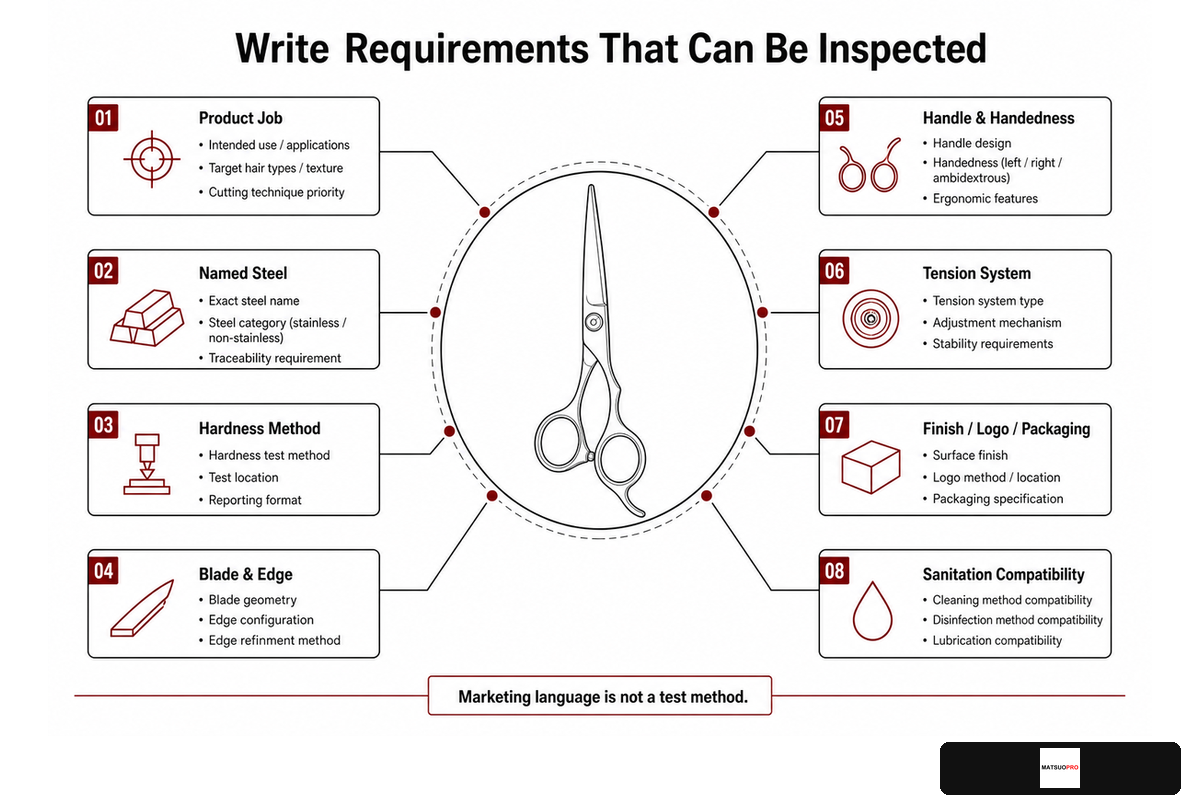
Write a wholesale hair-scissor specification that turns product language into fields that can be quoted, manufactured, and inspected. Record the named steel grade, hardness target and test context, blade and edge geometry, handle and handedness, tension system, finish, custom logo, packaging, tolerances, revision, and compatibility with the buyer’s intended cleaning and disinfection protocol. “Japanese stainless steel” or “high quality” isn’t an inspectable substitute.
ANSI’s summary of ASTM E18-25 describes a controlled Rockwell test with specified machines, procedures, forces, and scales. This makes a hardness result useful evidence about a tested item under a named method. It doesn’t identify an alloy by itself, rank an entire scissor, or prove that every production pair matches the sample.
“Traceability alone does not ensure fitness for purpose.”
This evidence boundary is useful in procurement. Ask what was tested, when it was tested, which method and scale were used, which report belongs to which sample, and whether the production lot is covered. Certificates can support a claim; they can’t replace the contract definition or incoming inspection.
Marketing language needs the same discipline. Phrases such as “Japanese steel,” “Japan steel,” “quality steel,” “high quality hair shears,” “high quality hair,” “made from premium material,” “effortless cutting,” “durable,” “high-quality,” “wide range,” or “great price” don’t name a verifiable requirement. The same caution applies to marketplace shorthand such as “quality scissors,” “quality stainless steel,” “quality 440C,” “sharp blade,” “long-lasting,” “perfect cut,” “lower price,” “top quality,” or “fast shipping.” Translate each useful promise into a grade, test, geometry, finish, tolerance, service condition, or buyer trial. Titanium coating and polish should be listed as finish fields rather than treated as proof of the base material.
Fit claims also need a user and method. An ergonomic design, comfortable handle, or lightweight body may reduce hand fatigue for one grip while causing discomfort for another. Record the handle geometry, thumb position, weight, balance, and intended technique, then test the actual pair with representative users.
Sanitation compatibility belongs in the same specification. Texas inspection guidance requires salon tools and implements to be cleaned and disinfected around each client and calls for a wet-disinfectant container large enough to immerse implements. That establishes repeated sanitation as a real use condition, not a universal material recipe. Name the destination market, intended disinfectant protocol, contact conditions, rinse and dry steps, and lubrication step; then require the supplier to show that the supplied finish, lubricant, inserts, and accessories remain fit after the agreed cycle.
Copy the following fields into the request for quote. “Buyer-defined” means the purchaser must enter a value suitable for the target user and market rather than accept a silent supplier default.
RFQ checklist — copy these into your quote request:
| Parameter | Recommended range | Why it matters | How to verify |
|---|---|---|---|
| Product job | One named job per model | Stops cutting, thinning, and texturizing tools being treated as interchangeable | Approved product brief and labeled sample |
| Overall length | Buyer-selected, inches | Changes reach, balance, and technique | Calibrated measurement against stated tolerance |
| Steel | Named grade and revision | Country language doesn’t identify the material | Material declaration or report tied to the sample or lot |
| Hardness | Buyer-selected HRC window plus method | A bare number lacks test context | Named Rockwell scale, method, item identity, and date |
| Blade and edge | Named geometry and service requirement | Edge design affects cutting feel and sharpening compatibility | Drawing, sample comparison, and approved service method |
| Handle and handedness | Named geometry for each model | Offset, swivel, thumb fit, and true left-handed construction affect use | Drawing, orientation photos, and user trial |
| Tension system | Named parts and adjustment condition | Tension affects opening, closing, and hair movement | Parts list plus repeatable functional check |
| Sanitation compatibility | Buyer-named market and protocol | Repeated cleaning can affect finishes, lubricant, inserts, and accessories | Agreed cycle on the labeled sample plus supplier compatibility evidence |
| Finish, logo, packaging | Approved references and tolerances | Appearance and labeling errors can make a pair non-sellable | Golden sample, artwork revision, color reference, and pack-out photo |
Suppliers can propose values, but the buyer should approve them. For material context, the hair scissor steel guide can help frame questions. Treat hair scissors manufacturers’ pages as first-party product information until the named evidence is supplied.
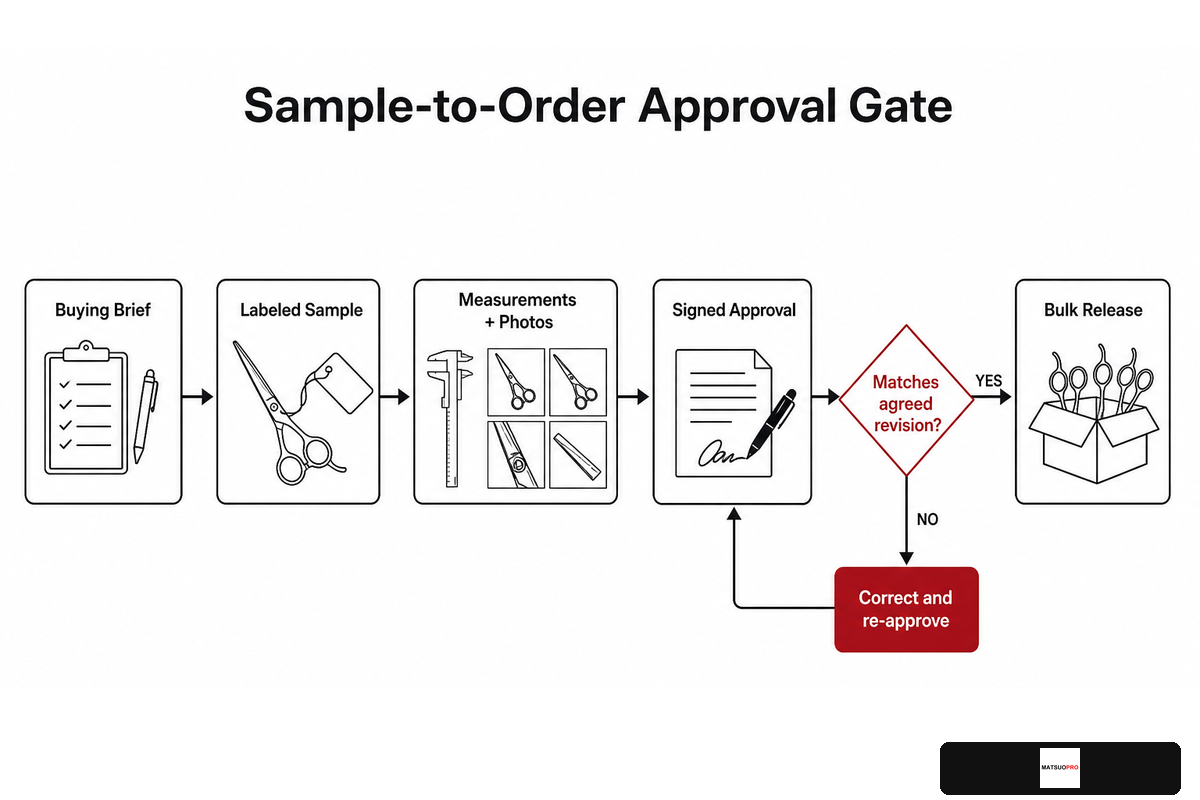
Treat each sample as a controlled reference, not a pleasant memory; NIST’s traceability policy provides the evidence-scope basis for that limit. Before production release, identify the specification revision, mark the approved physical pair, store measurements and photographs, approve decoration and packaging, record functional checks, and name the people who accepted it. Any exception should be written down before the purchase order is released.
This 7-Point Sample-to-Bulk Release Gate turns sample feedback into an auditable handoff. It’s an original buyer method derived from the evidence limit that one tested item doesn’t establish an untested lot.
Useful sample reports state who tested the pair, on what material or hair condition, with which method, and what failed. “Sharp” isn’t enough if one reviewer used a different medium, tension setting, or technique from another. Practitioners commonly report pulling, poor slicing behavior, rust, awkward balance, and degraded performance after unsuitable sharpening. Those complaints belong in the sample plan as scenarios, not as universal claims about every supplier.
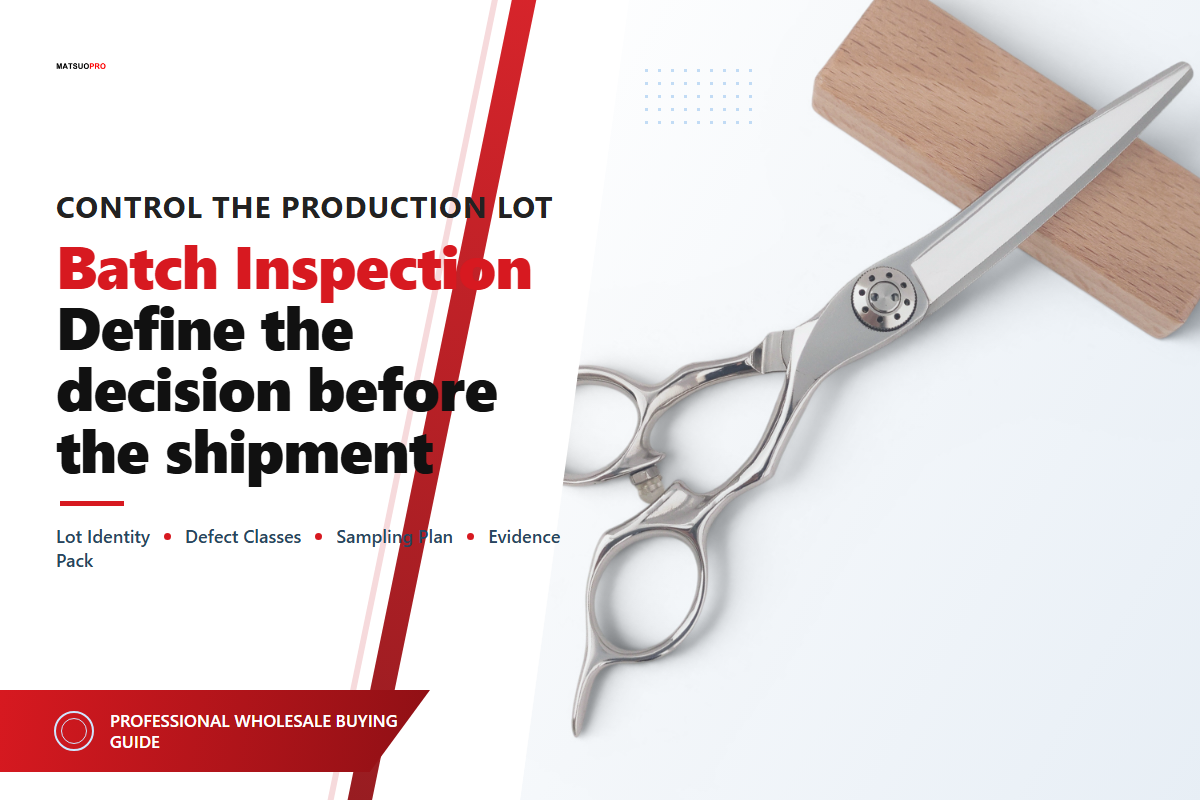
Batch inspection asks a different question from sample approval: does the identified production lot meet the buyer’s written acceptance rule? Define the lot, test conditions, critical, major, and minor defects, sampling inputs, disposition authority, and record format before inspection. One good pair or material report isn’t evidence that every untested unit conforms.
ISO’s official ISO 2859-1:2026 page identifies acceptance sampling by attributes for a continuing series of lots, with acceptance-quality-limit-indexed single, double, and multiple sampling schemes plus switching procedures. The standard gives a system; it doesn’t choose the buyer’s acceptance quality limit, inspection level, defect definitions, measurement method, or business risk. Those decisions need an owner. A first order or mixed launch assortment should not inherit a continuing-lot plan without a qualified owner documenting why the lot definition, scheme, and switching status fit the actual purchase.
Keep attribute inspection and measured characteristics separate. An attribute plan can count pairs that pass or fail a defined defect rule; it doesn’t by itself validate hardness readings, dimensions, tension values, or other continuous measurements. Record the measurement method, instrument, tolerance, sample identity, and decision rule separately, then connect both records to the same production lot.
| Decision field | What to record | Failure risk | Owner |
|---|---|---|---|
| Lot identity | Model, revision, quantity, production window, supplier lot | Mixed or ambiguous population | Procurement |
| Defect classes | Critical, major, and minor examples | Inspector judgment drifts | Quality |
| Acceptance quality limit | Buyer-selected value by defect class | A sampling table can’t be selected correctly | Quality with business approval |
| Inspection level and scheme | Selected level, single/double/multiple plan, normal/tightened/reduced status | Sample size or acceptance number is guessed | Quality |
| Test conditions | Measurement tools, functional medium, tension setup, sequence | Results aren’t repeatable | Inspector |
| Disposition | Accept, rework, sort, replace, or reject | A failed lot ships without authority | Named approver |
| Evidence pack | Photos, measurements, counts, sample IDs, report revision | The next reorder can’t be compared | Quality records owner |
Define defects in buyer language. Critical defects might involve an unsafe sharp projection or prohibited material condition; major defects might make the pair unsuitable for its intended hair-cutting job; minor defects might affect appearance without preventing use. These are examples, not ready-made contract definitions. Buyers must align each class with the target market, product risk, and remedy.
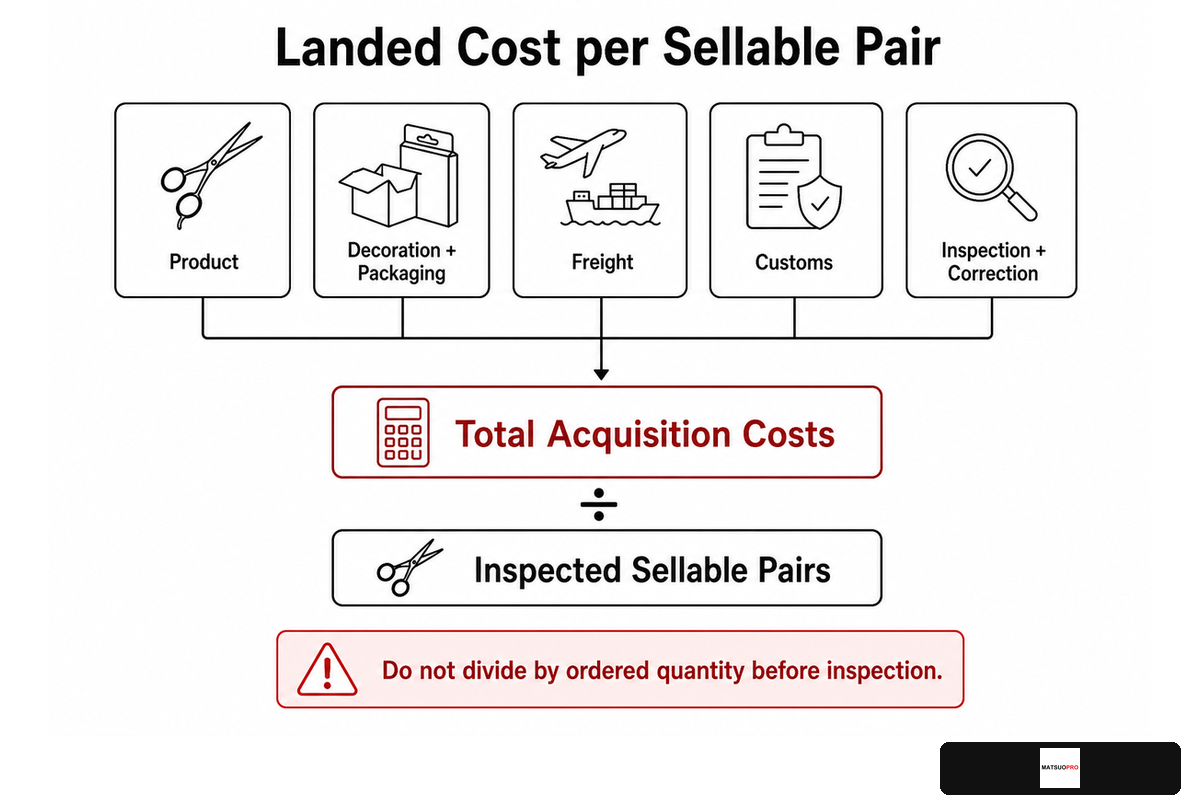
Landed cost per sellable pair equals all shipment-level acquisition costs divided by the quantity that passes the buyer’s sellable standard. Include product, decoration, packaging, freight, customs, inspection, rework or sorting, and other buyer-recorded costs. The denominator should exclude pairs that can’t be sold without correction or replacement.
Quoted unit prices can look cheap while hiding a smaller sellable denominator. This worked example is illustrative, not Mackay pricing, a wholesaler or exporter promise, or a current duty calculation. Replace every value with the buyer’s quote, freight record, classification decision, inspection invoice, and accepted quantity.
Illustrative shipment cost per sellable pair:
| Cost item | Illustrative input | Evidence to replace it |
|---|---|---|
| Product | Illustrative estimate: $8,000 | Signed purchase order and invoice |
| Decoration and packaging | Illustrative estimate: $900 | Approved artwork, pack-out quote, and invoice |
| Freight and shipment charges | Illustrative estimate: $1,200 | Carrier or forwarder record |
| Duty and import charges | Illustrative estimate: $800 | Current classification and entry record |
| Inspection and sorting | Illustrative estimate: $300 | Inspection invoice and lot report |
Worked result: ($8,000 + $900 + $1,200 + $800 + $300) ÷ 960 inspected sellable pairs = $11,200 ÷ 960 = $11.67 per sellable pair. Dividing the same total by 1,000 ordered pairs would show $11.20 and hide $0.47 per pair.
Use the current U.S. Harmonized Tariff Schedule to check current tariff descriptions and rates for a U.S. shipment. In CBP ruling N345316, a retail hair clipper kit containing a scissor, comb, oil bottle, cleaning brush, and attachments was classified under the hair-clipper heading. CBP also limited the holding to the described merchandise and facts. The example proves why a mixed kit can’t inherit a scissors-only classification or copied duty rate; it doesn’t supply a reusable heading or rate for another shipment. Give the actual bill of materials, origin, packaging, and sample configuration to a qualified customs professional.
| Hidden bottleneck | Required evidence | Owner | Stop signal |
|---|---|---|---|
| Classification input | Actual goods, composition, set contents, origin, current schedule | Importer / customs adviser | Supplier supplies only a rate with no classification basis |
| Sellable-unit denominator | Lot report, rework count, replacements, approved disposition | Quality and finance | Cost model uses ordered quantity before inspection |
Finance should approve the formula structure before supplier comparison. Procurement supplies commercial inputs, quality supplies the accepted quantity, and the importer owns classification evidence. That division prevents one attractive quote from becoming unsupported “wholesale prices” in a spreadsheet.
Reorders should point to the approved revision and retained sample, not merely repeat a model name. Lock the steel declaration, heat-treatment and hardness evidence, blade and edge geometry, handle, tension parts, finish, logo, packaging, inspection method, and approved exceptions. Require written notice and buyer approval before any material, process, subcontractor, or packaging change.
Evidence from one sample or batch has a defined scope, consistent with NIST’s item-and-time traceability limit. Previous reports don’t automatically describe a future order. Compare the new preproduction sample or incoming lot with the retained reference and the same inspection conditions. If a supplier proposes a change, record why, which fields move, which tests must be repeated, and who can accept the difference.
Do
Don’t
Small changes can be acceptable. Change control isn’t designed to freeze a supplier forever; it makes the tradeoff visible. That record also helps customer service separate user-fit complaints from production inconsistency.
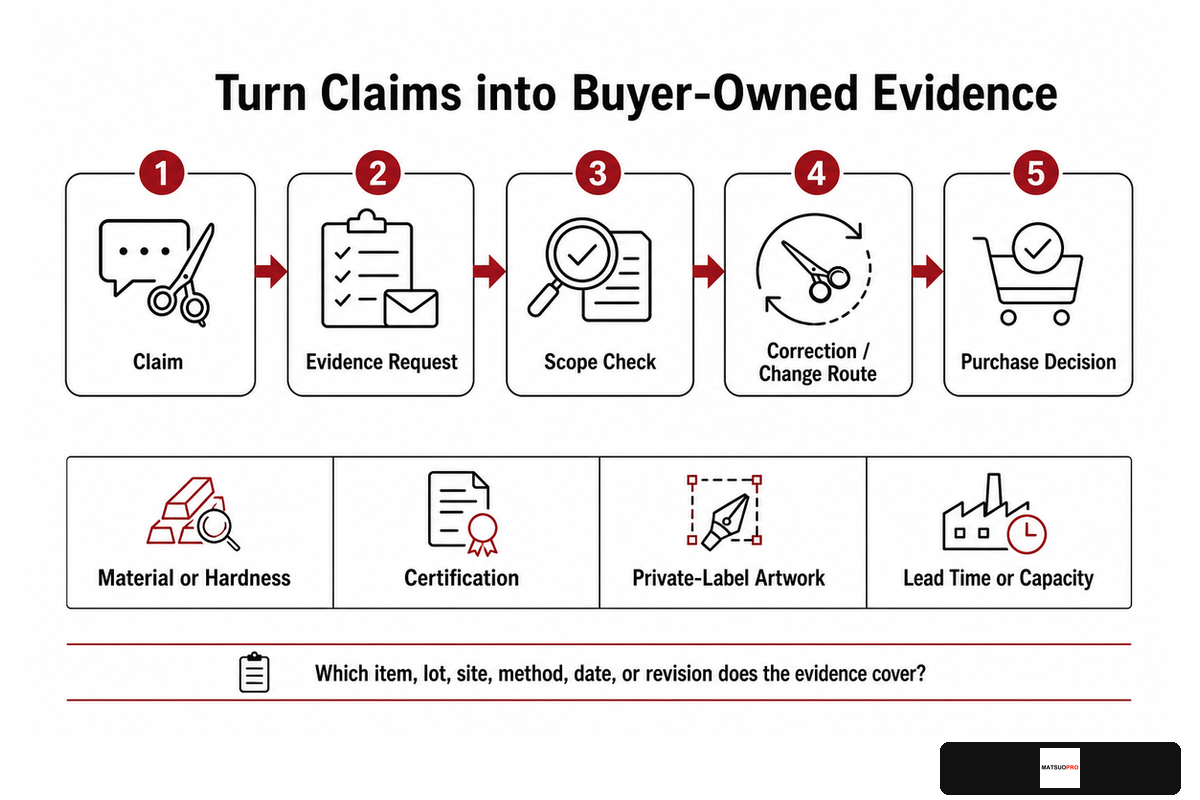
Supplier verification works when each important claim has an owner, evidence type, revision or expiry field, correction route, and change-notice term. Manufacturers may describe materials, certifications, capacity, markets, or customer service. Buyers should decide which claims affect purchase approval and what evidence is proportionate.
| Claim | Evidence request | Scope check | Correction / change route |
|---|---|---|---|
| Material or hardness | Named declaration or test report | Which item, lot, method, and date? | Replacement, retest, sort, or rejection term |
| Certification | Current certificate and scope | Which site, activity, product, and validity period? | Notice before lapse or scope change |
| Private-label artwork | Approved proof and packaging file | Market, language, model, and revision | Correction before mass pack-out |
| Lead time or capacity | Order-specific production plan | Quantity, approval date, dependencies, shipment term | Escalation and revised-date approval |
Private-label buyers should also assign a market-specific compliance owner. Origin marking, responsible-party duties, packaging claims, consumer warnings, and required languages vary by destination and product configuration. This guide doesn’t supply legal conclusions. It provides a place to record who will review them before artwork or shipment release.
When the buying file is ready, Mackay’s private label hair scissors services page can start a supplier-specific discussion. Request current evidence for the actual quote rather than treating the website as proof.
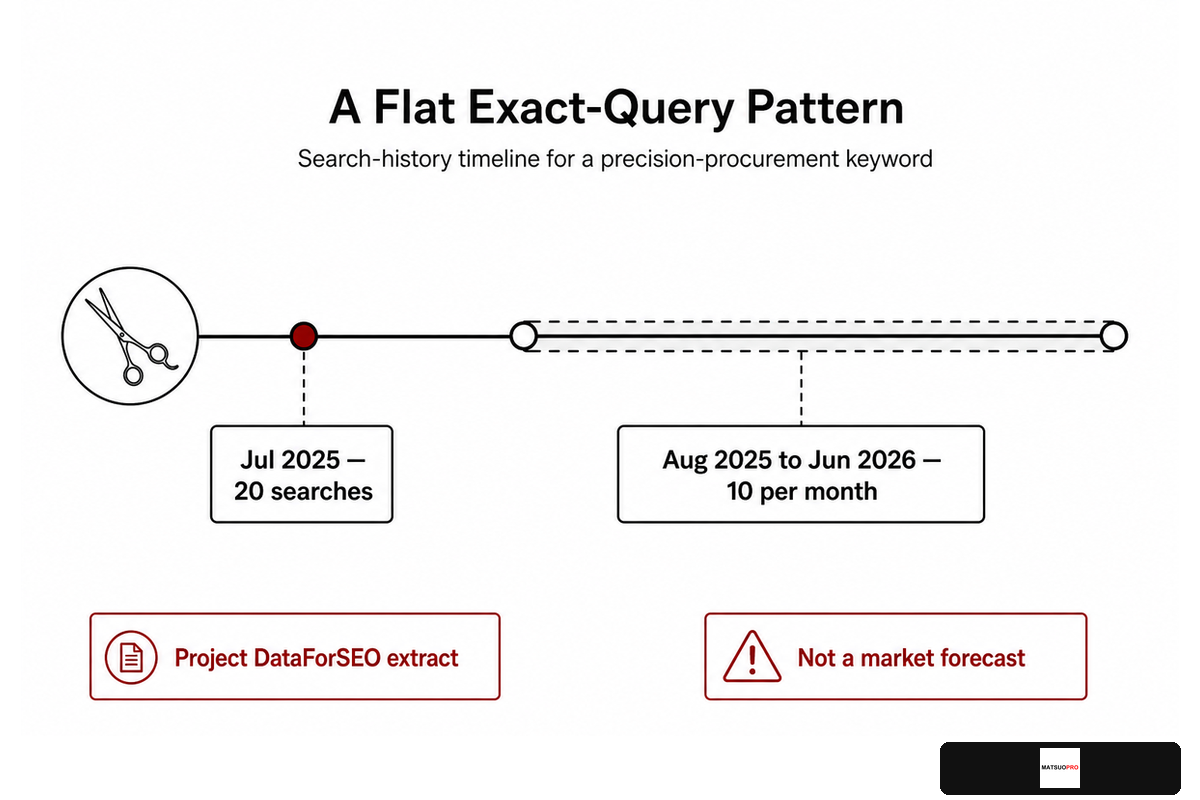
This exact hair-scissors-wholesale query cluster is narrow and stable, not a market forecast. DataForSEO recorded 20 monthly searches in July 2025 and 10 per month from August 2025 through June 2026 for the grouped query used in this project. Google Ads’ historical-metrics documentation describes the upstream monthly search-volume metric family; the exact values here come from this project’s current DataForSEO extract. That history can guide content expectations; it can’t establish category growth, wholesale revenue, or inventory demand.
Low exact-query counts can still sit inside a larger buying journey that uses product, steel, thinning, barber, private-label, and supplier terms. Results can also be distorted by grouped synonyms and tools’ data-collection methods. Don’t turn occupational growth, marketplace listings, or commercial market-report forecasts into evidence for this specific wholesale decision. Use first-party sales and inquiry data for inventory forecasting.
Keep this article educational and send commercial visitors to the established product and service pages. Search evidence shaped the boundary; it didn’t decide how many units a buyer should purchase.
Mackay supplies professional hair scissors and private-label programs, but this article separates supplier claims from buyer evidence. The sample-release gate, sellable-pair cost model, and batch decision fields are designed to help buyers ask clearer questions before a quote or reorder. Reviewed by the MATSUOPRO / Mackay Hair Scissors technical team.
Bring the product jobs, specification fields, sample-release evidence, expected quantity, packaging brief, and destination market into one request. That shared file lets the buyer and supplier discuss the same acceptance conditions, evidence, and commercial assumptions. Mackay can then respond to a defined buying file instead of an ambiguous “best price” inquiry.
MATSUOPRO is the Mackay Hair Scissors manufacturing brand for professional hairdressing shears, barber scissors, thinning shears, and pet-grooming scissors. We support salons, distributors, academies, grooming brands, and private-label buyers that need factory-direct production with practical material guidance.
Our buying guides are written to help purchasers compare steel grades, handle styles, blade geometry, surface finishes, logo options, packaging, MOQ, and sample validation before placing an OEM or wholesale order. The goal is to make each scissors specification easier to discuss with a real production team.
Factory-direct supply since 2014, with product lines covering professional cutting shears, barber shears, thinning scissors, texturizing scissors, left-handed models, and pet grooming scissors for international B2B customers.
We focus on Japanese 440C, VG10, and ATS-314 steel choices, convex and bevel edge geometry, ergonomic handle balance, tension systems, logo engraving, private-label packaging, and sample-based OEM confirmation.