Get in Touch with Mackayhairscissors Company
We use submitted details to respond to your quote request. Read our Privacy Policy.

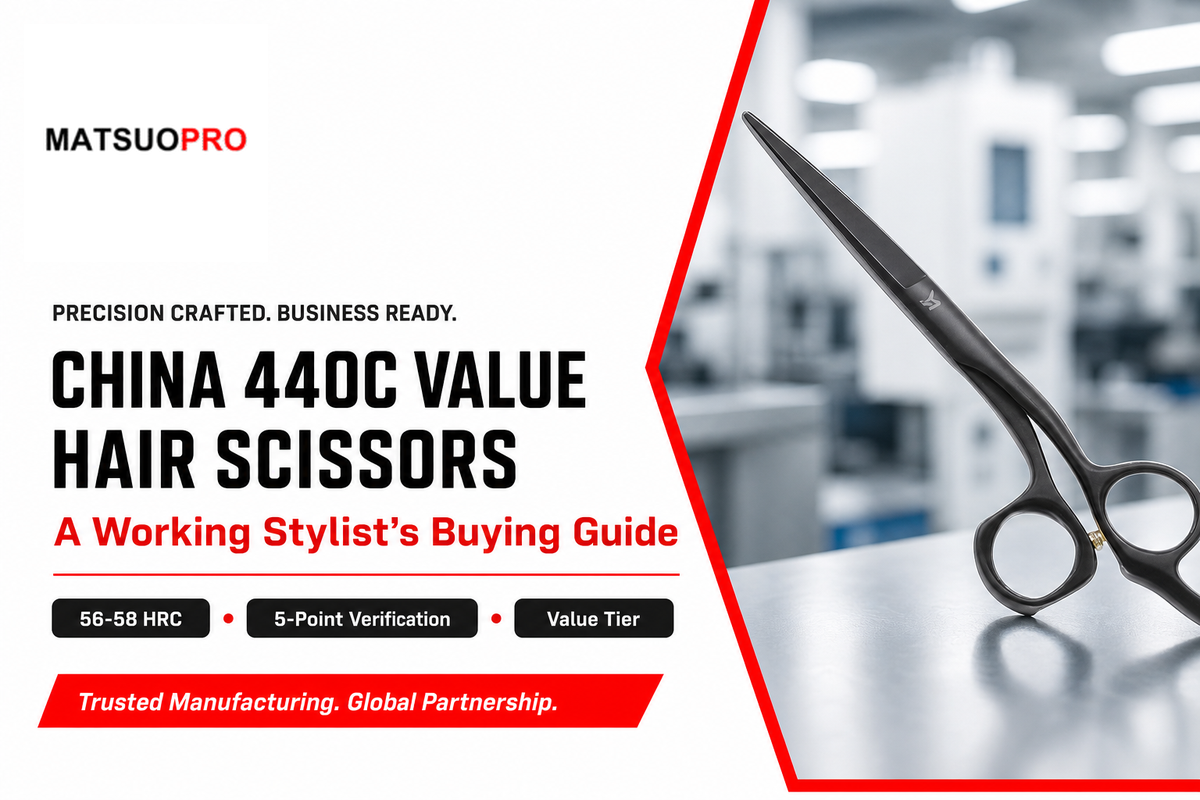
China 440C Value Hair Scissors are entry-price professional hairdressing shears forged from 440C martensitic stainless steel at a factory in mainland China. The label states origin and steel grade only; it does not certify tested hardness or manufacturing quality on its own, which is what this guide verifies.
Updated July 2026 · Reviewed by the Mackay / MATSUOPRO technical team
| Steel grade | 440C martensitic stainless (bar/shape stock spec: ASTM A276/A276M-25) |
| Typical hardness | 56-58 HRC (China-sourced 440C, per brand glossary; premium 440C lines run 58-60 HRC) |
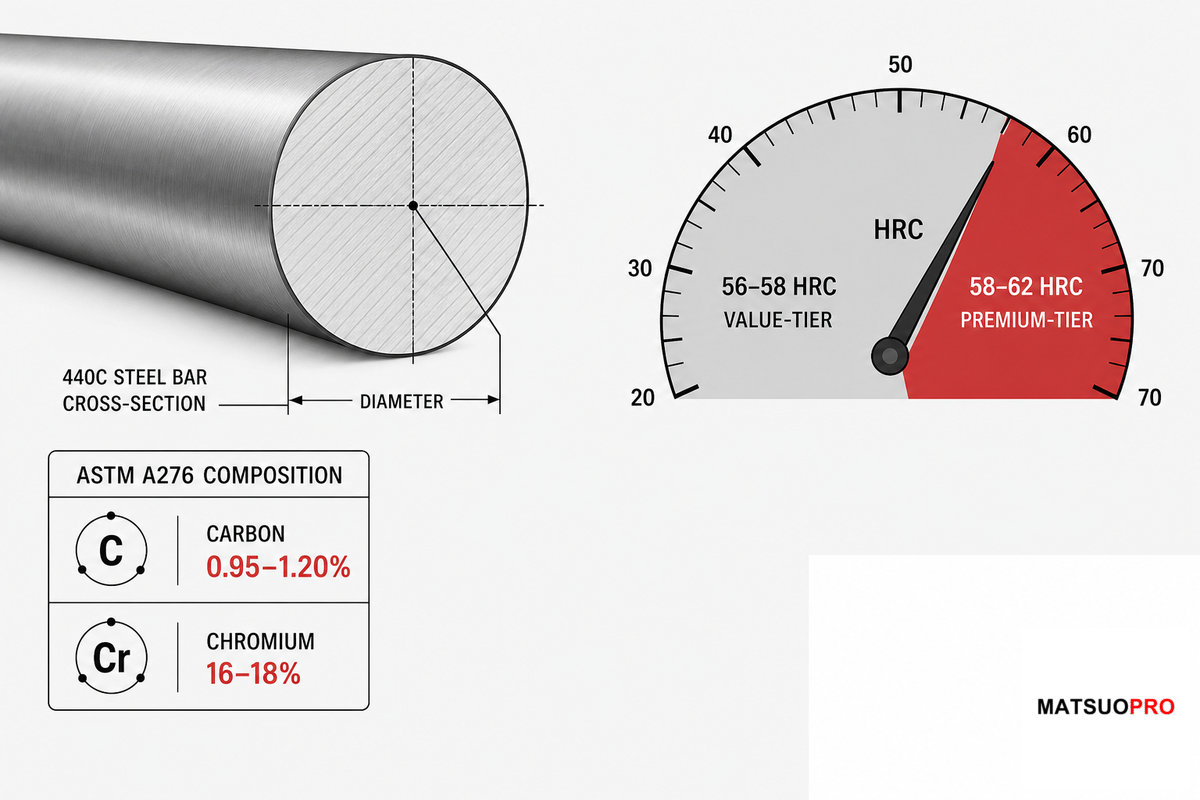
| Chromium content | 16.00-18.00% (ASTM A276 spec range) |
| Market price band | Typically the lowest tier in the professional-shear market — industry price-tier breakdowns vary by source and age, treat any specific dollar range as directional, not fixed |
| Resharpen interval | 3-6 months at regular daily-cutting volume, shorter than premium-tier steel |
| Common sizes | 5.5 inch (~140mm) and 6 inch (~152mm) cutting scissors most common; pet-grooming versions run longer, typically 7.0-8.5 inch (~178-216mm); also sold as thinning/blending scissors sets |
China 440C value hair scissors are the entry-price professional hairdressing scissors category built from 440C martensitic stainless steel, manufactured in China, and sold at the low end of the professional-shear market. This guide isn’t a spec sheet – it’s a buyer’s guide to a category that get more marketing noise and less honest verification advice than almost any other tool in a stylist’s or barber’s kit.
China 440C Value Hair Scissors is a category label, not a brand: it describes shears forged from 440C martensitic stainless steel, manufactured at a factory in mainland China, and priced at the value end of the professional-shear market. The label states origin and steel grade only-it says nothing on its own about tested hardness or manufacturing quality.
China 440C value hair scissors are shears forged from 440C stainless steel – a martensitic grade whose raw bar and shape stock is covered by ASTM A276/A276M-25 – manufactured at a factory in mainland China, and priced at the value end of the professional-shear market. “China 440C” is not a brand name and not a proprietary alloy.
It’s a description of two facts: where the blade was made, and which steel family it’s cut from. Worth being precise here: A276 governs the composition and mechanical properties of the stainless bar or billet the blade is later machined from – it is a raw-material specification, not a certification for the finished, ground, and heat-treated scissor blade itself. No ASTM or ISO standard certifies a “finished hair scissor” as a complete product; the steel-stock spec is your starting-point evidence, not the whole story.
That distinction matters because sellers routinely blur it. A listing that says “Japanese 440C” is making a claim about the steel’s pedigree, not its manufacturing location – Japan doesn’t have exclusive rights to the 440C designation, and plenty of 440C is melted and forged in China to the identical ASTM spec.
The steel grade itself is public and unbranded: any mill that can hit the composition and heat-treatment window can legally call the output 440C. For the full atomic-level breakdown of what separates 440C from its closest premium alternative, see our 440C vs VG10 steel composition and hardness comparison – this guide stays focused on what the label means for a value-tier buyer rather than re-covering that metallurgy.
Steel-database vendors I’ve referenced to for 440C always refer back to ASTM A276/A276M specification where carbon ranges between 0.95-1.20% and chromium from 16.00-18.00%, and a 60 HRC max from a mill-spec hardness perspective (the ASTM specification itself is behind a paywall, so take these as cross-referenced values and not direct quotes, verifying the exact numbers off your actual mill certificate). Economy grade Chinese 440C often comes in at 56-58 HRC per brand-glossary, which is 2-4 HRC lower than the premium 58-60+ HRC series that come with tighter tolerances on their heat-treatment. The composition window is the same in terms of what they’re claiming to make, but the heat-treatment is what gives them the higher end HRC values.
The “value” side of the label really just refers to price placement and nothing else in regards to materials. Two perfectly valid pairs (one in their value-tier, the other in their premium-tier) might both bear a “440C” marking. But the real figure differentiating the two-the one that’s nearly universally absent from published specs-is the measured HRC of the steel, and the consistency with which that measurement is maintained by the factory from batch to batch.
This guide exists to bridge that gap. If you want to quickly recap the basics of how the HRC figure is actually measured before we proceed, you may consult our HRC hardness scale guide.
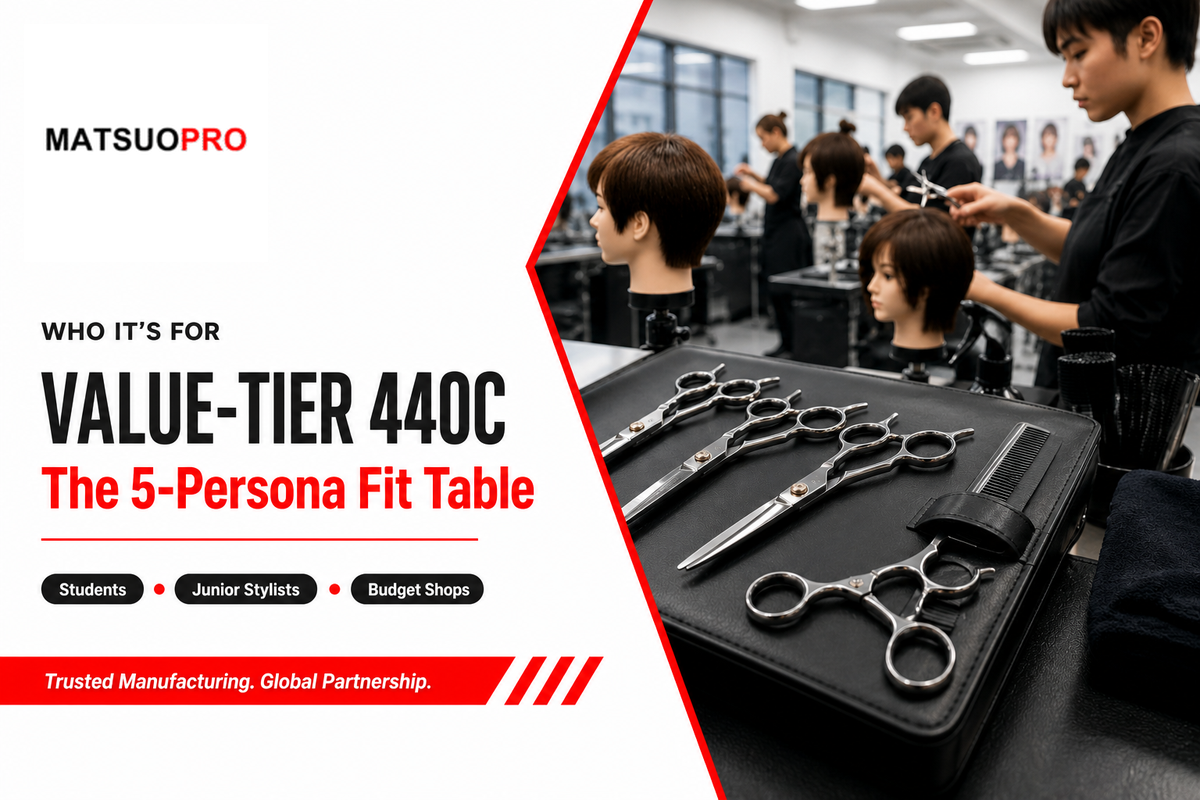
Value-tier 440C genuinely fits five buyer situations well: students, junior stylists building a book, backup pairs, occasional-use session work, and training stations. It fits high-volume daily-use chairs poorly, because the resharpen cost gap with premium steel grows fastest exactly where cutting volume is highest.
The right purchase for the value-priced 440C, wrong purchase for some others-where most guides fail is by grouping “budget scissors” together as a generic thing, instead of correlating them to the actual person who’s got their hand on the handles: are they a hairdresser trying to set up a first kit of professional hair scissors?
A dog groomer outfitting their second station?
Thinning and texturizing shears made of 440C steel use the same fit principles as cutting shears, which the following chart uses as the base example. In the same vein, if a stylist looking for professional hair shears left the barber chair longing for more cutting power, that stylist is just asking the fit question that the following table attempts to answer.
The 5-Persona Value-Tier Fit Table visualizes buyers and tier fit at-a-glance-nine typical buyer roles paired with the typical frequency they re-sharpen and the trigger to switch up a steel tier.
| Buyer Persona | Tier Fit | Expected Resharpen Cadence | Upgrade Signal |
|---|---|---|---|
| Cosmetology student | Good fit | Every 3-4 months in school-volume use | Licensure + first full-time chair |
| Junior salon stylist (building a book) | Good fit, short-term | Every 3 months at moderate volume | Client volume exceeds ~15 cuts/week consistently |
| High-volume budget shop (20-25+ cuts/week) | Poor fit long-term | Every 4-8 weeks — resharpen cost erodes savings fast | Immediately — the math below explains why |
| Pet groomer (coarse/dirty coat work) | Fair fit as a secondary pair | Every 6-8 weeks — coarser material dulls edges faster | Primary daily-use pair |
| Backup / travel pair for an established stylist | Good fit | Low — occasional use only | Rarely needed to upgrade in this role |
| Barbershop apprentice (fade-focused) | Good fit, short-term | Every 2-3 months at fade-heavy volume | Independent chair + steady clientele |
| Salon owner outfitting a training station | Good fit | Every 4-6 months, shared low-volume use | Station converts to a paid working chair |
| Editorial / session stylist (occasional use) | Good fit | Every 6+ months — infrequent, low-wear use | Booking a steady weekly session schedule |
| Mobile / freelance stylist (variable volume) | Fair fit, volume-dependent | Every 2-5 months depending on client load | Client load stabilizes above ~15 cuts/week |
Yes, 440C is capable of daily professional cutting at 56-60 HRC. The real tradeoff is cadence, not capability: value-tier 440C needs roughly twice as many sharpening visits as premium 58-62 HRC steel under identical daily volume, which is the actual cost a high-volume stylist pays for the lower sticker price.
Seriously though, 440C is absolutely capable of daily professional cutting; it’s what supported the entry- and mid-tier of the professional shear market for decades before the first Cobalt Alloy premium options emerged. The one real truth you need to accept is cadence, not capacity: at 56-58HRC a budget 440C needs about two visits to the sharpener to equal one visit to the sharpener of 58-62HRC pair, used the same number of days per week. That extra visit, per the volume of a stylist working 20-25+ haircuts per week, has a cost all of its own.
Definitely run the numbers before deciding (you can compare the cost to our mid and premium grade tools below) the sticker price isn’t always the true price over time. And once you’re past entry/mid tier, you should definitely take a look at our China 440C Value Hair Scissors product line, and its premium counterpart as the next progression.
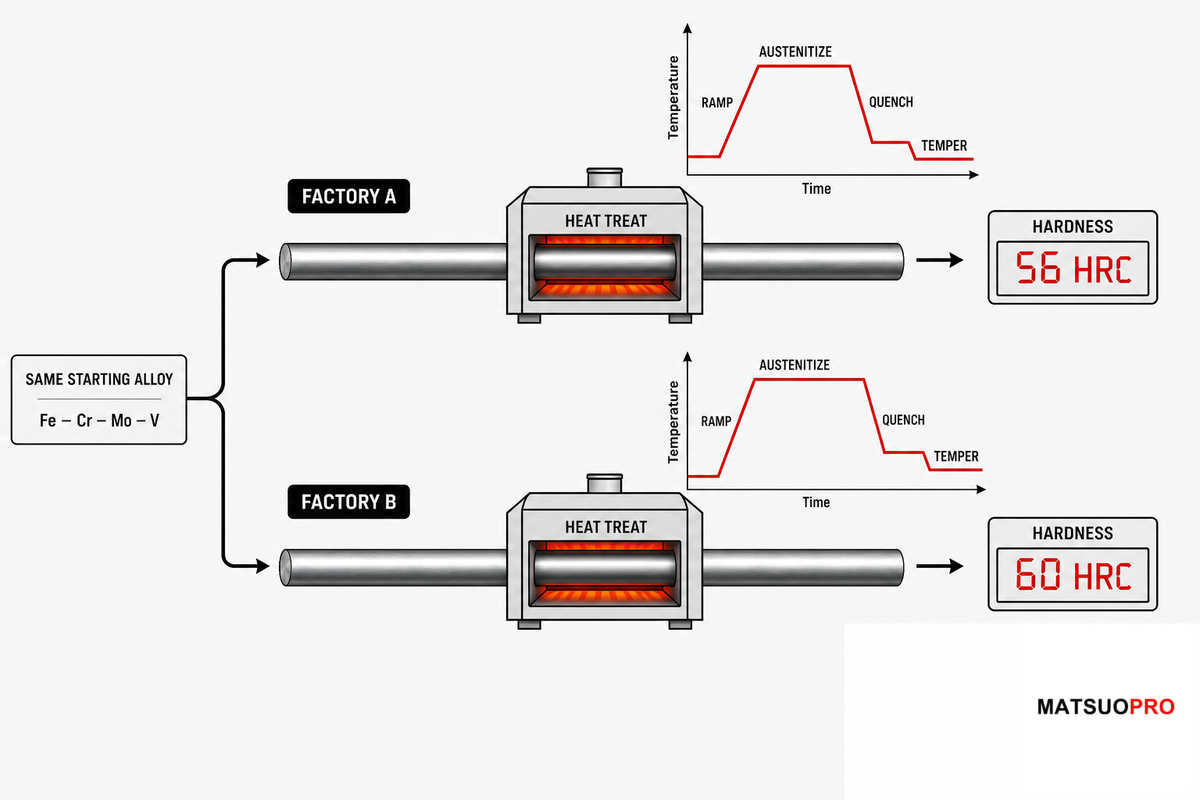
Can a shear made in China possibly offer Japan- or Germany-branded quality at this price point? To be blunt: the country of manufacture isn’t the relevant factor-heat treatment and quality control are. The very same 440C steel forged in the same nation can emerge at 56 HRC with a rough, uneven grain structure from one facility and 58-60 HRC with a uniform grain structure from another. The country stamp on the product listing merely tells you where the metal was cut; it provides zero information regarding whether the furnace attained the correct temperature for the optimal number of minutes for the batch you’re handling. Corrosion resistance is subject to the same principles irrespective of source: chromium in excess of approximately 10.5-12% creates the protective oxide layer that classifies any steel as “stainless,” and the 16-18% specified range for 440C easily satisfies this threshold no matter the factory that produced it.
This is precisely the deception that “Japanese steel” marketing language perpetuates through out the broader hair-shear industry. A listing touting “japanese 440c stainless steel” is referring to a family of steel, not proof of manufacturing origin; many premium Western-branded shears themselves are manufactured abroad from these same steel families but are marketed differently. The narrative is more persuasive than the composition sheet for buyers across the entire price spectrum. A hair salon owner evaluating proposals from two manufacturers for the identical professional hair shear specification sheet will witness this first hand: the identical steel grade, the identical asserted hardness, and a cost differential that bears no relation to either of them.
“You get what you pay for” is not an absolute truism for scissors, but it is far from irrelevant-the very bottom of the price range indeed contains genuine lemons, not just unfairly maligned bargains.
paraphrased from working-barber sentiment, r/Barber scissors-pricing discussion
This forum sentiment is echoed by independent reviews that scrutinize the cheapest offerings on Amazon, with users reporting blades that fail to cut smoothly-a distinction from “dull slightly faster,” one that has absolutely no bearing on the country of origin and everything to do with a factory bypassing heat-treatment stages to achieve a rock-bottom price. The pertinent question isn’t “Is it made in China?” but rather, “Which specific factory, and can they provide the specifications, tested against federal metrology guidance on Rockwell hardness measurement, not just a marketing claim?” A well-convex-ground, appropriately treated blade from a disciplined China-based factory will outperform a poorly-treated “Japanese steel” shear every time; the country stamp is the least reliable indicator in the listing.
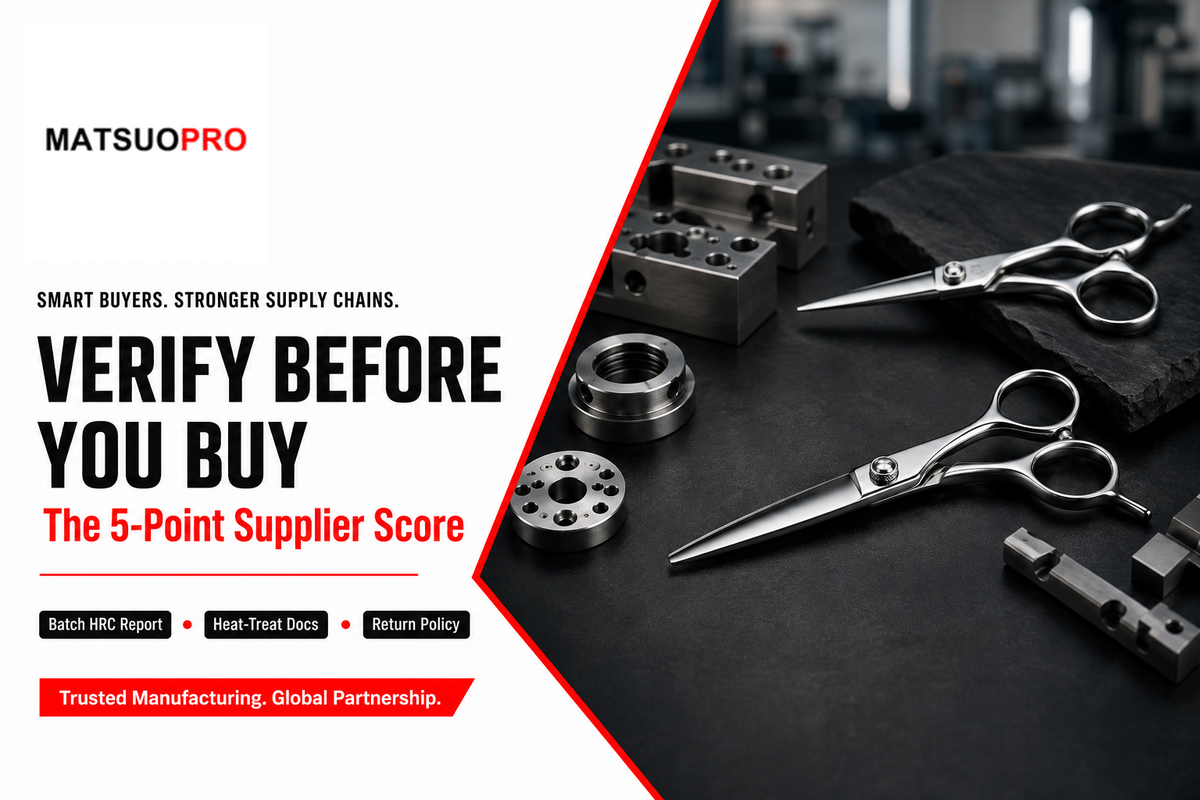
Identifying a value-tier 440C listing requires less effort than reading through customer comments and alerts you to suppliers cutting corners before you’re the one with a blade that won’t retain its edge. Score each listing based on these five criteria (one point per criterion, maximum of five) as if it were a scissors professional checklist for any China 440C hair cutting shears listing, applied in less than five minutes.
The 5-Point Supplier Verification Score is a 5-question, 0-5 scale check for any China 440C listing before you buy – no test equipment required, just the listing text and, if needed, one message to the seller.
Score interpretation: 4-5 points, proceed with normal buyer diligence. 2-3 points, ask the seller the missing questions directly before ordering – a legitimate factory answers immediately. 0-1 points, treat it as a red flag; a listing with zero verifiable claims is the same risk profile as the bottom-of-market listings that show up in negative reviews. This is the same checklist worth running on any search for high quality hair cutting scissors or high quality barber scissors, not just the value-tier end – a high price alone scores zero points on this list too.
A legitimate HRC claim should be traceable to the Rockwell C test method – a 120° diamond indenter, seated with a 10 kgf minor load and then read under a 150 kgf major load, standardized under ISO 6508-1:2023 and ASTM E18. If a supplier can’t say which standard their hardness number was tested against, that’s a sixth informal check worth asking – a real test lab always references one of these two.
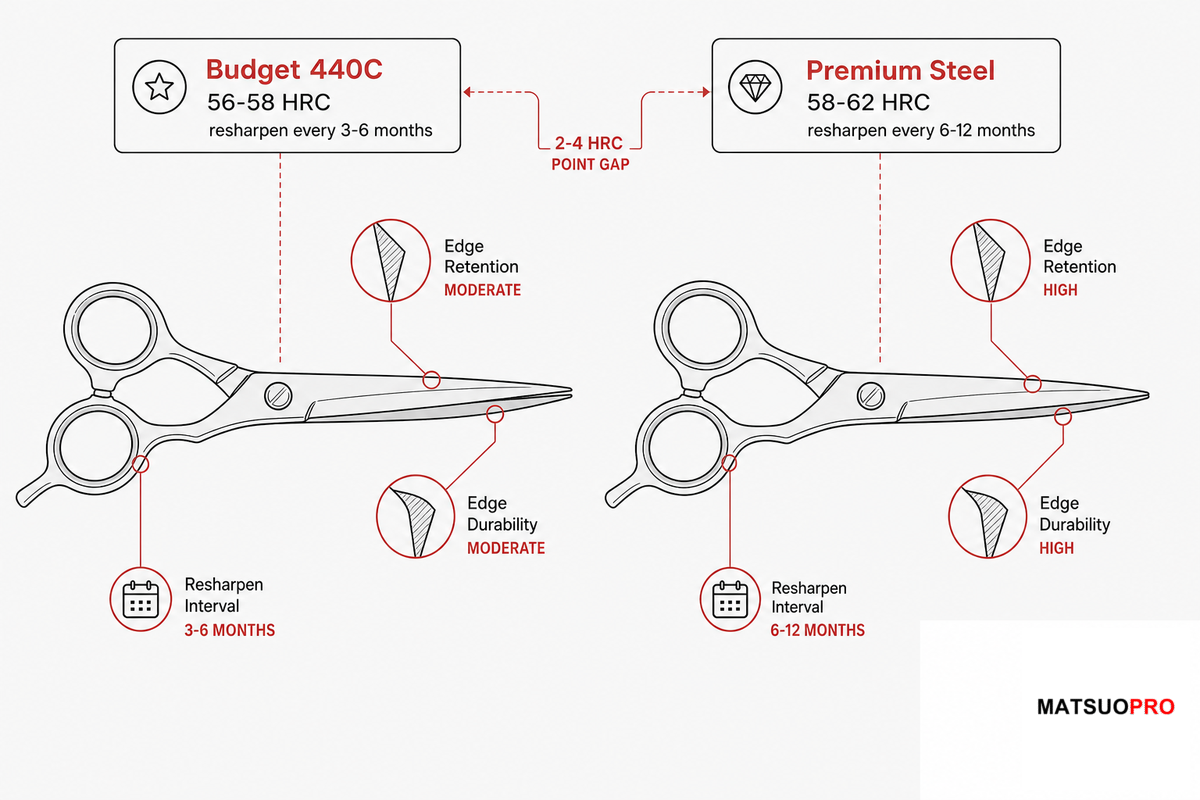
The resharpen-cadence gap is where the real cost live. At 20-25 cuts a week, a value-tier pair needing service every 4-8 weeks versus a premium pair needing it every 3-6 months adds up over a year – professional sharpening commonly runs in the $20-50 range per visit industry-wide, and the visit frequency, not the sticker price, is usually what decides total cost of ownership for a high-volume shop. For the five personas in the table above who aren’t cutting at that volume, the gap barely matter. For the one who’s, it’s the entire decision.
When you’re searching for hair cutting scissors 440c luxury options, you’ll likely encounter this comparison. Our detailed 440C vs VG10 vs ATS-314 vs Cobalt comparison and TCO worksheet covers the 4-way numbers instead of the simple 2-tier summary here if you’re considering that upgrade very seriously. Even within the 440C category, our Japanese 440C hair scissors line sits between this value tier and the top-of-the-line VG10 hair shears line.
Please note: Daily comfort is determined by factors beyond just steel grade. Research on hair shears ergonomics shows that handle design and shape influence wrist angle and reported fatigue separate from the steel used-even a well-made value-grade 440C blade in an poorly fitted handle may not be as comfortable during an 8-hour day as a mid-range pair with a more comfortable design. It’s wise to check the fit of your scissors either in person or by relying on the seller’s return policy-this can’t be assessed by steel grade alone.
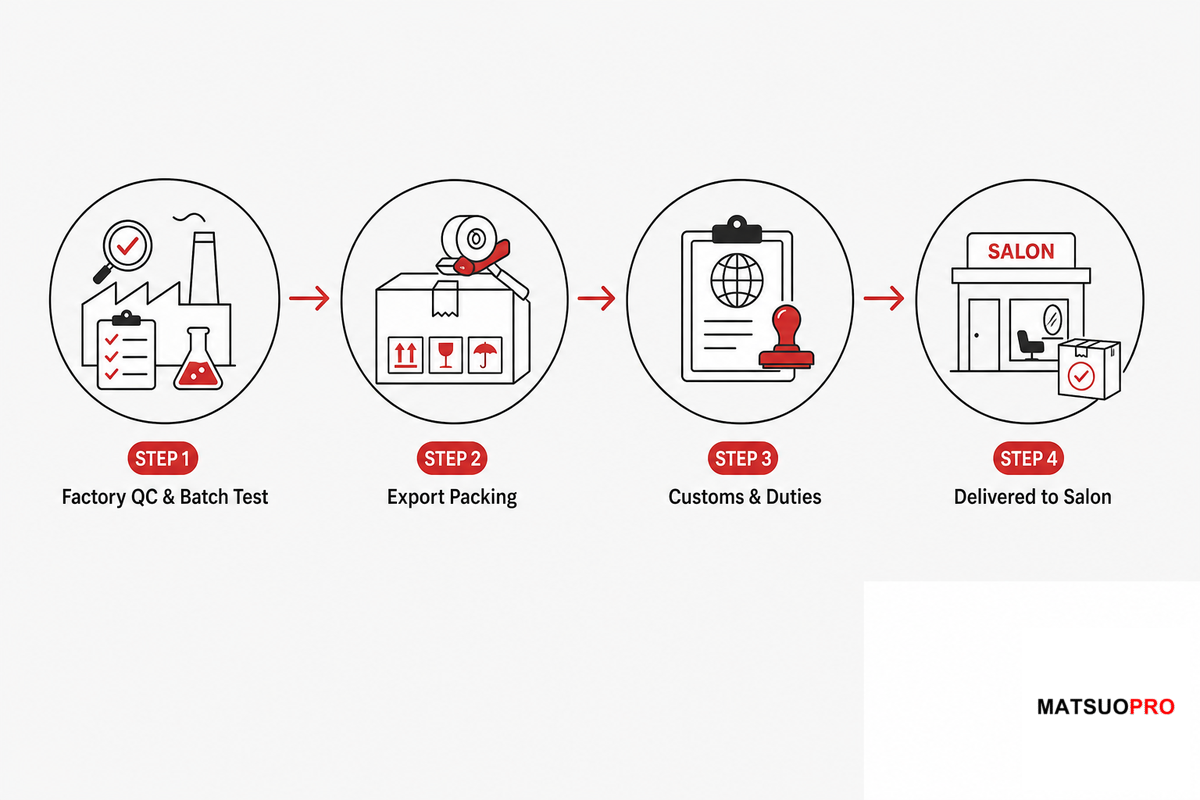
At this price level, purchasing directly from a factory typically involve dealing with a manufacturer also responsible for OEM and private-label orders, rather than a dedicated retail brand. You’ll generally need to order at least 50-300 units if you require custom specifications (custom logo, handle shape, packaging), while single-piece or small-batch orders may be available for items in stock. A reliable manufacturer will promptly inform you about the lead time and usually reply to inquires within 24-48 hours-a slow or evasive response to a specific request should also be considered as a significant factor.
Customizations (custom ergonomic handle, customized blade length, custom logo) are common for these scissors and typically don’t affect the steel or heat treatment-they modify appearance and fit, not the metallurgy. Multi-purpose kits that include a pair of thinning scissors along with a cutting pair are also prevalent in this tier, and require the same verification process for each piece. If you’re primarily looking to purchase a large quantity or to develop a private label brand rather than a single pair, that’s a separate issue than the buyer verification checklist provided-professional salons or groups developing an in-house brand follow the same 5-point check, but on a larger scale.
U.S.-based buyers who intend to import directly should be aware of an upcoming change to customs regulations in 2025: starting May 2, 2025, the “de minimis” exemption that allows low-value shipments from China and Hong Kong to enter the United States free of duties no longer applies. All low-value orders from a Chinese factory will now be subject to duties, per Executive Order 14256 in the Federal Register. This change doesn’t impact the steel used or the verification checklist presented above but will alter the overall cost of a direct import order-obtain a full landed-cost quote from your supplier or freight forwarder.
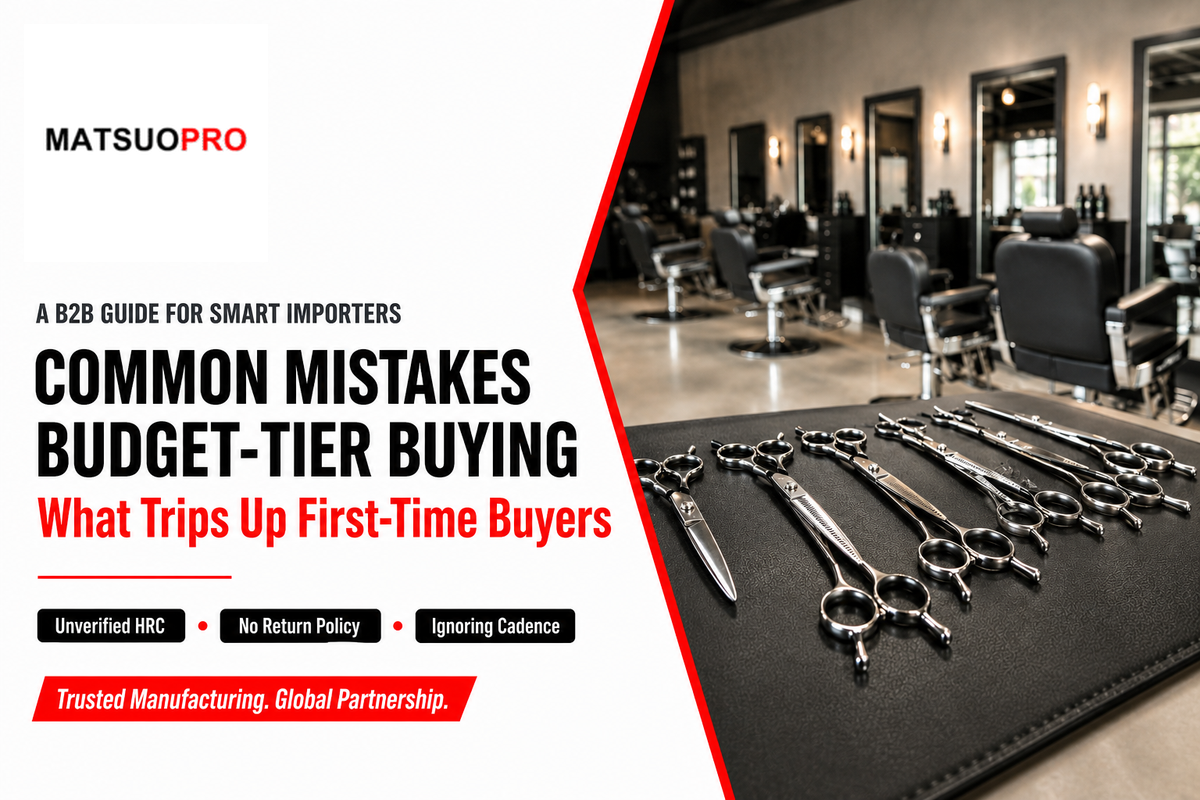
The consistent errors at this price point are simple and recurring shortcuts that are evident across numerous listings and reviews.
There’s roughly a fifty-fifty split among online hair-scissors communities between “I got a cheap pair that was great luck” and “I bought cheap and it backfired.” That divide is telling; a category where outcomes vary this widely for one price point is exactly the category where a five-minute verification pay off, whether you’re a salon professional shopping for styling shears or a barber seeking fade-focused barber shears – the barber hair specialist and the japanese hair steel skeptic run the same check.
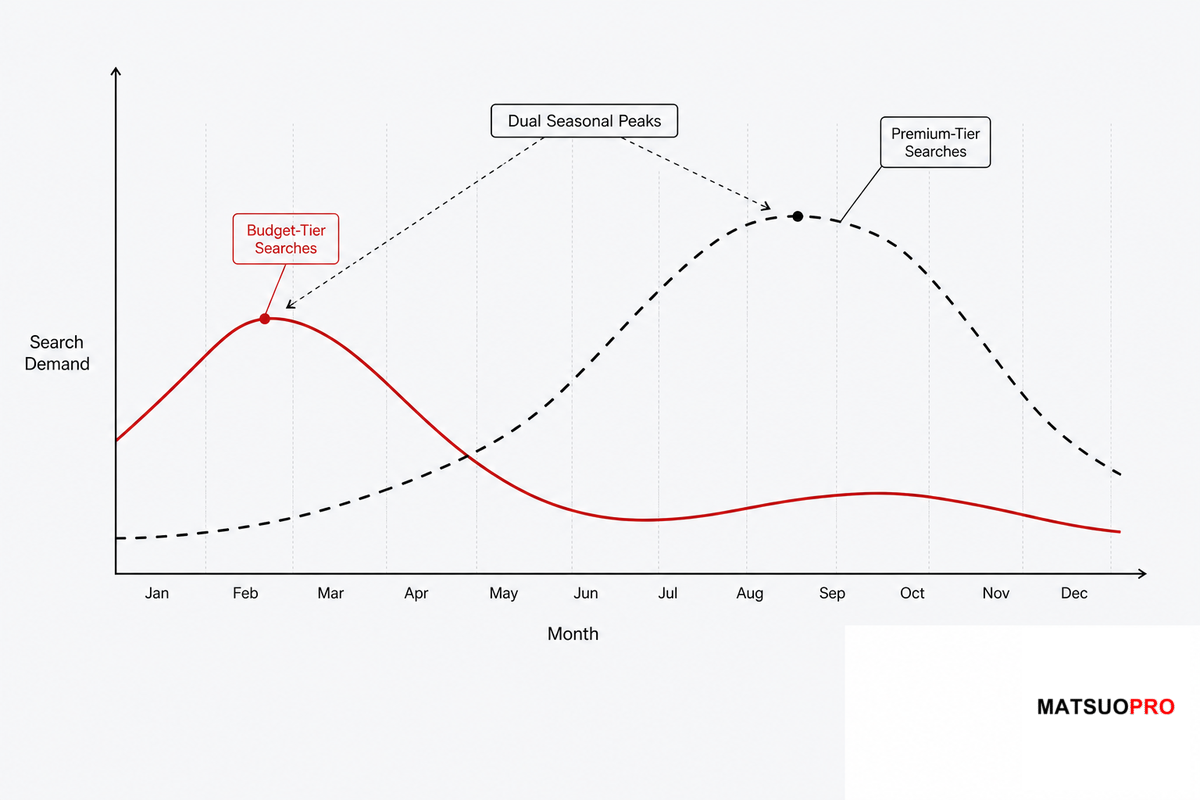
The most noticeable change in this market recently isn’t about a new steel type or a new price tier-it’s about a growing shift toward verification prior to purchase rather than after disappointment, because the risk of an unverified value-tier listing hasn’t gone away even as the category has grown. Buyers searching the market in two different, seasonal cycles (a “high quality/high end” search surge during late summer that correlates with stylist and barber licensing cycles and a “budget/affordable” search spike in late winter) are both converging on the same underlying, unresolved question: do the price points in this category correlate to actual quality.
That’s the gap this guide fills, not just a random confluence of unrelated search terms – whether someone types “China 440C Value Hair Scissors review,” “China 440C Value Hair Scissors for sale,” or “China 440C Value Hair Scissors Amazon,” they’re all circling the same unverified-claim problem this guide addresses.
On the supply side, that verification-forward approach is also emerging; B2B demand tracking in the wholesale sector for hair-scissors category show increased activity from quarter to quarter, spanning salon-chair cutting shears and 7.0-8.5 inch pet-grooming sets alike.
This puts more pressure on manufacturers to supply verifiable data to capture buyer attention rather than just vaguely claim “premium steel,” because a buyer who’s already asking for an HRC number tested against the current ISO 6508-1:2023 edition and a factory location is a harder sale for a vague listing. Mackay/MATSUOPRO sees this shift directly in the RFQ questions factory-direct buyers now ask before ordering. Buyers asking the five verification questions highlighted here are actually driving that change with each supplier inquiry they make.
Global market research organizations that track the hair-scissors industry can’t seem to agree on a consensus market size or growth rate; the variance in reports is the real insight into market uncertainty, precisely because no single source has resolved it. Take any dollar figures or percentage growth rates cited (including from sources on this website) as directional market indications from individual research firms, not concrete market consensus; they don’t offer clarity on who will win the market through a specific approach or verification practice.
We forge shears of 440C, VG10, ATS-314, and cobalt alloy across two facilities (Guangzhou and Zhangjiagang), so we’ve a unique perspective on the value-tier. We wrote this guide because the term “China 440C” carries more marketing weight than reliable guidance for buyers across any of the tiers we make-we thought we’d provide a practical list instead of just another country-of-origin story, from either angle. Reviewed by the Mackay / MATSUOPRO technical team.
MATSUOPRO is the Mackay Hair Scissors manufacturing brand for professional hairdressing shears, barber scissors, thinning shears, and pet-grooming scissors. We support salons, distributors, academies, grooming brands, and private-label buyers that need factory-direct production with practical material guidance.
Our buying guides are written to help purchasers compare steel grades, handle styles, blade geometry, surface finishes, logo options, packaging, MOQ, and sample validation before placing an OEM or wholesale order. The goal is to make each scissors specification easier to discuss with a real production team.
Factory-direct supply since 2014, with product lines covering professional cutting shears, barber shears, thinning scissors, texturizing scissors, left-handed models, and pet grooming scissors for international B2B customers.
We focus on Japanese 440C, VG10, and ATS-314 steel choices, convex and bevel edge geometry, ergonomic handle balance, tension systems, logo engraving, private-label packaging, and sample-based OEM confirmation.